When landscape designers and homeowners are searching for a tough, attractive, and low-maintenance groundcover, Juniperus sabina ‘Arcadia’ is often at the top of the list. This hardy evergreen shrub has earned a reputation for performing well in difficult growing conditions while providing year-round colour and texture.
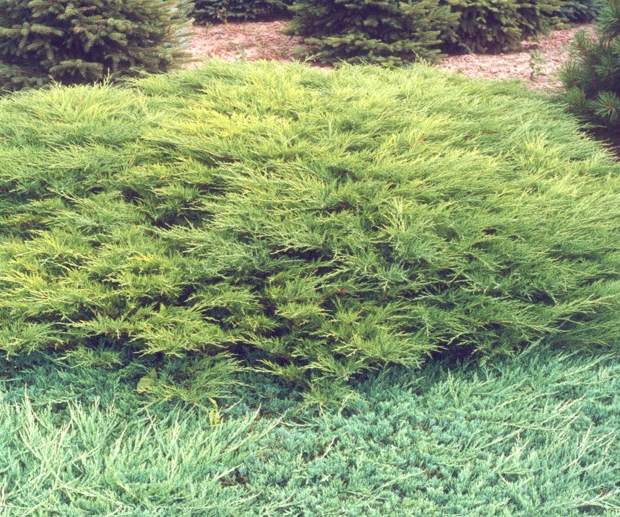
Its dense spreading habit, drought tolerance, and resistance to many environmental stresses make it an excellent choice for residential, commercial, and municipal landscapes.
Origins and Background
Juniperus sabina, commonly known as Savin Juniper, is native to mountainous regions and rocky slopes across parts of Europe, Central Asia, and Siberia. Over centuries, it adapted to harsh climates, poor soils, and exposed sites where many other plants struggle to survive.
‘Arcadia’ is a cultivated selection valued for its compact, spreading growth habit and dense branching structure. Unlike some larger junipers, Arcadia remains relatively low to the ground, creating an attractive evergreen carpet that effectively covers the soil surface.
Its natural toughness and adaptability have made it a popular landscape plant throughout North America, particularly in regions with cold winters and hot, dry summers.
Plant Characteristics
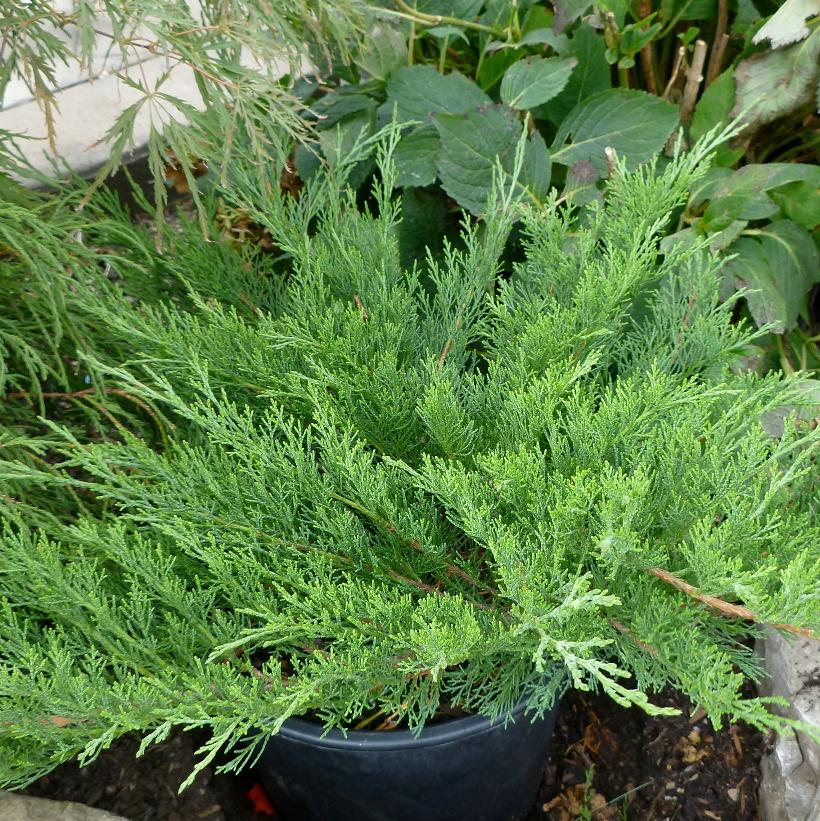
Arcadia Juniper is a broad-spreading evergreen shrub with a low profile.
Mature Size:
- Height: 30 to 60 cm (12 to 24 inches)
- Spread: 1.8 to 3 m (6 to 10 feet)
Foliage:
- Soft-textured blue-green to grey-green foliage
- Dense branching habit
- Evergreen colour throughout the year
- May take on a slightly purplish tint during winter
Growth Rate:
- Moderate growth rate
- Forms a dense mat over time
- Excellent longevity in the landscape
Its ability to spread widely while remaining relatively low makes it particularly useful as a groundcover shrub.
Ideal Growing Conditions
One of Arcadia Juniper’s greatest strengths is its adaptability to a wide range of growing conditions.
Sun Exposure
For best performance, plant Arcadia Juniper in:
- Full sun
- A minimum of six hours of direct sunlight daily
Plants grown in heavy shade often become thin, open, and less vigorous.
Soil Requirements
Arcadia Juniper is highly adaptable and performs well in:
- Sandy soils
- Gravelly soils
- Rocky soils
- Loam soils
- Moderately poor soils
Good drainage is essential. Like many junipers, it does not tolerate prolonged periods of wet or poorly drained soil.
Drought Tolerance
Once established, Arcadia Juniper demonstrates exceptional drought tolerance, making it an excellent choice for:
- Water-wise landscapes
- Roadside plantings
- Slopes
- Hot urban sites
- Areas with limited irrigation
Landscape Uses
Because of its versatility, Arcadia Juniper can be used in many landscape situations.
Groundcover Plantings
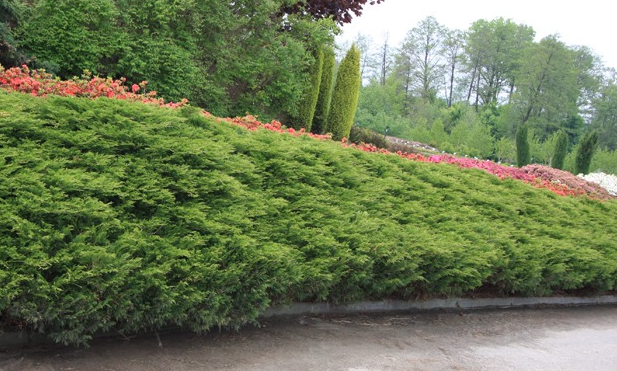
Its spreading habit creates an effective evergreen carpet that suppresses weeds while reducing the need for ongoing maintenance.
Erosion Control
Arcadia’s dense root system and spreading growth make it valuable for stabilizing:
- Banks
- Slopes
- Hillsides
- Difficult-to-maintain areas
Foundation Plantings
Its low-growing nature allows it to soften building foundations without blocking windows or requiring frequent pruning.
Rock Gardens
The blue-green foliage contrasts beautifully with natural stone and ornamental boulders, making it a good choice for rock garden designs.
Commercial Landscapes
Property managers appreciate Arcadia Juniper for its durability and low maintenance requirements in:
- Office parks
- Industrial properties
- Retail developments
- Municipal landscapes
Maintenance Requirements
One of the reasons Arcadia remains popular is its minimal maintenance needs.
Watering
- Water regularly during establishment.
- Once established, supplemental watering is typically only required during extended drought.
Fertilizing
Junipers generally require little fertilization.
A light application of a balanced fertilizer in early spring can encourage healthy growth if needed, but excessive fertilization should be avoided.
Pruning
Very little pruning is required.
Remove:
- Dead branches
- Damaged branches
- Occasional stray growth
Avoid cutting deeply into old wood, as junipers do not always regenerate well from older stems.
Common Pests
Arcadia Juniper is generally considered a tough and reliable plant, but several pests may occasionally appear.
Spider Mites
Spider mites are the most common pest affecting junipers.
Symptoms include:
- Bronzed foliage
- Yellowing needles
- Fine webbing
Problems are more likely during hot, dry weather.
Bagworms
Bagworms can occasionally feed on juniper foliage, creating noticeable damage if populations become severe.
Hand removal is often effective on smaller infestations.
Scale Insects
Scale insects may occasionally be found on stems and branches, causing:
- Yellowing foliage
- Reduced vigour
- Branch dieback in severe cases
Regular monitoring helps catch infestations early.
Common Diseases
Although relatively disease resistant, Arcadia Juniper can experience certain issues.
Tip Blight
This fungal disease primarily affects new growth and may cause:
- Browning shoot tips
- Dieback of young stems
Good air circulation and proper plant spacing can help reduce disease pressure.
Root Rot
Poor drainage is the leading cause of root rot in junipers.
Planting in well-drained soils is the best prevention strategy.
Deer and Rabbit Resistance
Arcadia Juniper is often considered moderately resistant to browsing by deer and rabbits.
While no plant is completely deer-proof, junipers are generally less attractive to wildlife than many broadleaf shrubs and perennials.
Why We Like Arcadia Juniper
As Landscape Professionals we often recommend Arcadia Juniper because it combines many desirable characteristics in a single plant:
- Evergreen year-round interest
- Attractive blue-green foliage
- Excellent drought tolerance
- Adaptability to poor soils
- Minimal maintenance requirements
- Effective weed suppression
- Soil stabilization capabilities
- Reliable cold hardiness
These qualities help create sustainable landscapes that look attractive while requiring fewer inputs over time.
Final Thoughts
Juniperus sabina ‘Arcadia’ is a proven performer for homeowners and landscape professionals seeking a dependable evergreen groundcover. Its ability to tolerate drought, poor soils, winter cold, and challenging growing conditions makes it one of the most versatile low-maintenance shrubs available.
Whether used on a slope, cover a difficult site, enhance a rock garden, or provide year-round interest in a foundation planting, Arcadia Juniper continues to demonstrate why it remains a valuable addition to the landscape. Its toughness, beauty, and adaptability make it a plant that earns its place in both contemporary and traditional landscape designs.