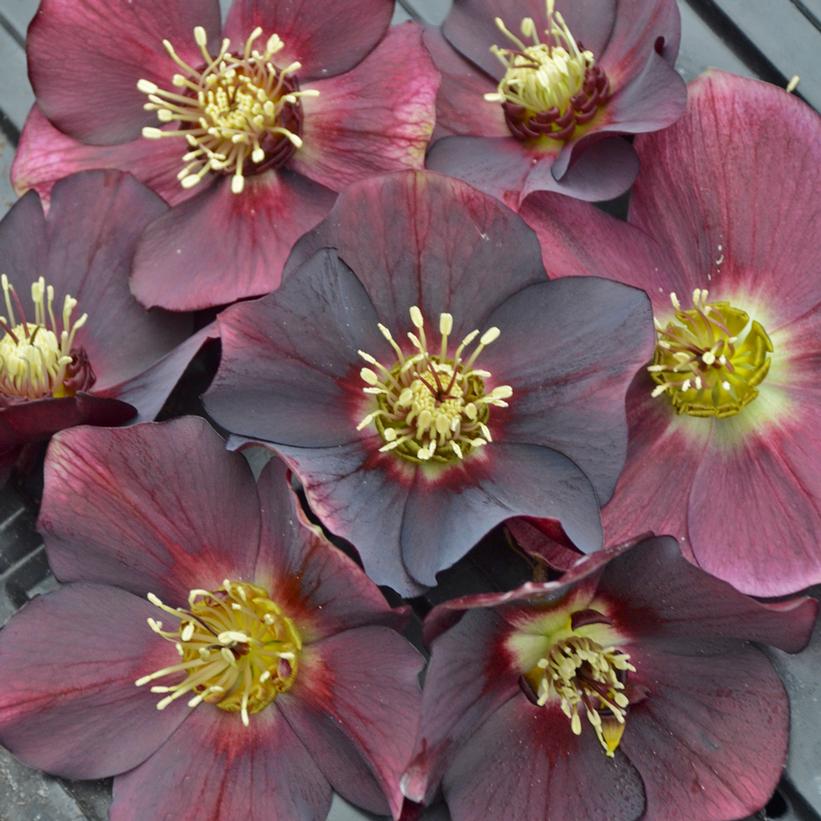
For gardeners who crave colour when winter is reluctant to let go, Helleborus ‘Rome in Red’ is a remarkable perennial. Part of the HONEYMOON Series developed by renowned plant breeder Hans Hansen, this selection is prized for its large, single flowers in deep maroon to wine-red shades that brighten the garden in late winter and early spring.
Unlike many spring-flowering perennials that emerge later in the season, ‘Rome in Red’ often begins blooming while snow is still lingering, making it one of the earliest and most welcome signs of the gardening season.
Origins
The HONEYMOON Series of hybrid hellebores, a breeding program focused on vigor, abundant flowering, and rich flower colours. Developed by Hans Hansen at Walters Gardens, the series features single-flowered selections with improved garden performance and striking colour variations.
The cultivar is derived from complex hybridization within the Helleborus × hybridus group, commonly known as Lenten Roses. While the parent species originate primarily from Europe and parts of western Asia, modern cultivars such as ‘Rome in Red’ have been carefully selected for ornamental garden use.
Description
‘Rome in Red’ produces:
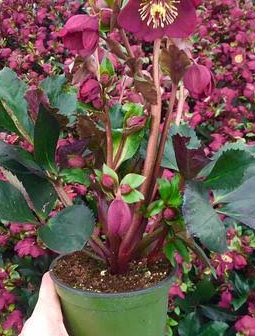
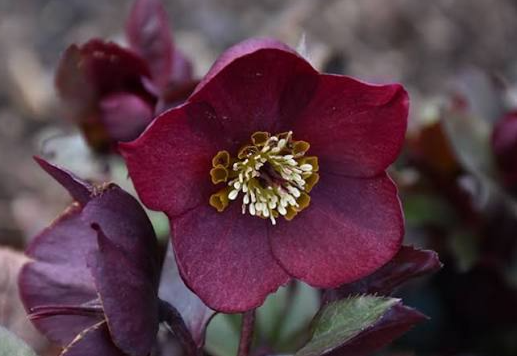
- Large, single flowers measuring 3–4 inches (7–10 cm) across.
- Rich maroon to wine-red blooms with contrasting yellow stamens.
- Glossy, dark green evergreen foliage that remains attractive throughout much of the year.
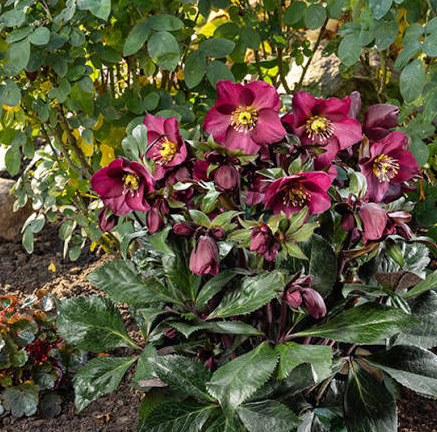
- A mature size of approximately 18–24 inches tall and wide.
The flowers persist for weeks, providing an exceptionally long display when few other perennials are blooming.
Growing Conditions and Care
Light
‘Rome in Red’ performs best in:
- Partial shade
- Dappled woodland shade
- Full shade with seasonal sunlight
It benefits from protection from intense afternoon summer sun.
Soil
For best results, plant in:
- Rich, humus-filled soil
- Well-drained locations
- Neutral to slightly alkaline soil
The plant appreciates consistent moisture but dislikes waterlogged conditions.
Water
Once established, hellebores are surprisingly drought tolerant, but they perform best when the soil remains evenly moist. Avoid allowing the planting area to become excessively dry during summer.
Maintenance
Hellebores are among the easiest perennials to maintain:
- Remove old foliage in late winter before flower stalks emerge.
- Cut spent flower stems after blooming if seeds are not desired.
- Apply compost annually to enrich the soil.
- Mulch lightly to conserve moisture and protect roots.
Landscape Uses
‘Rome in Red’ excels in a variety of landscape settings.
Woodland Gardens
Its natural habitat preference makes it ideal beneath deciduous trees, where it receives winter and spring sunlight before the canopy fills in.
Shade Borders
The deep red flowers provide dramatic contrast against hostas, ferns, epimediums, pulmonarias, and spring bulbs.
Foundation Plantings
Evergreen foliage provides year-round structure, while the early blooms offer seasonal interest close to entryways and windows.
Mass Plantings
Groups of ‘Rome in Red’ create a stunning carpet of colour in early spring and can naturalize slowly over time.
Pollinator Value
One of the greatest virtues of hellebores is their ability to provide nectar and pollen when little else is available. Early-emerging bees and other pollinators frequently visit the flowers during late winter and early spring.
Pests and Diseases
Hellebores have a reputation for being relatively trouble-free.
Common Pests
Occasionally, gardeners may encounter:
- Aphids
- Slugs
- Snails
- Leaf miners
These issues are typically minor and rarely threaten the long-term health of the plant.
Potential Diseases
Although generally healthy, watch for:
- Leaf spot
- Crown rot
- Hellebore black death (a virus spread by aphids)
Good sanitation, removing damaged foliage, and monitoring aphid populations can help prevent serious issues.
Deer and Rabbit Resistance
A significant advantage of ‘Rome in Red’ is its resistance to browsing. Deer and rabbits usually avoid hellebores because the plants contain naturally toxic compounds.
A Word of Caution
All parts of hellebores are considered toxic if ingested and may cause skin irritation in sensitive individuals. Wear gloves when handling the plants and keep them away from pets and children who may be tempted to chew the foliage.
Final Thoughts
With its luxurious wine-red blooms, evergreen foliage, exceptional hardiness, and low-maintenance nature, Helleborus ‘Rome in Red’ is one of the finest shade-garden perennials available today. It provides colour at a time when gardeners need it most and continues to add texture and structure throughout the year. Whether planted beneath trees, in woodland borders, or as a feature near a garden path, this cultivar is a sophisticated and reliable addition to the landscape.