Hydrangea paniculata ‘Bobo’ (ILVOBO) is proof that great things come in small packages. This award-winning panicle hydrangea has become a favourite among homeowners, landscapers, and garden designers because it combines compact growth with an astonishing display of flowers. If you are looking for a low-maintenance flowering shrub that performs reliably in Ontario and across much of North America, Bobo deserves a spot on your shortlist.
The Origins of Bobo Hydrangea
Bobo Hydrangea (Hydrangea paniculata ‘ILVOBO’) was developed in Belgium through a controlled breeding program conducted at the ILVO research station in Melle. The cultivar originated from an open-pollinated cross involving the popular cultivar ‘Pink Diamond’ and an unknown pollen parent. Plant breeder Dr. Johan Van Huylenbroeck selected the plant for its exceptionally compact habit, strong stems, and prolific flowering.
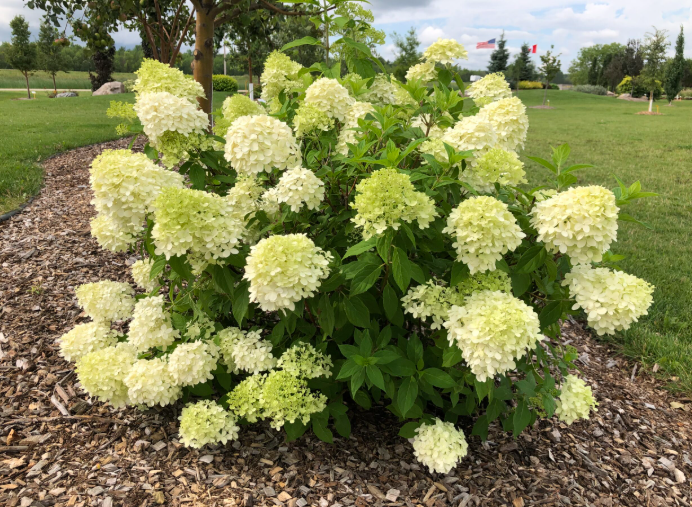
The cultivar quickly gained international attention and earned awards for its novelty and garden performance. Unlike many older panicle hydrangeas that can grow 8 to 15 feet tall, Bobo remains a manageable 2½ to 3 feet tall and 3 to 4 feet wide.
Why We Love Bobo
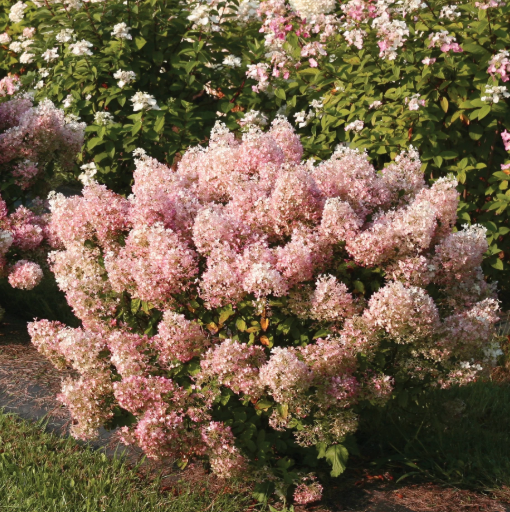
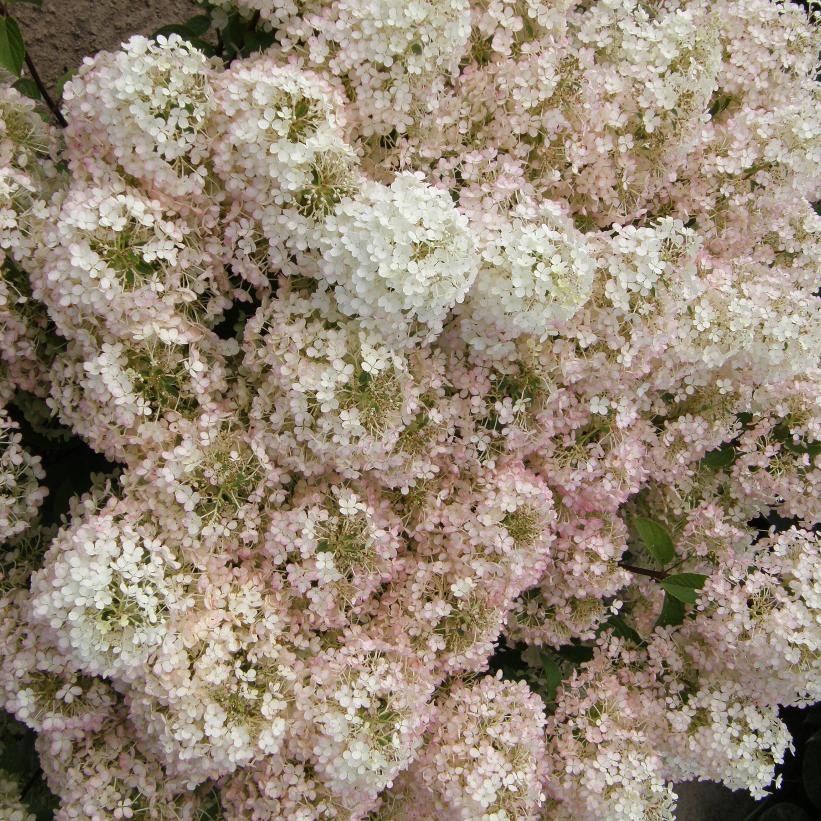
The biggest selling feature of Bobo is its flower power. Beginning in early to mid-summer, the shrub becomes covered in large conical flower panicles that can nearly conceal the foliage beneath. The blooms emerge creamy white and gradually develop soft pink and blush-purple tones as autumn approaches.
Strong, sturdy stems keep the flower heads upright, preventing the flopping often associated with larger hydrangea varieties. The result is a neat, tidy, and highly ornamental shrub that performs beautifully throughout the growing season.
Landscape Uses for Bobo Hydrangea
Because of its compact size, Bobo is one of the most versatile hydrangeas available.
Foundation Plantings
Its dwarf habit makes it ideal for planting along the front of homes, where it won’t outgrow windows or require constant pruning.
Mixed Shrub Borders
Bobo blends beautifully with spirea, ninebark, boxwood, ornamental grasses, and flowering perennials.
Mass Plantings
Planting several Bobo hydrangeas together creates a spectacular blanket of white flowers in summer and pink hues in fall.
Containers
Unlike many panicle hydrangeas, Bobo performs exceptionally well in large patio containers, providing season-long colour for decks and outdoor living spaces.
Pollinator Gardens
Although the showy flowers are primarily sterile, pollinators still visit the fertile flowers within the panicles, adding ecological value to the landscape.
Small Urban Gardens
For homeowners with limited space, Bobo offers all the beauty of a hydrangea without overwhelming the garden.
Growing and Caring for Bobo Hydrangea
Sunlight
Bobo performs best in full sun to partial shade. In hotter climates, some afternoon shade can help reduce plant stress, while in Ontario it generally flowers best with at least six hours of sunlight daily.
Soil
Like most panicle hydrangeas, Bobo prefers well-drained soil enriched with organic matter. Unlike bigleaf hydrangeas, flower colour is not affected by soil pH.
Watering
Maintain consistent soil moisture, especially during the first growing season. Once established, Bobo is relatively tolerant of short dry periods, but it produces the best blooms when watered during extended droughts.
Fertilizing
Apply a balanced slow-release shrub fertilizer in early spring. Avoid excessive nitrogen, which can encourage foliage growth at the expense of flowers.
Pruning
One of the easiest hydrangeas to prune, Bobo flowers on new wood. Prune in late winter or early spring before new growth begins. Removing about one-third of the previous year’s growth helps maintain a compact shape and encourages vigorous flowering.
Winter Hardiness
Bobo is remarkably cold-hardy, thriving in USDA Zones 3 through 8 or 9. Its flower buds form on current-season growth, meaning winter injury rarely affects flowering performance.
Potential Pests and Diseases
Bobo is generally considered a trouble-free shrub, but like all hydrangeas, it can occasionally encounter issues.
Aphids
These small sap-sucking insects may appear on new growth. They are easily managed with beneficial insects, water sprays, or insecticidal soap.
Powdery Mildew
Poor air circulation and humid weather can sometimes lead to powdery mildew. Proper spacing and pruning help reduce disease pressure.
Leaf Spot
Various fungal leaf spots may occur during wet weather. Cleaning up fallen leaves and avoiding overhead irrigation can help minimize problems.
Bud Blight and Wilt
These issues are relatively uncommon but can appear during prolonged periods of environmental stress or poor drainage.
Deer Damage
While not a preferred food source, deer may browse hydrangeas when food sources are scarce.
Final Thoughts
If you’re searching for a compact flowering shrub that delivers exceptional performance, Bobo Hydrangea is hard to beat. Its manageable size, massive blooms, long flowering season, strong stems, and cold hardiness make it one of the finest dwarf hydrangeas available today. Whether planted in a foundation bed, mixed border, container, or mass planting, Bobo offers reliable beauty with surprisingly little maintenance.