
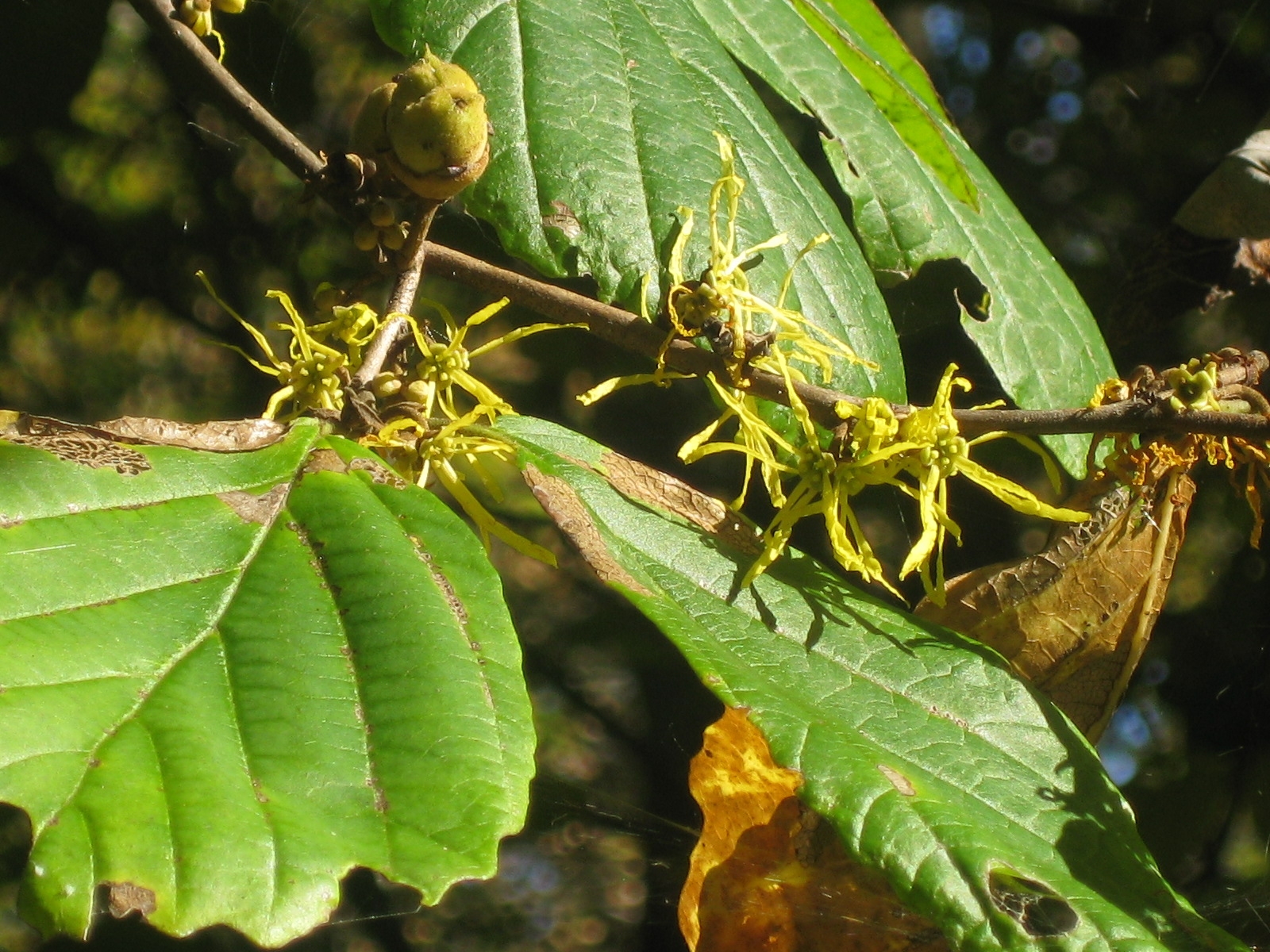
Hamamelis virginiana and the Fascinating World of Witch-Hazels
History and Origins
Hamamelis virginiana, commonly known as American witch-hazel, is native to eastern North America, ranging from Nova Scotia to Florida and west to Texas. The genus Hamamelis includes several species found in North America and Asia, with notable varieties like Hamamelis japonica and Hamamelis mollis originating from Japan and China. The name “Hamamelis” comes from Greek roots meaning “together with fruit,” referring to its unique habit of blooming while old fruit from the previous season is still on the plant.
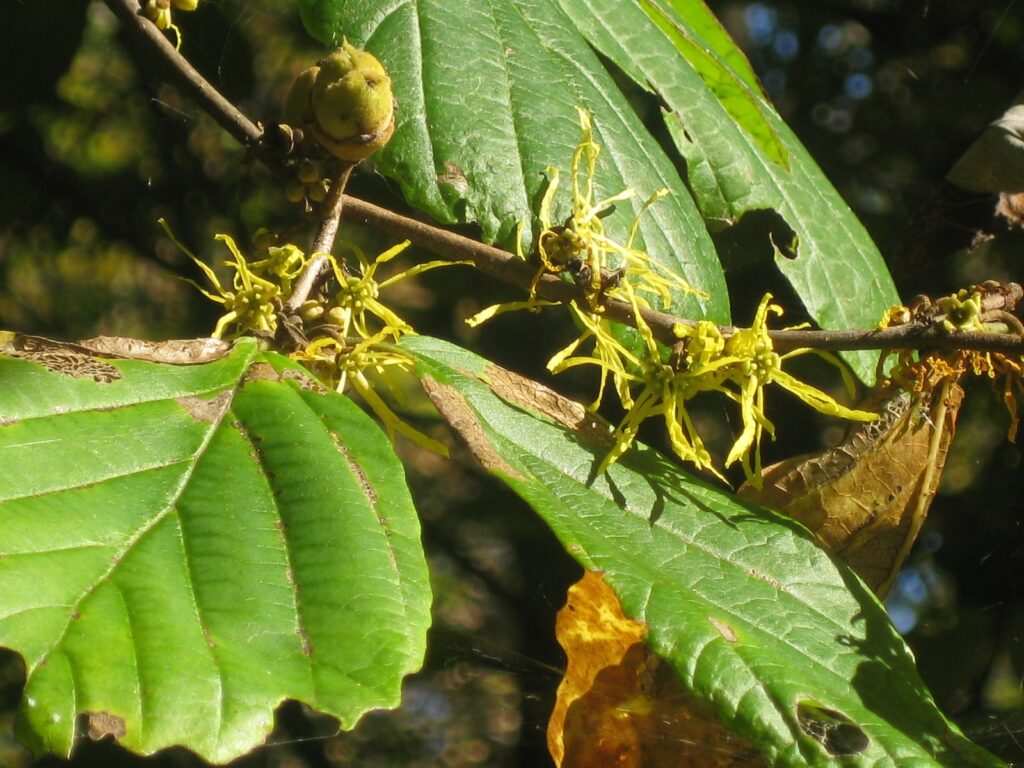
Hamamelis × intermedia: The Hybrid Witch-Hazel
Origin
Hamamelis × intermedia is a hybrid species created by crossing Hamamelis japonica (Japanese witch-hazel) and Hamamelis mollis (Chinese witch-hazel). This hybrid was developed in Europe in the early 20th century to combine the best traits of both parents—hardiness, vibrant winter flowers, and strong fragrance.
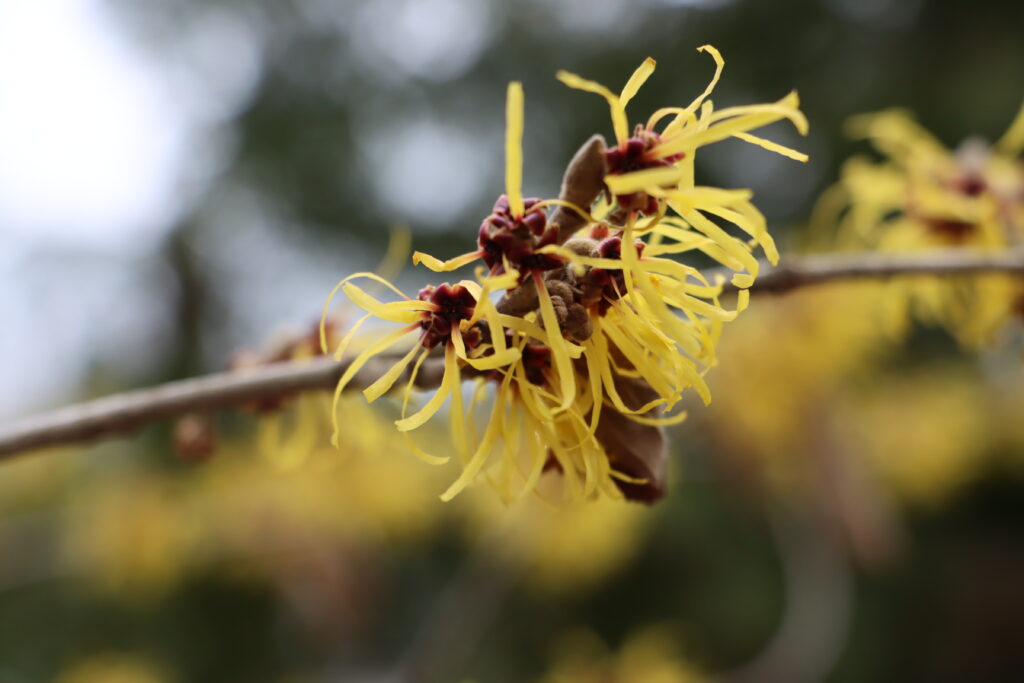
Key Features
- Bloom Time: Late winter to early spring (often January–March), providing colour when few other plants bloom.
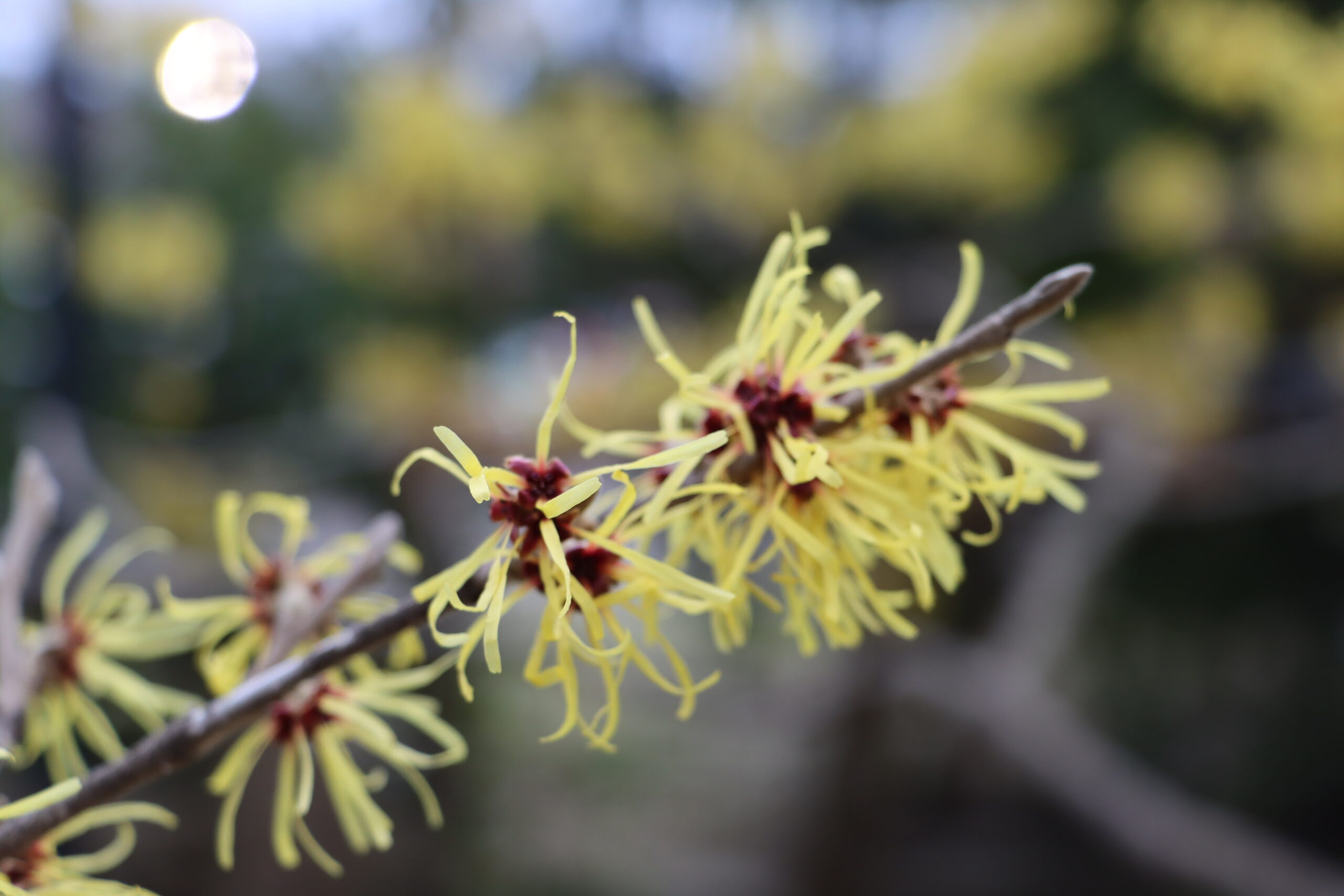
- Flowers: Spidery petals in shades of yellow, orange, or red, depending on the cultivar.
- Fragrance: Many cultivars are highly fragrant, adding sensory appeal to winter gardens.
- Foliage: Attractive green leaves that turn brilliant yellow, orange, or red in autumn.
Popular Cultivars
- ‘Arnold Promise’ – Bright yellow flowers, strong fragrance, very hardy.
- ‘Diane’ – Coppery-red flowers, excellent for adding warm tones.
- ‘Jelena’ – Orange flowers, striking in winter landscapes.
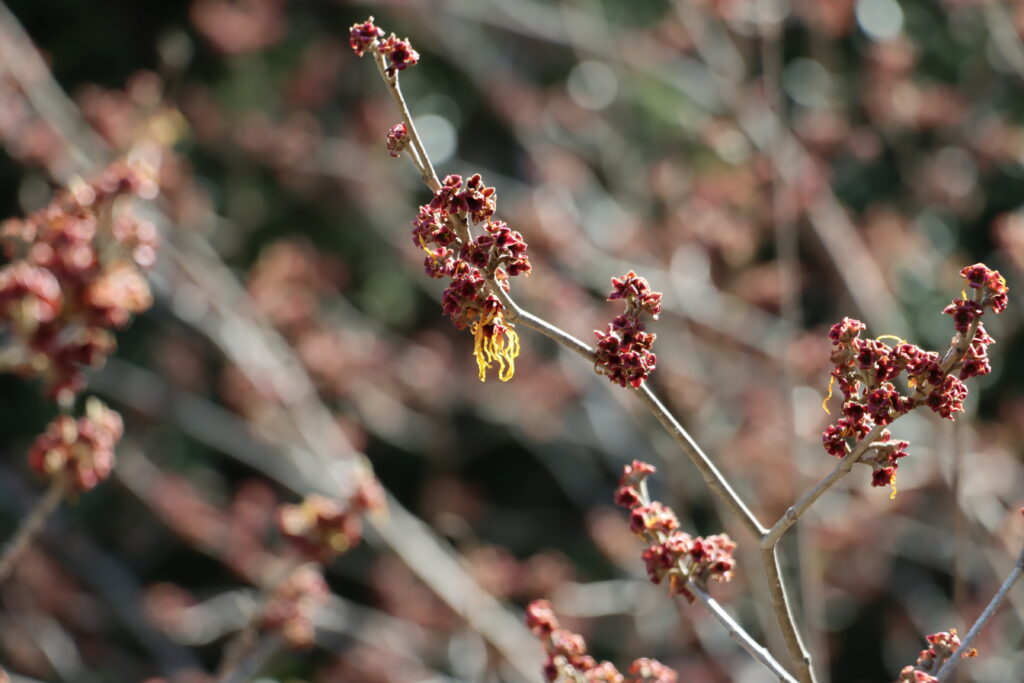
Hamamelis virginiana vs. Hamamelis × intermedia
| Feature | Hamamelis virginiana (Witch-Hazel) | Hamamelis × intermedia (Hybrid Witch-Hazel) |
| Origin | Native to Eastern North America | Hybrid of H. japonica (Japan) & H. mollis (China) |
| Bloom Time | Late fall (October–December) | Late winter to early spring (January–March) |
| Flower Colour | Yellow | Yellow, orange, or red (varies by cultivar) |
| Fragrance | Mild | Often strong and sweet |
| Fall Foliage | Yellow | Brilliant yellow, orange, or red |
| Growth Habit | Large shrub or small tree (10–20 ft) | Medium shrub (8–15 ft) |
| Hardiness | Very hardy (Zones 3–8) | Hardy (Zones 5–8) |
| Uses | Native plantings, woodland gardens, medicinal | Ornamental winter interest, fragrance, color |
| Special Notes | Historic medicinal uses; blooms when leaves drop | Cultivars offer diverse colors and strong fragrance |
Which One Should You Choose?
- Hamamelis virginiana is ideal for naturalized landscapes, native gardens, and those who appreciate its historic medicinal role.
- Hamamelis × intermedia shines in ornamental gardens, offering fragrance and vibrant winter color when few other plants bloom.
Historical Uses
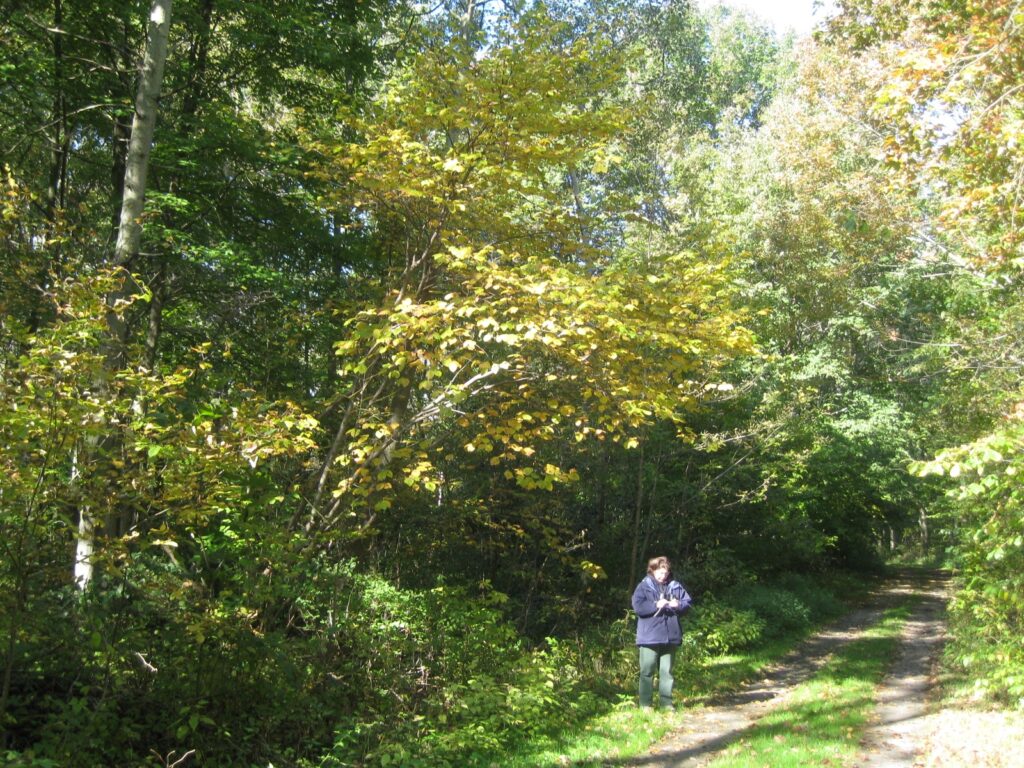
Indigenous peoples of North America were the first to use witch-hazel medicinally. They boiled the bark and leaves to create a strong herbal tea called a decoction for treating inflammation, skin irritations, and minor wounds. Later, European settlers adopted these practices, and witch-hazel extract became a staple in herbal medicine. Today, witch-hazel is widely used in skincare products for its astringent and soothing properties.
Care and Cultivation
Hamamelis species are prized for their late-fall or winter blooms, which bring colour when most plants are dormant. Here are some care tips:
- Light: Prefers full sun to partial shade for best flowering.
- Soil: Moist, well-drained, slightly acidic soil is ideal.
- Watering: Regular watering during dry spells, especially in the first few years.
- Pruning: Minimal pruning—just remove dead or crossing branches after flowering.
- Fertilization: A balanced, slow-release fertilizer, or topdressing of compost, in early spring can boost growth.
Why Grow Hamamelis?
Aside from its ornamental value, witch-hazel offers ecological benefits by providing nectar for pollinators during cooler months. Its fragrant, spidery flowers and vibrant fall foliage make it a standout in any garden.
Why Grow Hamamelis × intermedia?
This hybrid is beloved for its winter interest, fragrance, and vibrant fall foliage. It’s perfect for gardeners seeking year-round beauty and pollinator support during the lean months.
Care Tips
- Light: Full sun to partial shade for best flowering.
- Soil: Moist, well-drained, slightly acidic soil.
- Water: Regular watering during dry periods, especially when young.
- Pruning: Light pruning after flowering to maintain shape.
💡 We’d love your input!
Do you grow Hamamelis? Have tips, stories, or favorite cultivars? Share your thoughts at matt@verdantlandscaping.ca or call 905-299-9403. Your insights could be featured in a future post!
You may also may want to check out our post on winter interest in the garden.


1 thought on “Witch-Hazel Showdown: Hamamelis virginiana vs. Hamamelis × intermedia”
Comments are closed.