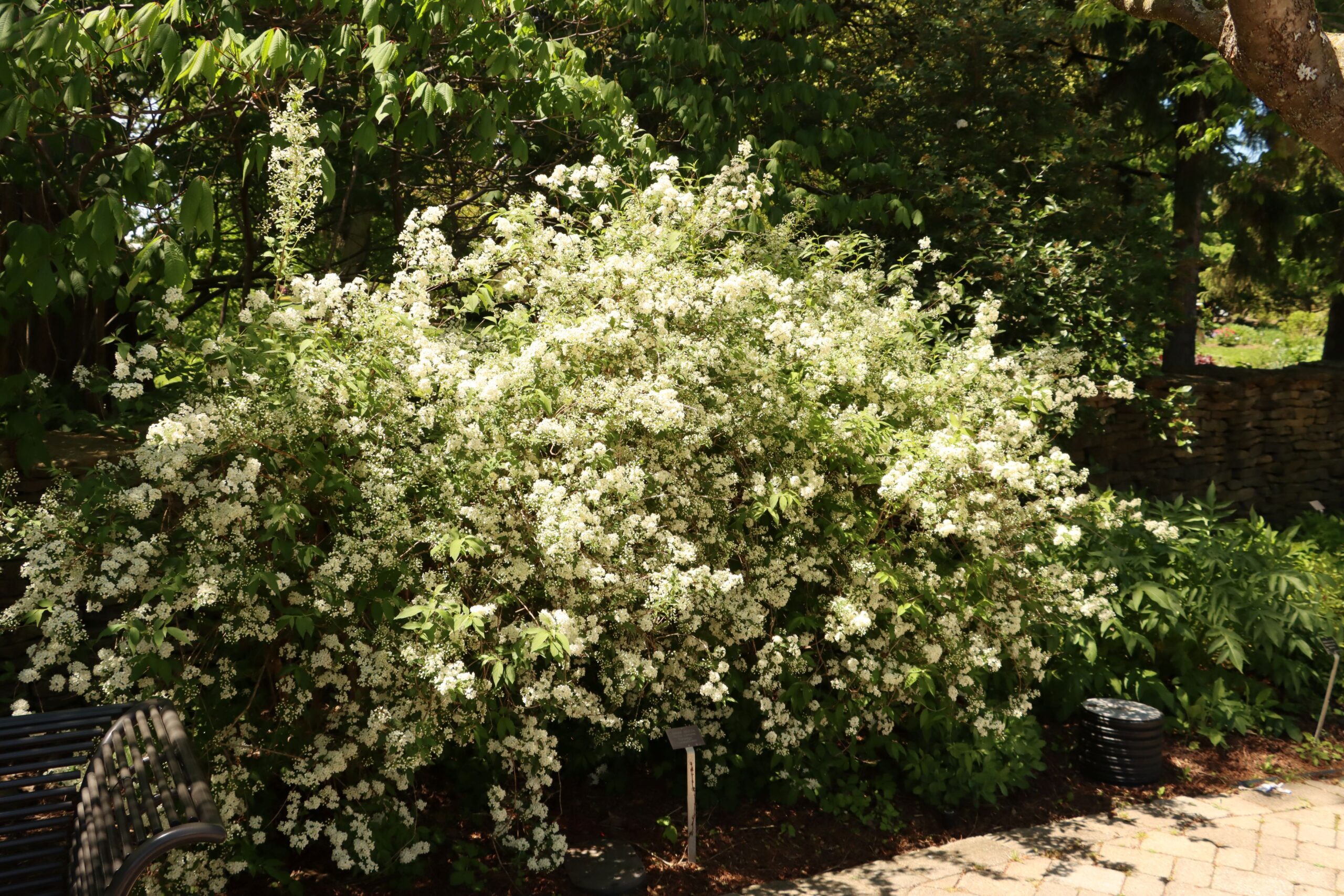
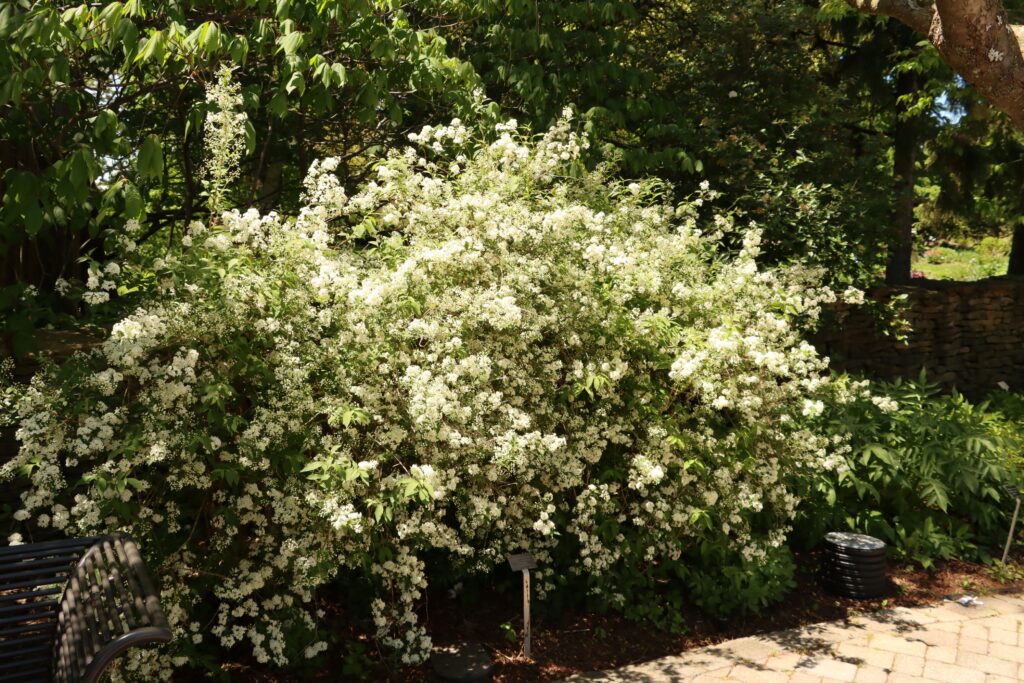
If you’re looking for a reliable, compact, and truly eye-catching spring shrub, Deutzia x lemoinei ‘Compacta’ quietly outperforms flashier plants. In late spring, it becomes a cloud of crisp white flowers—often covering the plant so thoroughly that foliage nearly disappears. This dense, mounded shrub (typically 3–4 ft tall and wide) is hardy to Zone 4, making it a dependable performer across much of Ontario.
🌿 Landscape Uses in Ontario
Here’s where ‘Compacta’ shines in real-world garden design:
- Low Informal Hedges & Edging
Its dense, rounded habit makes it perfect for small hedges or defining garden rooms without becoming overpowering.
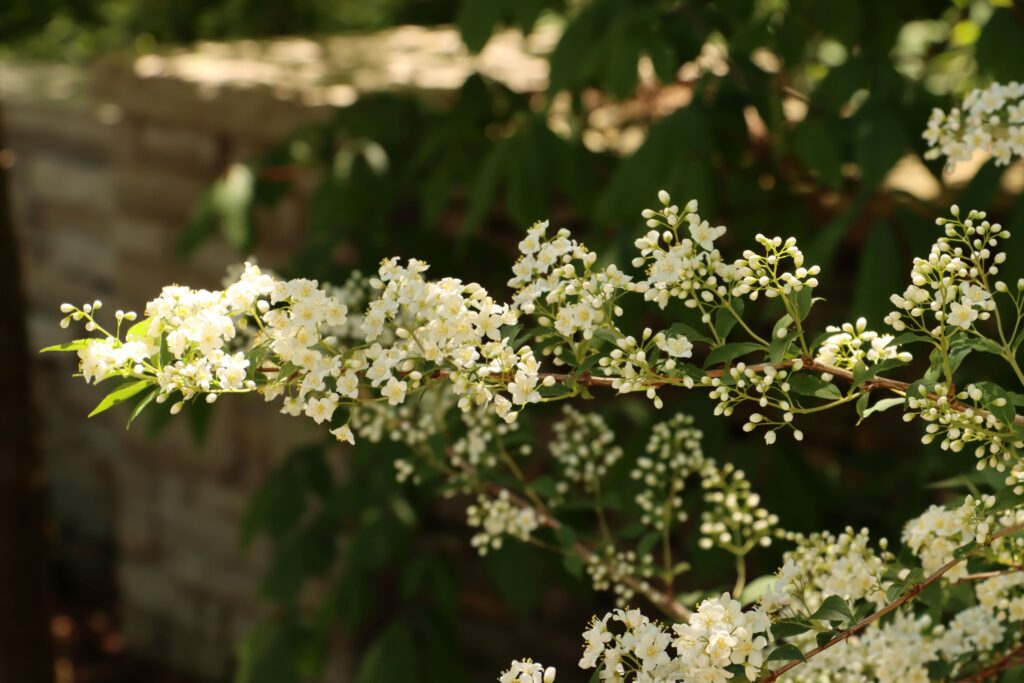
- Mass Plantings
Planted in groups, the spring bloom becomes a dramatic blanket of white, ideal for commercial landscapes, subdivisions, or municipal plantings where low maintenance is critical.
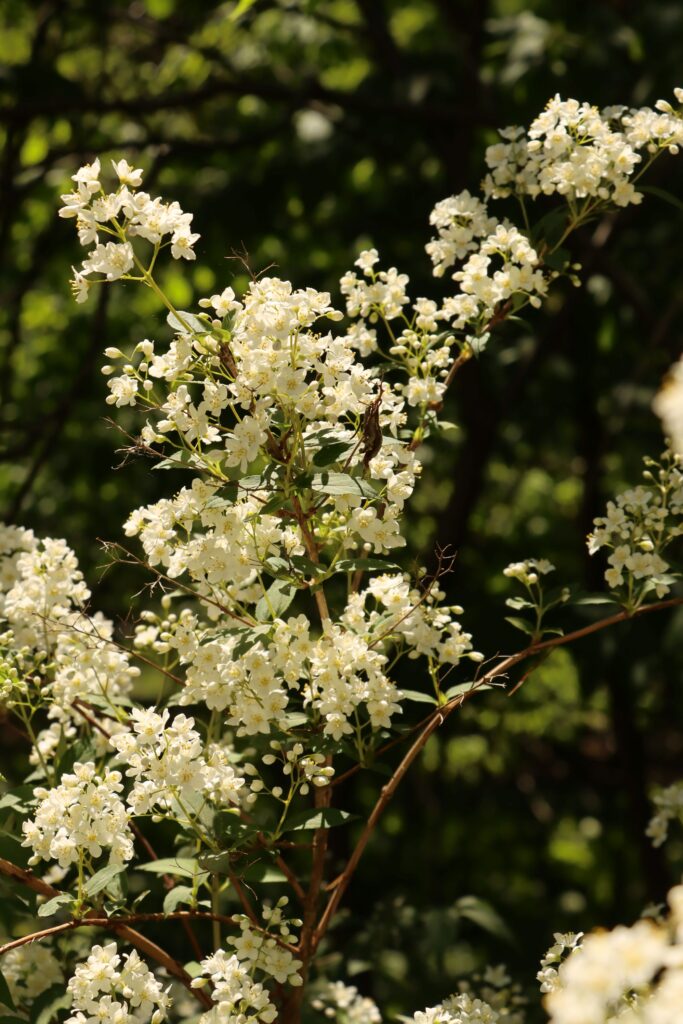
- Foundation Planting
Its compact size fits neatly under windows without constant pruning—something Ontario homeowners appreciate..
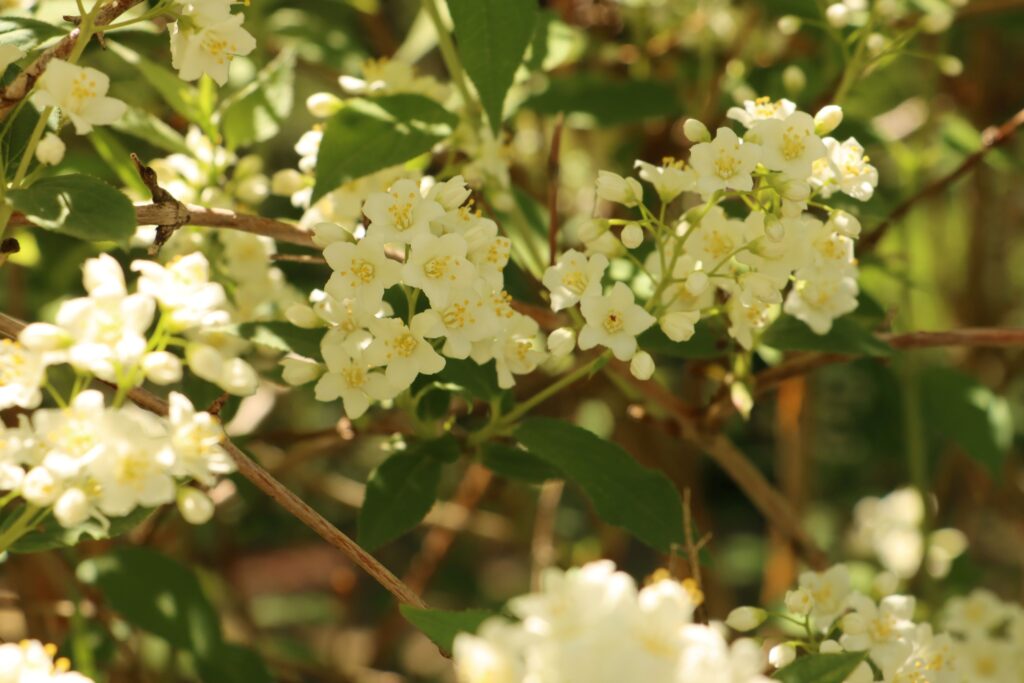
- Mixed Shrub Borders
Works beautifully alongside spirea, weigela, or dwarf ninebark, adding fine texture and a clean white contrast.
- Urban & Roadside Applications
Highly tolerant of pollution and even some salt, making it well-suited for streetscapes and urban infill projects.
- Pollinator-Friendly Gardens
While not the top nectar plant, the spring bloom still attracts butterflies and beneficial insects, adding ecological value.
- Slopes & Problem Areas
Deutzia’s root system can help with erosion control, especially on sunny slopes.
⚠️ Pests, Problems & Drawbacks
Despite its many strengths, ‘Compacta’ isn’t flawless:
Common Pests
- Aphids – distort new growth and produce sticky honeydew
- Spider mites – cause leaf bronzing in hot, dry conditions
- Scale insects – attach to stems and weaken vigor
Diseases
- Generally trouble-free, but can occasionally get:
- Leaf spot
- Powdery mildew in humid or poorly ventilated sites
Cultural/Design Limitations
- Can look leggy or unkempt without renewal pruning
- Blooms on old wood—incorrect pruning timing = no flowers the following year
- Limited fall colour—not a four-season standout compared to some shrubs
- Short bloom window—spectacular, but brief
- Moderate maintenance if you want to keep that tight, refined shape
Environmental Stress
- Poor drainage can lead to root rot
- Drought stress may reduce flowering and vigor
🌟 Why It’s Still a Standout
Despite minor drawbacks, ‘Compacta’ hits a rare sweet spot:
- ✅ Extremely hardy for Ontario (Zone 4+)
- ✅ Compact, manageable size for residential design
- ✅ Massive floral impact in spring
- ✅ Adaptable to soils, urban conditions, and sun exposure
- ✅ Generally low pest pressure compared to many flowering shrubs
For designers and contractors, it’s a high-impact, low-risk plant—especially where space, durability, and spring appeal matter.