When homeowners, landscapers, and horticulture technicians search for reliable evergreen trees for the Ontario landscape, one species that consistently deserves more attention is Pseudotsuga menziesii, commonly known as Douglas‑fir. While the coastal form is iconic in the Pacific Northwest it truly excels in Ontario’s climate. With its soft needles, elegant form, and four‑season visual appeal, Douglas‑fir is an outstanding choice for both residential and commercial landscapes across the province.
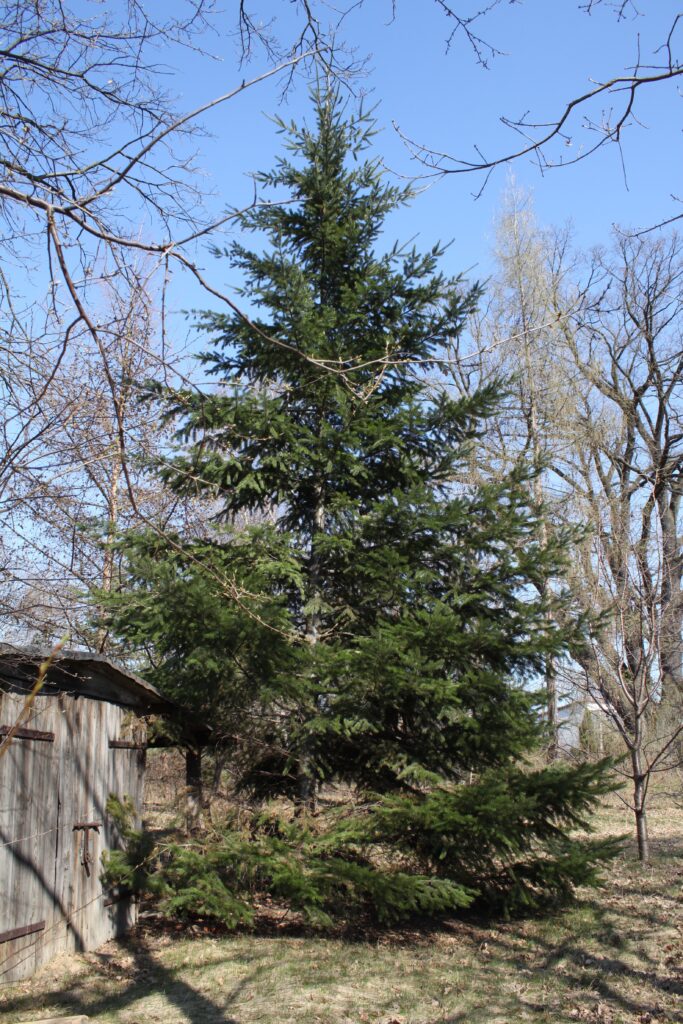
What Makes Pseudotsuga menziesii Ideal for the Ontario landscape?
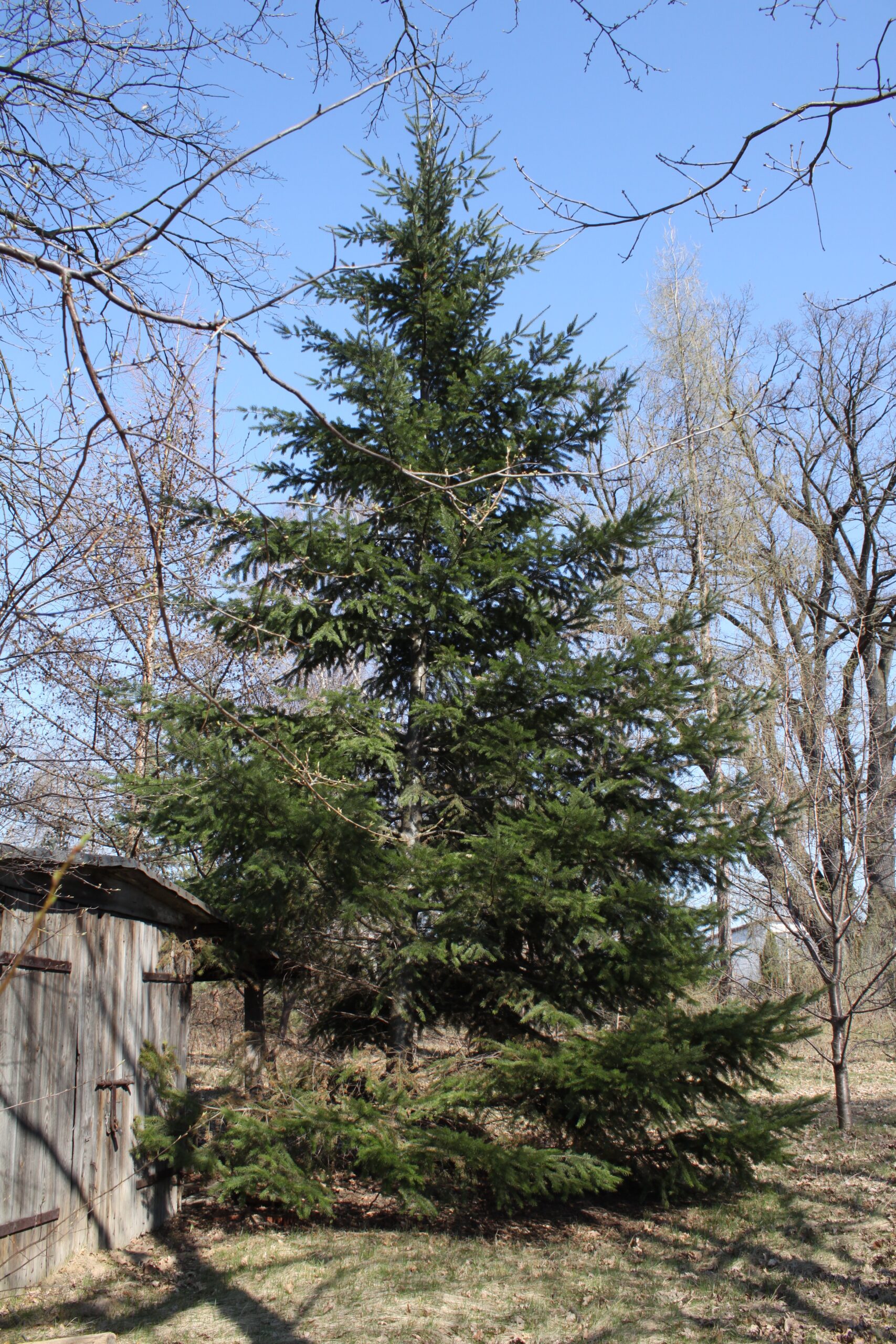
Although Pseudotsuga menziesii is native to the west coast, the glauca variety has evolved to handle harsher winters, drier conditions, and temperature fluctuations—making it a strong performer in Southern Ontario, Eastern Ontario, and even parts of Cottage Country.
Key advantages for Ontario landscapes:
- Excellent cold hardiness
- Strong drought tolerance once established
- Beautiful soft needles in bluish‑green tones
- Naturally symmetrical, pyramidal growth habit
- Strong landscape presence without looking rigid or formal
For homeowners and designers seeking alternatives to spruce or pine, Rocky Mountain Douglas‑fir provides a softer, more graceful texture that stands out year‑round.
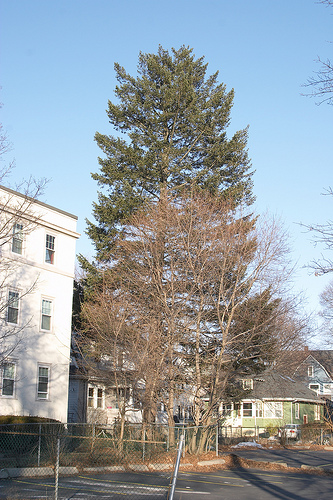
Best Uses for Douglas‑fir in Residential and Commercial Landscapes
- Signature Specimen Tree
Douglas‑fir makes an exceptional focal point in large residential yards, estate properties, and rural landscapes. Its evergreen presence brings height, softness, and architectural form.
- Evergreen Privacy Screen or Windbreak
Because the tree retains its needles densely along the branches, it performs well as:
- A privacy hedge alternative for large properties
- A naturalized windbreak along driveways or open fields
- A screening tree in mixed evergreen groupings
- Naturalized Landscapes and Cottage Settings
Douglas‑fir fits beautifully into:
- Naturalized plantings
- Reforestation plantings
- Cottage and woodland landscapes
- Mixed conifer groupings with pine, fir, and spruce
The soft texture and gentle branching create a natural forest aesthetic.
- Urban and Suburban Landscapes
When planted in well‑drained soil and full sun, Douglas‑fir adapts surprisingly well to:
- Larger suburban backyards
- Commercial properties
- Public greenspaces
- Parks and campus landscapes
Soil, Light, and Site Requirements
For success in Ontario, ensure:
- Full sun (6+ hours daily)
- Well‑drained soil — Douglas‑fir does not tolerate standing water
- Slightly acidic soil preferred
- Space for mature size (40–80 ft depending on site and provenance)
With the right siting, Pseudotsuga menziesii is long‑lived, durable, and relatively low‑maintenance.
Pests and Diseases Affecting Douglas‑fir in Ontario
While generally resilient, Douglas‑fir can experience several issues—many linked to stress or improper siting.
Common pests:
- Douglas‑fir Needle Moth / Needle Miner – causes banding or browning on needles
- Spruce Budworm – occasional defoliation during regional outbreaks
Common diseases:
- Swiss Needle Cast – fungal disease causing premature needle shed
- Cytospora Canker – often related to drought stress or mechanical injury
- Root rot (in poorly drained soils) — avoid heavy clay and wet areas
Healthy trees in well‑draining sites experience far fewer problems.
Fun Trivia: Why Douglas‑fir Isn’t Actually a Fir
Despite its name, the Douglas‑fir is not a true fir (Abies). It belongs to its own unique genus, Pseudotsuga, meaning:
“False hemlock”
Where the name came from
- Archibald Menzies, a Scottish botanist, was the first to describe the species — thus, menziesii.
- David Douglas, a 19th‑century Scottish plant collector, popularized the tree in horticulture and forestry. His extensive fieldwork led to the widespread use of his name: Douglas‑fir.
Cone legend
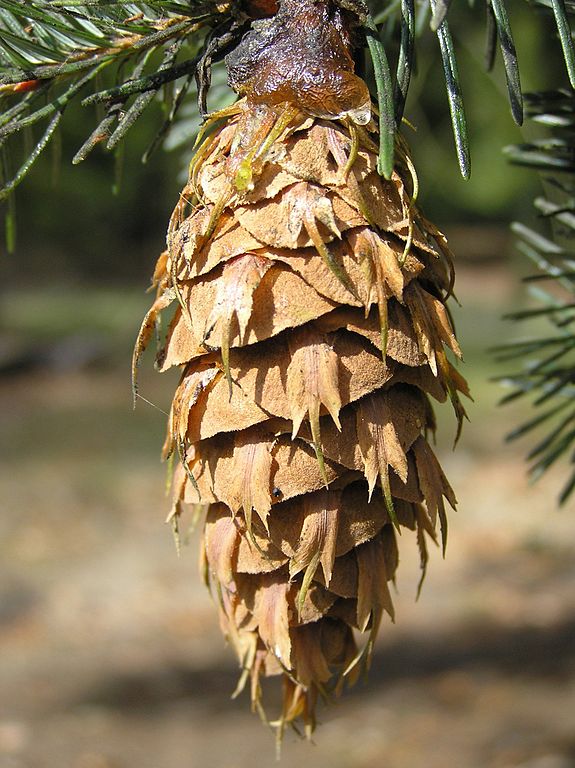
The cones have distinctive three‑pronged bracts that look like little mouse tails and feet. Indigenous stories say mice hid in the cones during forest fires, giving the tree its unique and charming cone structure.
Final Thoughts
Whether you’re a homeowner seeking a reliable evergreen, a landscape designer looking for a graceful alternative to spruce, or a horticulture technician choosing the right conifer for the Ontario climate, Pseudotsuga menziesii is an exceptional choice. Its beauty, adaptability, and long lifespan make it one of the most underused yet valuable conifers available in Ontario.
Have you planted Douglas‑fir in your landscape? What results have you seen? I’d love to hear your experiences and thoughts in the comments.