Although Pinus nigra (Austrian pine) is widely planted across Canada, especially in Ontario, it’s not without issues. I’ve never been its biggest fan, but there’s no denying its usefulness in challenging Canadian landscapes where few conifers tolerate urban stress, road salt, or poor soils.
Below is a fresh, Canadian‑context overview of its origins, hardiness, landscape performance, and known issues.
Origins and Distribution
Pinus nigra is not native to Canada. It originates from a broad range across Southern and Central Europe, including Austria, Spain, France, Italy, the Balkans, Greece, Cyprus, Turkey, and parts of North Africa.
In Canada, Austrian pine is strictly an introduced ornamental species, planted in parks, windbreaks, commercial landscapes, and private properties — and typically not found in the wild.
A study on its Ontario presence shows that although it can reproduce from roadside plantings, it does not significantly invade natural habitats or outcompete native species. It has been observed spreading at 24 localities in eastern southern Ontario. Not a good thing.
Canadian Hardiness Zones
According to Tree Canada, Pinus nigra is hardy to zone 4a.
Natural Resources Canada also tracks its present and projected distribution as part of the Canadian Plant Hardiness System, confirming it as an established introduced species.
This hardiness range explains why the species appears commonly across Southern Ontario, including the Greater Toronto Area, the Golden Horseshoe, and Ottawa Valley plantings.
Identification and Characteristics
Canadian field guides and provincial resources describe Pinus nigra as follows:
- Height in Canada: commonly 13–20 m, though sometimes larger.
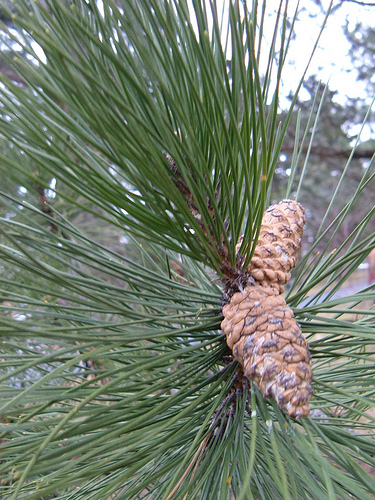
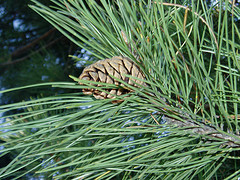
- Needles: two per bundle, long (8–12 cm), stiff, sharp; similar to red pine but less brittle.
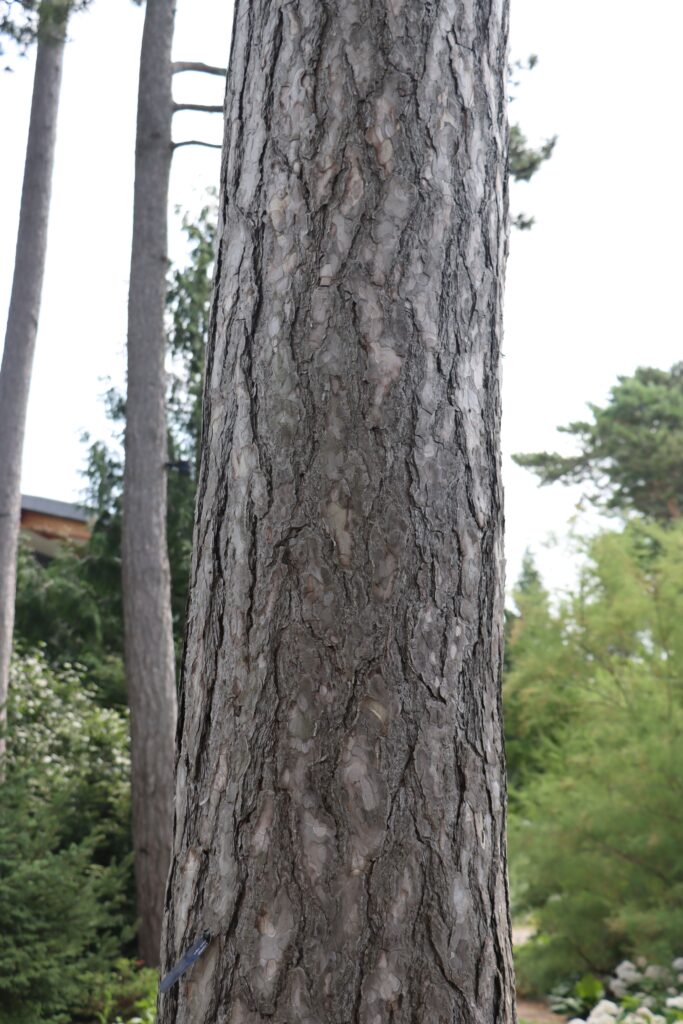
- Bark: flaky and dark brown to black.
- Cones: ovoid, 4–8 cm.
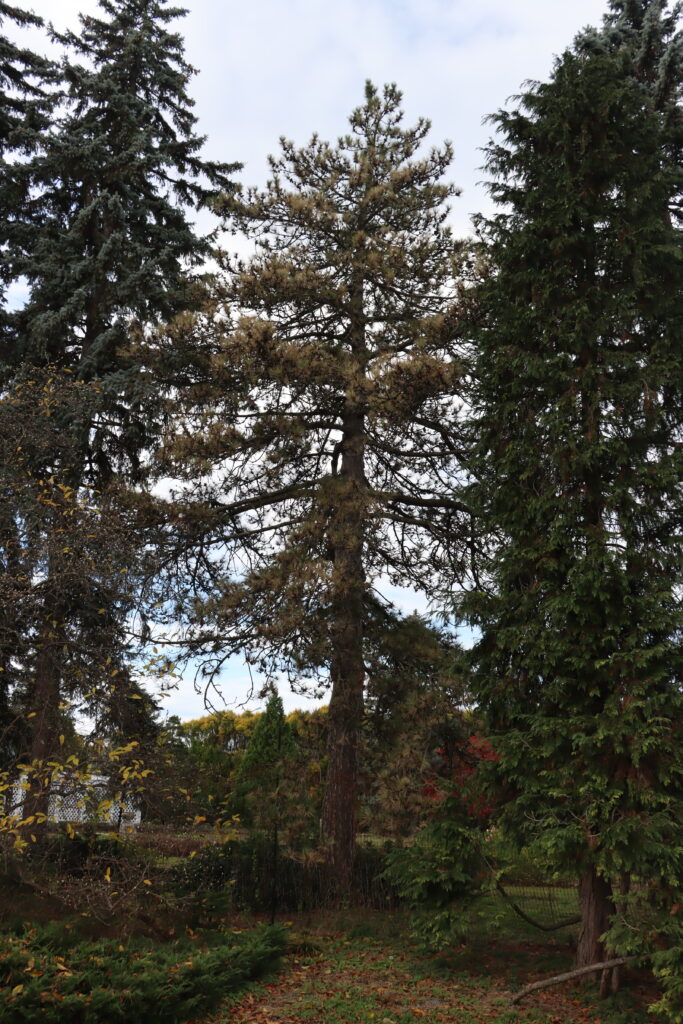
- Form: dense, conical when young; broad and somewhat irregular with age.
These traits make it recognizable across Ontario landscapes, especially in parks and older institutional plantings.
Care Requirements
Its care requirements in Canadian landscapes are well understood:
Light & Soil
- Prefers full sun.
- Best in deep, moist, well‑drained soil, but handles a range of urban and compacted soils.
Drought & Urban Tolerance
- Noted for tolerating road salt, pollution, and urban stress — one of the main reasons it is used by municipalities despite disease issues.
Pests and Diseases
Here’s where Pinus nigra becomes problematic — and why many Ontario municipalities are now phasing it out.
Major Diseases in Ontario
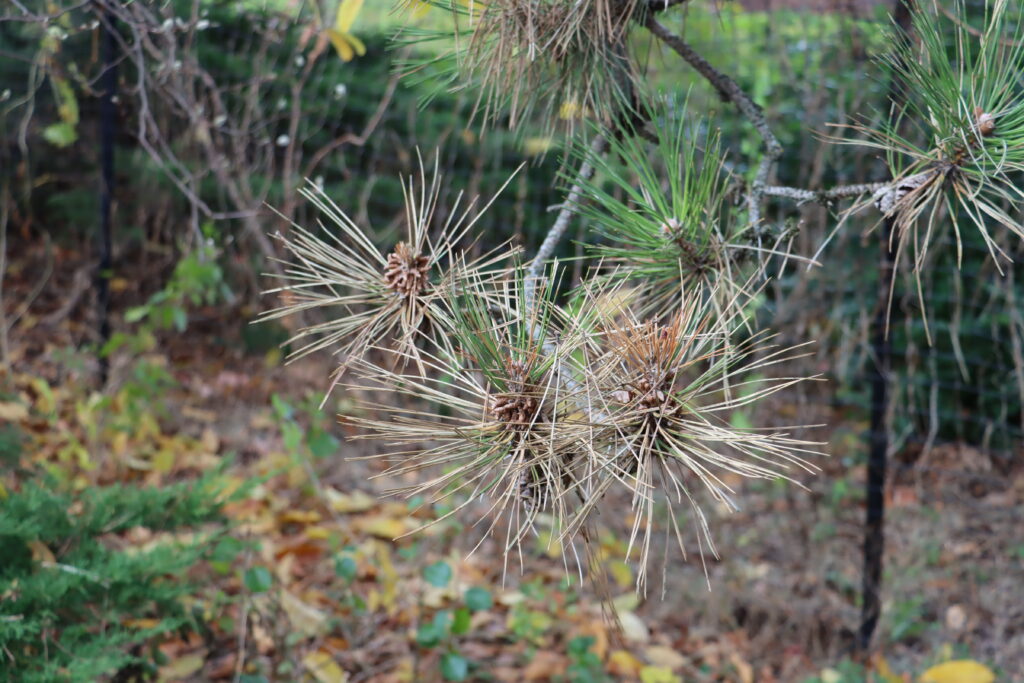
- Diplodia (Sphaeropsis) tip blight
- Dothistroma needle blight
Both are widespread in Ontario due to humidity and summer rainfall patterns. Mature Austrian pines (older than ~15–20 years) frequently decline from these diseases.
Common Insect Problems
- Pine sawfly larvae
- Pine needle scale
- Zimmerman pine moth
- Aphids, adelgids, needle miners, spittlebugs
While pine wilt nematode is rare in Ontario, it remains a potential threat.
Naturalization Risk?
Ontario research confirms the species is spreading slightly, but not aggressively and does not significantly displace native species.
This is important because it distinguishes Austrian pine from Scots pine, which is much more invasive in Ontario.
Should You Plant It?
From a Canadian horticultural and ecological perspective:
Pros
- Excellent cold hardiness across Southern Ontario
- Strong salt, drought, and pollution tolerance
- Fast establishment
- Performs where other pines fail
Cons
- Serious susceptibility to Diplodia tip blight in Ontario’s climate
- Shorter effective lifespan in Canadian urban landscapes
- Aesthetic decline with age
- Better conifer alternatives now available (e.g., Pinus flexilis, Picea omorika, Pinus strobus in appropriate conditions)
In other words: it’s functional, not elegant — a workhorse, not a showpiece.
What Do YOU Think?
Do you grow Austrian pine on your property? Have you removed declining specimens? Are you fighting tip blight?
I’d love to hear your questions, comments, or experiences — especially your perspective from right here in Canada. Your insight helps other Canadian gardeners make better planting decisions.