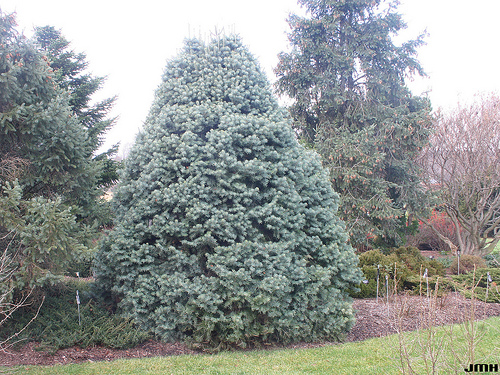
Abies concolor, White Fir, is an increasingly appreciated choice for Canadian landscapes—particularly in Ontario—thanks to its soft blue‑green needles, citrus fragrance (smells amazing), and excellent adaptability among true firs. While not native to Canada, it offers a striking alternative to commonly planted spruces and pines, especially where homeowners or designers want an evergreen with softer texture and strong year‑round colour.
Why Abies concolor Works in Ontario Landscapes
Although this species originates in the mountainous western U.S., it has proven to be one of the most adaptable firs for our climate. It is considered the most heat‑ and drought‑tolerant of the firs, once established and is also recognized as the fir species that tolerates our climate conditions best.
Landscape Appeal
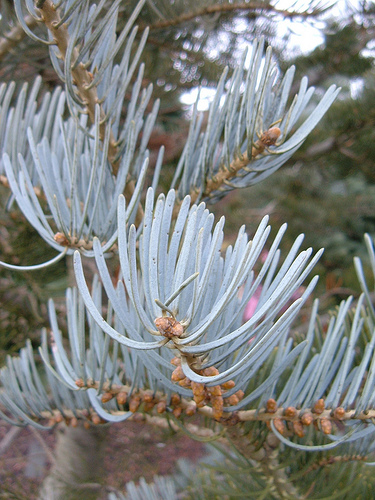
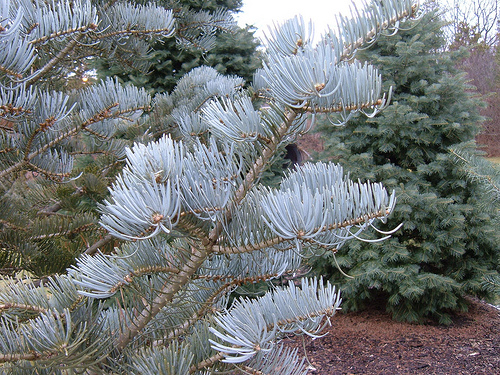
- Soft, blue‑green to silvery foliage that contrasts beautifully against spruces and pines. Needle length: up to 7 cm.
- Pleasant citrus scent when needles are crushed.
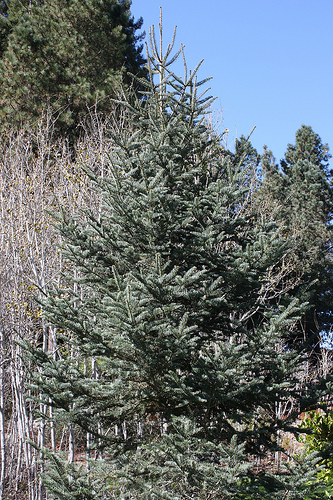
- Symmetrical conical form, especially in youth; matures to a more cylindrical crown.
- Typically reaches 12–21 m tall and 4.5–7.5 m wide in landscape settings.
These traits make it suitable as:
- A specimen tree in large residential or commercial landscapes
- A soft-textured alternative to Colorado blue spruce, which increasingly suffers from fungal issues across Ontario
- An evergreen anchor in four-season gardens
How to Grow Abies concolor in Ontario
Hardiness
- Rated for USDA Zones 3–7 (roughly aligns with most areas of Ontario).
Soil Requirements
- Prefers rich, moist, well‑drained, slightly acidic sandy or gravelly soils, but iis actually tolerant of most soils.
- Avoid heavy clay, poorly drained areas, or constantly wet soils. Ontario clay belts may require soil amendment or raised planting.
Light
- Best in full sun, though it tolerates light shade.
Moisture
- Once established, drought tolerant compared to other firs.
- Keep soil evenly moist, especially during the first 2–3 years. Abies concolor prefers consistent moisture—not waterlogging—to maintain root health.
Planting Notes
- Space trees 6–7 m away from structures to accommodate mature spread.
- Avoid windy, exposed locations—young trees may require staking on open sites.
Growth Rate
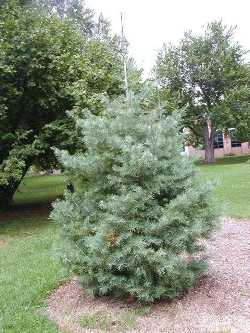
- Considered slow-growing, reaching 30–50 ft (approx. 9–15 m) in typical home landscapes over several decades.
Pests & Diseases in Ontario
While no major insect or disease problems are typically observed on Abies concolor, several pests known in North America—including Canada—may appear in Ontario landscapes. Sources describe it as having very few issues compared to other firs, but still susceptible to some common conifer pests.
Insect Pests
According to some sources:
- Balsam woolly adelgid. Balsam woolly adelgid has been detected in Atlantic Canada but not widespread in Ontario as of recent forestry reports; however, awareness is important due to potential spread.
- Bark beetles
- Spruce budworm. Spruce budworm and aphids are widely present in Ontario forests.
- Aphids
- Bagworms
- Scale insects
- Spider mites (especially in hot, dry conditions). Spider mites commonly affect stressed landscape conifers during hot Ontario summers.
Diseases
- Root rot, particularly in poorly drained soils
- Needle rust
- Twig blight
Prevention:
- Plant on well‑drained soil
- Avoid mechanical injury to branches (infection sites for fungi)
- Maintain good air circulation around the tree
Environmental Sensitivities
- Air pollution intolerance makes it less suitable for high‑traffic urban core areas.
- Wind damage is possible on exposed sites, particularly as trees grow tall.
Why Ontario Landscapers Should Consider Abies concolor
With increasing disease pressure on Colorado blue spruce and limited fir species adapted to Ontario’s mix of humid summers and cold winters, Abies concolor stands out for its:
- Superior aesthetic value (soft blue needles, fragrance)
- Lower maintenance profile
- Good performance in Midwestern-like climates—closely paralleling much of southern Ontario
- Drought tolerance once established
- Excellent winter interest
It is an underused conifer in Canadian landscapes—making it an ideal choice for designers and homeowners seeking something unique, resilient, and beautiful.