Rain, Rain, Rain!
It certainly has been a wet month so far. The rain plus relatively cool-ish nights and warm days are causing lawns to grow like crazy! (Yup that is a proper horticultural term)
Ideally lawns should be mowed using the “1/3 : 2/3” rule. What this means is no more than 1/3 of the plant tissue be removed at once. So, if you want your lawn to be mowed to 3” you should mow when the lawn is no longer than 4 ½”. If you are like us, you likely mow on a schedule, which means at some times you may be cutting less than 1/3 off. Not as big a deal as cutting MORE than ½ off.
There are some physiological reasons behind not cutting more than 1/3 off but I am not going very deep, is at all, into those. Suffice to say that cutting too much of a lawn consistently will weaken the lawn encouraging weed and other pests to proliferate.
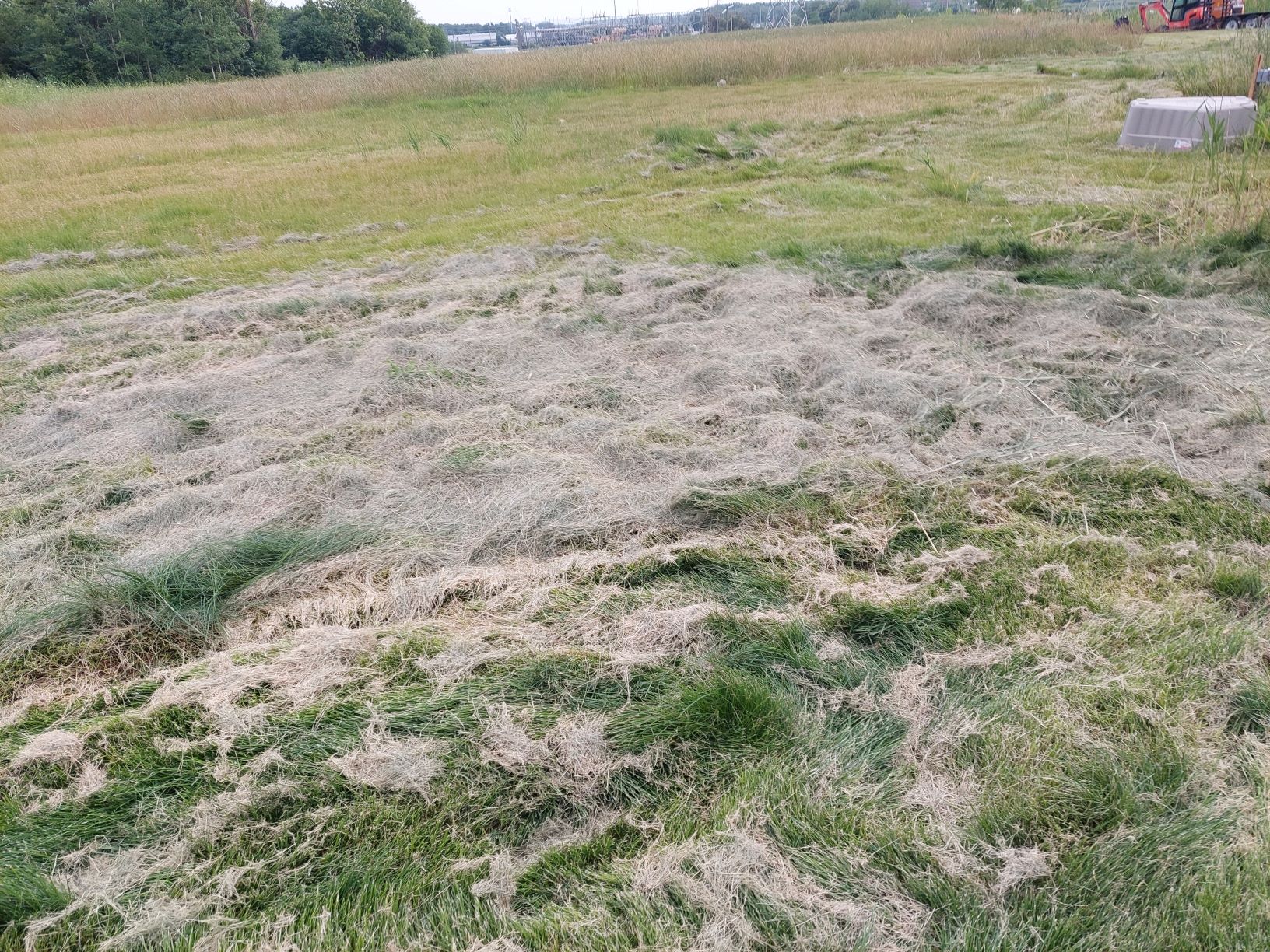
The real problem (in the short term) with cutting more than 1/3 off is the clippings. Leaving large quantities of clipping on the grass blocks sunlight and can kill the lawn in areas where the clippings are thick. We use mulching mowers and the residue from them when mowing too much off are large clumps of “wadded” grass. These will do great damage if not taken care of.
All that needs to be done is to remove the clippings. These clippings, or wads, are great in composters by the way. You can use a rake. We use a backpack blower. The blower breaks the clumps of grass into much smaller clumps that fall to the surface of the soil where they can decompose.
Because of all of the rain we have been having check you irrigation timer to make sure your rain sensor is engaged and not bypassed. If you do not have a rain sensor turn your system of when we have a rainfall or better yet – get a rain sensor installed!
Be kind to your lawn and it will reward you with years of “bare foot” grass that you’ll love being on and looking at!
As always, if you have any questions please contact us.