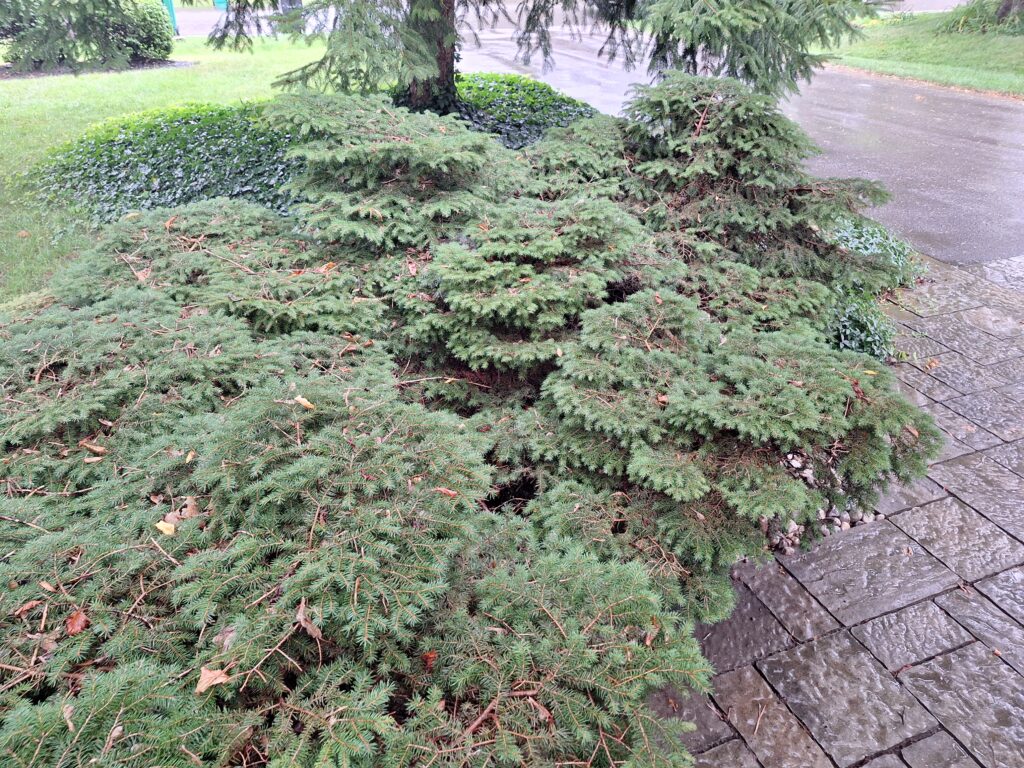
Few dwarf conifers have earned the popularity and longevity of Picea abies ‘Nidiformis’, commonly known as Bird’s Nest Spruce. This compact evergreen combines attractive year-round foliage with a naturally sculptural form that fits beautifully into today’s landscapes.
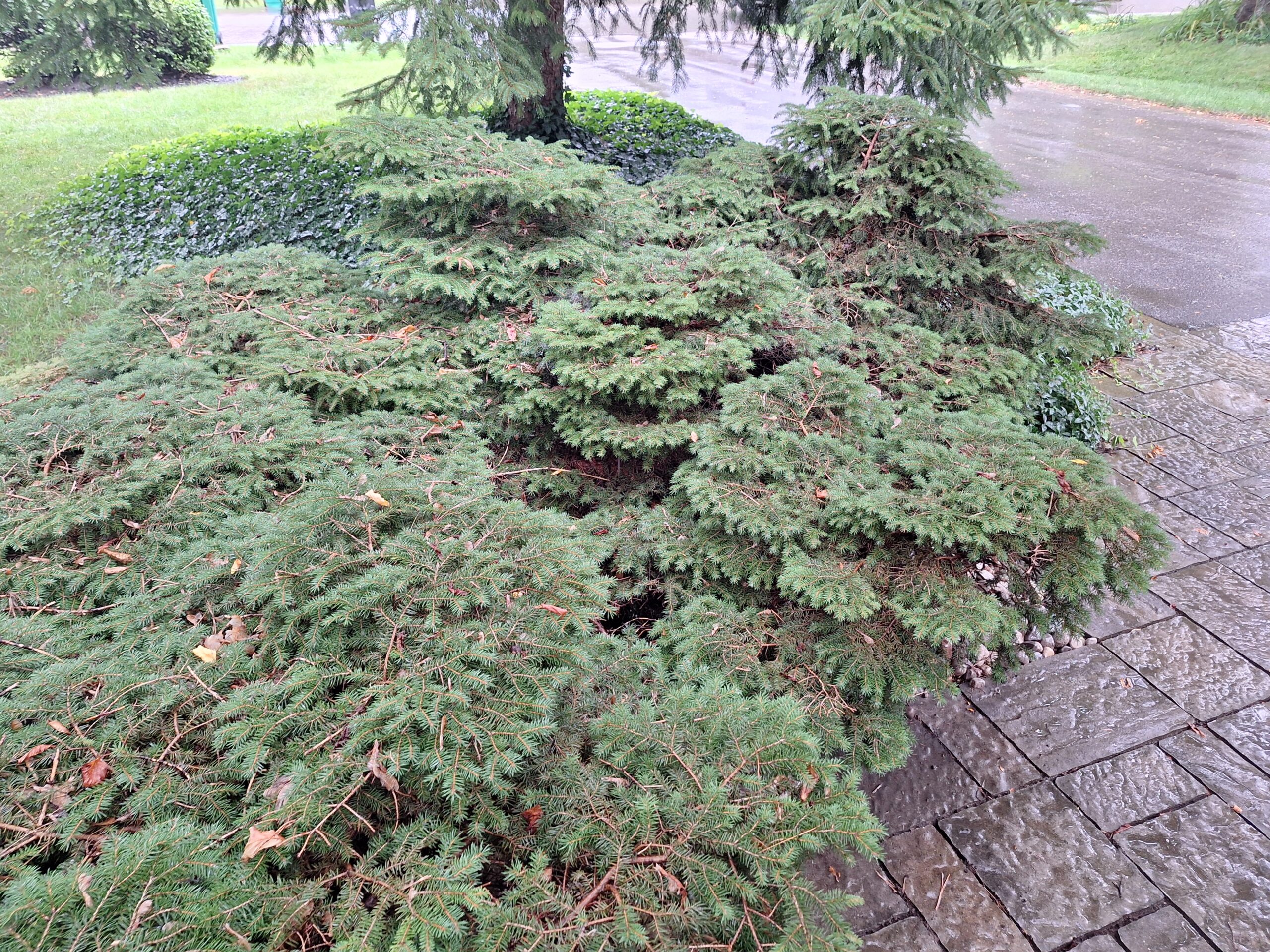
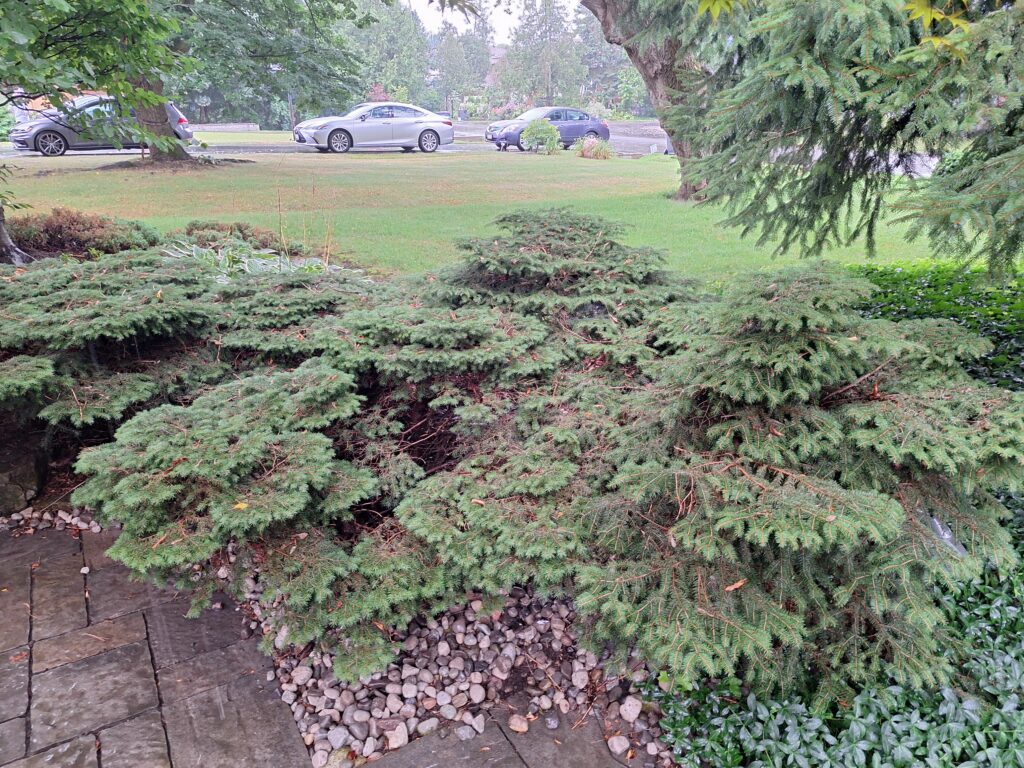
Its dense branching, rich green needles, and distinctive depression in the center create the appearance of a bird’s nest, giving rise to its common name. Whether you’re designing a residential garden, commercial landscape, or rock garden, Bird’s Nest Spruce is a versatile plant that offers four-season appeal.
Origins and History
Bird’s Nest Spruce is a cultivated dwarf selection of the Norway Spruce (Picea abies), a species native to northern and central Europe.
The cultivar was discovered in Germany during the early 1900s as a naturally occurring dwarf mutation of the species. Unlike the towering Norway Spruce, which can grow over 30 metres (100 feet) tall, ‘Nidiformis’ remains compact and low-growing throughout its life.
Because of its dependable growth habit and excellent hardiness, it quickly became a favourite among landscape designers and collectors of dwarf conifers throughout North America and Europe.
Distinctive Characteristics
One of the most appealing features of Bird’s Nest Spruce is its unique growth habit.
Mature Size
- Height: 1 to 1.5 m (3 to 5 ft)
- Spread: 1.5 to 2.5 m (5 to 8 ft)
- Growth Rate: Slow to moderate (5 to 10 cm annually)
Appearance
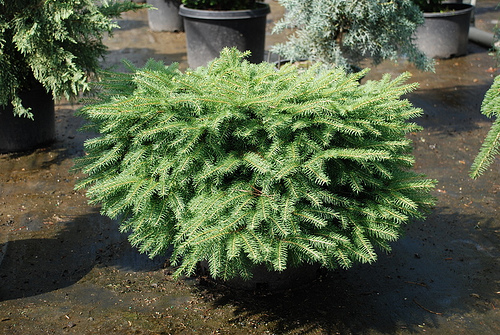
- Dense, finely textured evergreen foliage
- Rich medium-green needles
- Broad, spreading growth habit
- Characteristic central depression resembling a nest
- Retains colour throughout winter
Unlike many dwarf evergreens that become irregular with age, Bird’s Nest Spruce generally maintains its attractive shape for decades.
Landscape Uses
Bird’s Nest Spruce is one of the most versatile dwarf conifers available.
Foundation Plantings
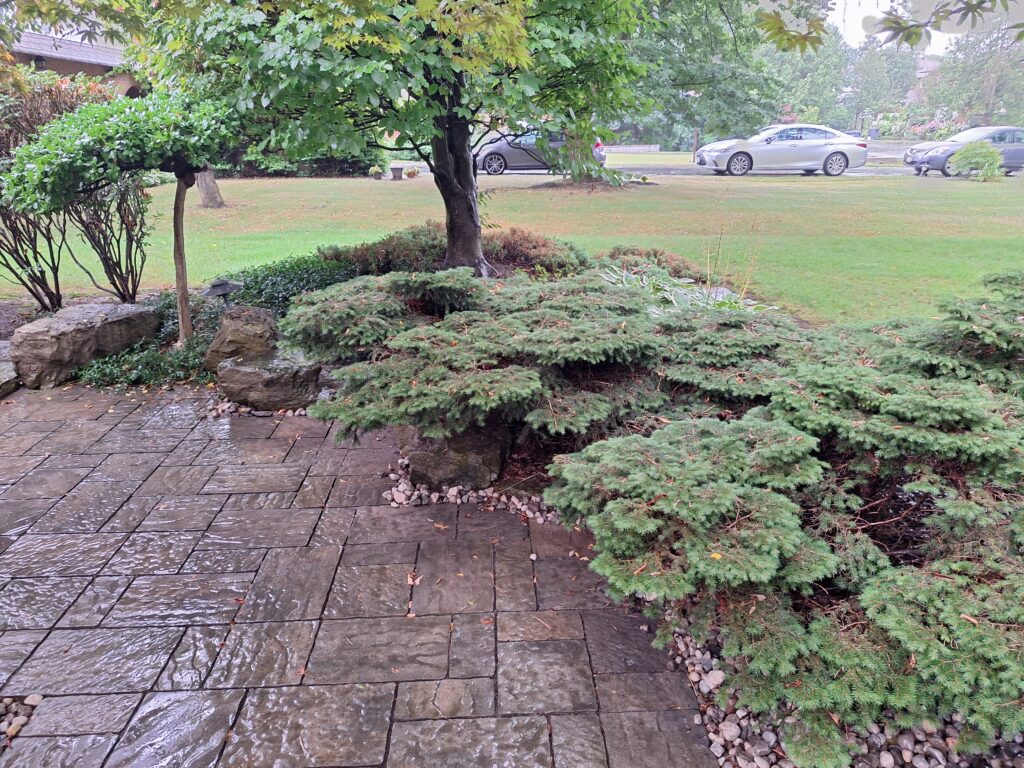
Its compact size makes it ideal near entrances, patios, and foundations where larger conifers would eventually outgrow the space.
Rock Gardens
Its naturally mounded habit pairs beautifully with boulders, ornamental grasses, and alpine plants.
Mixed Borders
It provides year-round structure among flowering shrubs and perennials.
Japanese and Formal Gardens
Its naturally symmetrical shape contributes a calm, architectural presence.
Commercial Plantings
It works exceptionally well in low-maintenance commercial landscapes where reliability is important.
Four-Season Interest
During winter, Bird’s Nest Spruce provides valuable colour, texture, and structure when many other landscape plants are dormant.
Growing Requirements
Hardiness
- USDA Zones 3 to 7
- Exceptionally hardy throughout Ontario and most of Canada
Sun Exposure
Bird’s Nest Spruce performs best in:
- Full sun
- Light shade
For the densest growth and richest colour, plant in at least six hours of direct sunlight daily.
Soil Preferences
Bird’s Nest Spruce prefers:
- Moist but well-drained soil
- Slightly acidic soil conditions
- Organic-rich garden soils
It tolerates a range of soil types but performs poorly in:
- Waterlogged areas
- Heavy clay with poor drainage
- Sites with standing water
Adding compost before planting can significantly improve establishment and long-term performance.
Watering Requirements
Newly Planted Specimens
Water deeply during the first two growing seasons to establish a healthy root system.
Established Plants
Once established, Bird’s Nest Spruce is relatively drought tolerant but benefits from supplemental watering during prolonged dry periods.
Avoid overwatering, which can contribute to root problems.
Fertilization
Bird’s Nest Spruce is not a heavy feeder.
A spring application of:
- Compost
- Leaf mould
- Slow-release evergreen fertilizer
is usually sufficient.
Over-fertilization may encourage excessive growth and reduce the plant’s natural form.
Pruning
One of the major advantages of Bird’s Nest Spruce is that it rarely requires pruning.
Prune only to:
- Remove dead branches
- Correct damage
- Shape lightly if desired
Avoid cutting back into old wood where no green needles remain, as regrowth may be limited.
Common Pests
Bird’s Nest Spruce is generally considered a relatively pest-resistant landscape plant.
However, it can occasionally experience issues with:
Spruce Spider Mites
Symptoms include:
- Yellow stippling on needles
- Bronzing foliage
- Fine webbing
Spider mites are most active during cool spring and fall weather.
Aphids
Occasionally found on developing shoots.
Symptoms:
- Distorted new growth
- Sticky honeydew
Spruce Gall Adelgids
Can create small cone-like galls on new growth.
These are generally cosmetic and rarely cause significant damage.
Disease Concerns
Cytospora Canker
Most common on stressed spruce trees.
Symptoms include:
- Branch dieback
- Needle loss
- White resin exudation
Maintaining plant health helps reduce susceptibility.
Needle Cast Diseases
May occasionally appear during prolonged wet weather.
Proper spacing and good air circulation help minimize disease development.
Root Rot
Poor drainage is the most common cultural problem affecting Bird’s Nest Spruce.
Always ensure the planting site drains well.
Wildlife Value
Although not a major wildlife food source, Bird’s Nest Spruce offers:
- Shelter for small birds
- Winter protection for beneficial insects
- Nesting opportunities for songbirds
Its dense branching structure provides valuable cover throughout the year.
Companion Plants
Bird’s Nest Spruce pairs beautifully with:
Shrubs
- Boxwood
- Dwarf Mugo Pine
- Inkberry Holly
- Japanese Spirea
Perennials
- Hosta
- Heuchera
- Sedum
- Ornamental grasses
Trees
- Japanese Maple
- Serviceberry
- Eastern Redbud
The contrast between its evergreen texture and flowering plants creates a dynamic landscape composition.
Why We Love Bird’s Nest Spruce
Bird’s Nest Spruce continues to be a favourite because it offers:
✅ Year-round greenery
✅ Compact size
✅ Minimal maintenance
✅ Excellent winter interest
✅ Slow growth
✅ Attractive natural shape
✅ Outstanding cold hardiness
✅ Versatile landscape uses
For gardeners looking for a dependable evergreen that won’t outgrow its space, few plants offer the combination of beauty, durability, and ease of care found in Picea abies ‘Nidiformis’.
Final Thoughts
Bird’s Nest Spruce is proof that great things come in small packages. Its unique nest-like form, rich green foliage, and exceptional hardiness make it one of the best dwarf conifers for Canadian landscapes. Whether tucked into a rock garden, featured near an entrance, or used as an evergreen anchor in a perennial border, this charming spruce delivers decades of reliable beauty with very little maintenance.
For homeowners, landscape designers, and gardeners seeking a compact evergreen with four-season appeal, Picea abies ‘Nidiformis’ remains one of the finest choices available. 🌲