Why Do Tropical Houseplants Develop Brown Leaf Tips?
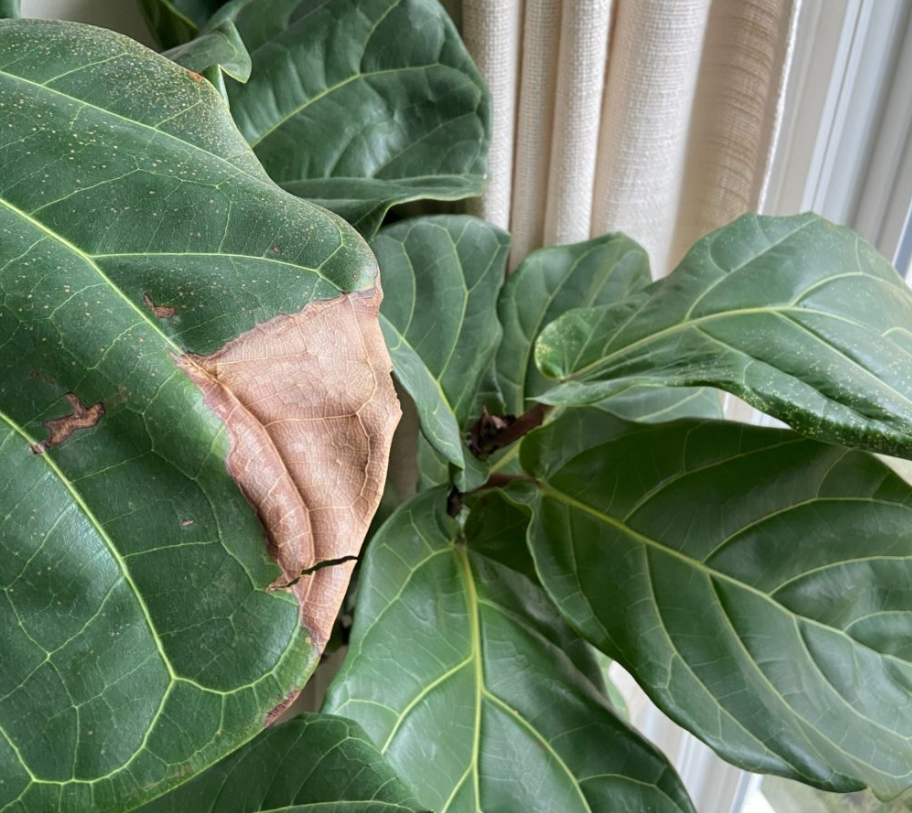
Few things are more frustrating than watching a beautiful tropical houseplant develop brown leaf tips. The rest of the plant may appear healthy, yet those crispy brown ends can make even a thriving specimen look stressed.
Whether you’re growing a Peace Lily, Spider Plant, Dracaena, Kentia Palm, Areca Palm, or Philodendron, brown leaf tips are a common concern. Understanding the causes can help you correct the problem and keep your plants looking their best.
Tropical Plants Come from Humid Environments
Most popular houseplants originated in tropical and subtropical regions where humidity levels are often much higher than those found inside our homes.
During the winter heating season, indoor humidity can drop dramatically. Dry air causes moisture to evaporate more quickly from leaf surfaces, often resulting in brown, crispy leaf tips.
Plants that are particularly sensitive to low humidity include:
- Peace Lily
- Calathea
- Maranta (Prayer Plant)
- Areca Palm
- Boston Fern
- Kentia Palm
Increasing humidity with a humidifier, grouping plants together, or placing plants in naturally humid rooms can often help.
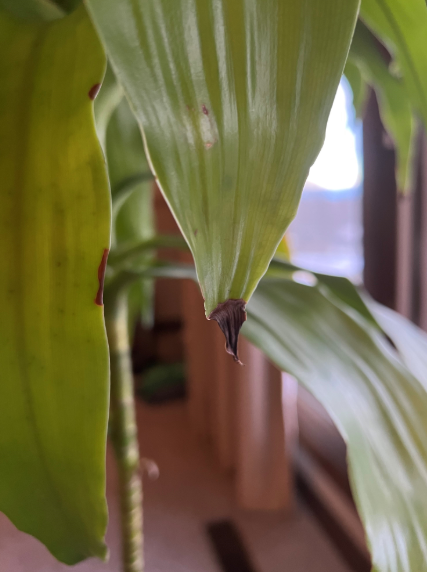
Inconsistent Watering
One of the most common causes of brown leaf tips is inconsistent watering.
When a plant becomes too dry, root systems struggle to supply adequate moisture to the leaves. The leaf tips are often the first area to show stress because they are the furthest point from the plant’s water supply.
Signs of underwatering include:
- Brown leaf tips
- Dry soil
- Wilting
- Curling leaves
At the same time, overwatering can damage roots and reduce their ability to absorb water, causing similar symptoms.
Consistency is key.
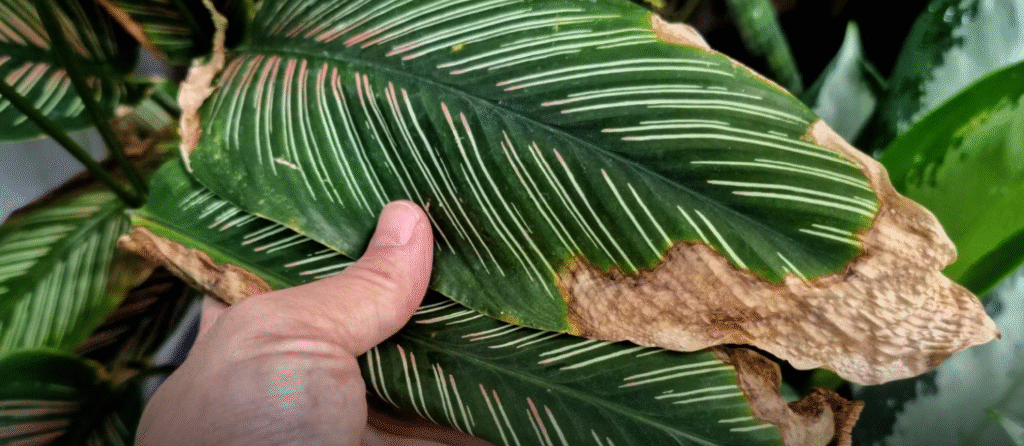
Mineral and Salt Buildup
Tap water and fertilizers both contain dissolved minerals and salts. Over time, these materials can accumulate in the soil.
As concentrations increase, roots may have difficulty absorbing water efficiently. Excess salts often move into the leaf tissue where they can cause tip burn and browning.
Plants commonly affected include:
- Spider Plants
- Dracaenas
- Peace Lilies
- Corn Plants
Periodically flushing the soil with water can help remove excess salts and reduce buildup.
Overfertilization
More fertilizer does not always mean more growth.
Excess fertilizer can cause root injury and create conditions that lead to brown leaf tips. The damage often appears as:
- Brown tips
- Yellowing leaf margins
- Crusty white deposits on the soil surface
- Reduced plant vigor
Most tropical houseplants require surprisingly little fertilizer, especially during periods of slower growth.
Water Quality Issues
Some tropical plants are sensitive to chemicals and minerals commonly found in municipal water supplies.
Fluoride, chlorine, and elevated mineral levels may contribute to leaf tip burn in sensitive species.
If water quality is suspected, allowing water to sit overnight before use or using filtered water may help reduce symptoms.
Low Humidity Combined with Good Light
Many homeowners place tropical plants in bright locations, which is generally beneficial. However, bright light combined with dry indoor air can increase moisture loss through the leaves.
The result may be healthy growth accompanied by brown leaf tips.
This combination is particularly common near:
- South-facing windows
- Heating vents
- Fireplaces
- Sunny patio doors
Root Problems
Houseplants that have become root-bound may develop brown tips because roots can no longer efficiently absorb water and nutrients.
Symptoms may include:
- Frequent wilting
- Stunted growth
- Rapid soil drying
- Brown leaf tips
Repotting into a slightly larger container often restores healthy growth.
Natural Aging
Not every brown tip is a reason for concern.
As leaves age, minor tip browning can occur naturally. Older leaves eventually decline and are replaced by new growth.
If only a few older leaves are affected while the rest of the plant appears healthy, aging may simply be part of the plant’s normal life cycle.
How to Prevent Brown Leaf Tips
To keep tropical houseplants looking their best:
- Maintain consistent watering practices.
- Avoid allowing plants to become extremely dry.
- Increase humidity when possible.
- Fertilize moderately.
- Flush soils periodically to remove excess salts.
- Ensure containers have proper drainage.
- Repot root-bound plants when necessary.
- Keep plants away from heating vents and drafts.
Final Thoughts
Brown leaf tips are usually a sign that your tropical houseplant is responding to environmental stress rather than suffering from a serious disease. Low humidity, inconsistent watering, salt buildup, overfertilization, and water quality issues are among the most common causes.
The encouraging news is that once the underlying problem is identified and corrected, new growth typically emerges healthy and attractive. A few brown tips may be inevitable from time to time, but with proper care, your tropical plants can remain lush, vibrant, and beautiful year-round. 🌿