Magnolia virginiana ‘Moonglow’: A Magnolia Worth Discovering
When gardeners think of magnolias, they often picture the large-flowered Southern Magnolia or the common Saucer Magnolia. However, Magnolia virginiana ‘Moonglow’ offers something equally special: graceful habit, lemon-scented flowers, native heritage, and exceptional cold hardiness. For Canadian gardeners and those throughout the northern United States, it may be one of the finest magnolias available.
Combining beauty with improved performance, ‘Moonglow’ provides four seasons of interest while thriving in conditions that challenge many other magnolias.
Origins of ‘Moonglow’
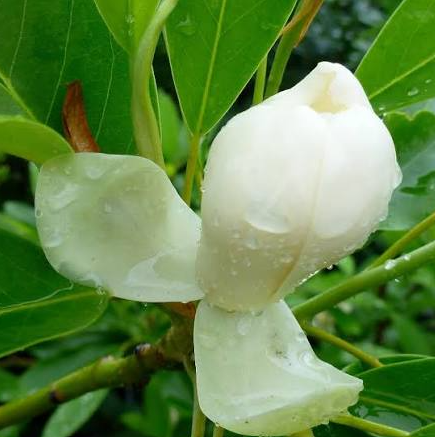
‘Moonglow’ is a patented cultivar of Magnolia virginiana, commonly known as Sweetbay Magnolia. The species is native to eastern North America, ranging from the southeastern United States north along the Atlantic coast to New York.
The cultivar itself is formally known as Magnolia virginiana ‘Jim Wilson’, marketed under the trademark Moonglow. It was introduced by noted plantsman Earl Cully of Heritage Trees, Inc., and named in honor of Jim Wilson, the longtime host of PBS’s The Victory Garden.
Compared to the straight species, ‘Moonglow’ was selected for:
- More vigorous, upright growth
- Improved cold hardiness
- Better foliage retention in colder climates
- Slightly larger flowers
Outstanding Ornamental Features
Fragrant White Flowers
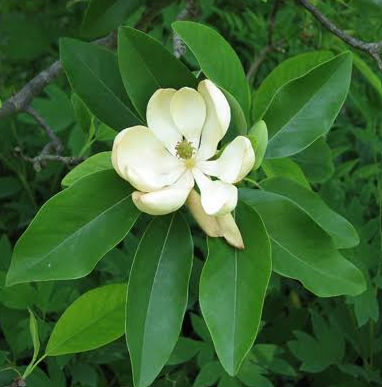
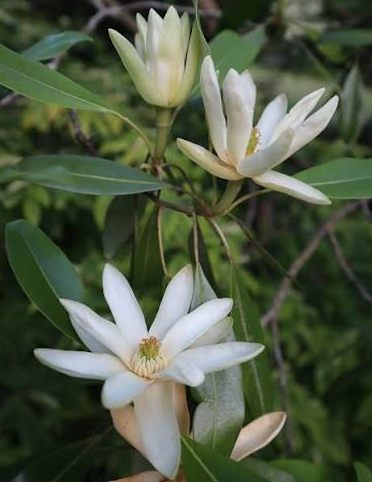
The star attraction is its creamy white, cup-shaped flowers that appear in late spring and continue sporadically through summer. The blooms are intensely fragrant, often described as having a sweet lemon scent that can perfume an entire garden area.
Unlike many magnolias that bloom for only a brief period, Sweetbay Magnolia provides an extended flowering season, making it especially valuable in residential landscapes.
Elegant Foliage
The leaves are glossy green on top with striking silvery undersides. A light breeze transforms the tree as the leaves flutter and flash silver, creating a shimmering effect that inspired the name “Moonglow.”
In warmer climates the foliage remains evergreen, while in colder regions it is typically semi-evergreen, retaining leaves longer than most Sweetbay Magnolias.
Attractive Fruit and Wildlife Value
Cone-like seed pods mature in fall and split open to reveal bright red seeds. These seeds are highly attractive to birds and provide an important food source during migration season.
Landscape Uses
‘Moonglow’ is remarkably versatile and fits both formal and naturalized landscapes.
Specimen Tree
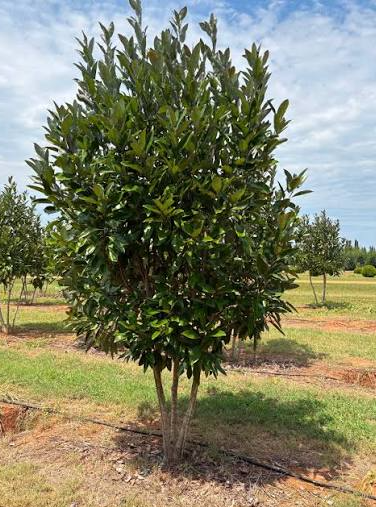
Its upright oval form makes it an ideal focal point in front lawns, courtyards, and garden beds. Mature trees typically reach 20 to 35 feet tall with a spread of 15 to 18 feet.
Rain Gardens and Wet Sites
One of its greatest strengths is tolerance of moist and even periodically wet soils. Unlike many ornamental trees, it is well adapted to locations near ponds, streams, drainage swales, and rain gardens.
Woodland Edges
The soft texture and native character make it excellent for woodland borders or naturalized areas where it blends seamlessly with native shrubs and perennials.
Small-Space Screening
Its relatively narrow habit compared to many magnolias allows it to function as a privacy screen or vertical accent in smaller landscapes.
How to Grow Magnolia ‘Moonglow’
Light
- Full sun to partial shade
- Best flowering occurs with at least six hours of direct sun daily
Soil
- Prefers acidic soils
- Thrives in rich, organic conditions
- Tolerates clay and wet soils better than most magnolias
Moisture
Sweetbay Magnolia naturally grows in swamps and moist woodlands. While established plants tolerate occasional dry periods, consistent moisture produces the best growth and flowering.
Hardiness
‘Moonglow’ is notably hardy, generally performing well in USDA Zones 5 to 10, with some reports suggesting hardiness into Zone 4B. This improved cold tolerance is one of the reasons it has become so popular in northern landscapes.
Pests and Diseases
One of the most appealing characteristics of ‘Moonglow’ is its relatively trouble-free nature.
Common Issues
There are no serious insect or disease problems typically associated with this cultivar.
Chlorosis
The most common issue is iron chlorosis, which causes yellowing leaves when the tree is planted in alkaline soils. Maintaining an acidic soil pH is important for long-term health.
Deer Resistance
While no plant is completely deer-proof, Sweetbay Magnolia is generally considered less attractive to deer than many other ornamental trees.
Ecological Benefits
For gardeners focused on biodiversity, ‘Moonglow’ offers significant environmental value.
- North American species selection
- Flowers attract pollinators, including bees and butterflies
- Seeds provide food for birds
- Offers nesting and shelter opportunities for wildlife
- Host plant for moths and butterflies, including the Sweetbay Silkmoth
Interesting Facts
- Sweetbay Magnolia is one of the few magnolias naturally adapted to wet soils.
- Crushing the leaves releases a spicy aroma reminiscent of culinary bay leaves.
- The silvery undersides of the leaves create a unique shimmering effect in the landscape.
- ‘Moonglow’ holds its foliage longer into winter than the straight species, giving northern gardeners a semi-evergreen magnolia option.
- The flowers are among the most fragrant of all hardy magnolias, often scenting an entire garden on warm evenings.
- Native Americans and early settlers were familiar with Sweetbay Magnolia long before it became a modern landscape plant.
Why Ontario Gardeners Should Grow It
For Ontario gardeners, finding a magnolia that combines beauty, fragrance, native genetics, and winter hardiness can be challenging. ‘Moonglow’ checks all the boxes. Its ability to tolerate heavy soils, periodic flooding, urban conditions, and cold winters makes it exceptionally adaptable. Add in the lemon-scented blooms, silver-backed foliage, and wildlife value, and you have a tree that delivers interest from spring through winter.
Whether planted as a specimen tree, incorporated into a rain garden, or used to soften the edge of a woodland planting, Magnolia virginiana ‘Moonglow’ offers a unique combination of elegance and resilience. It is proof that some of North America’s finest landscape plants are native species refined through thoughtful selection, and it deserves a place in far more Canadian gardens.