Calathea ‘Dottie’ – Rose Painted Calathea
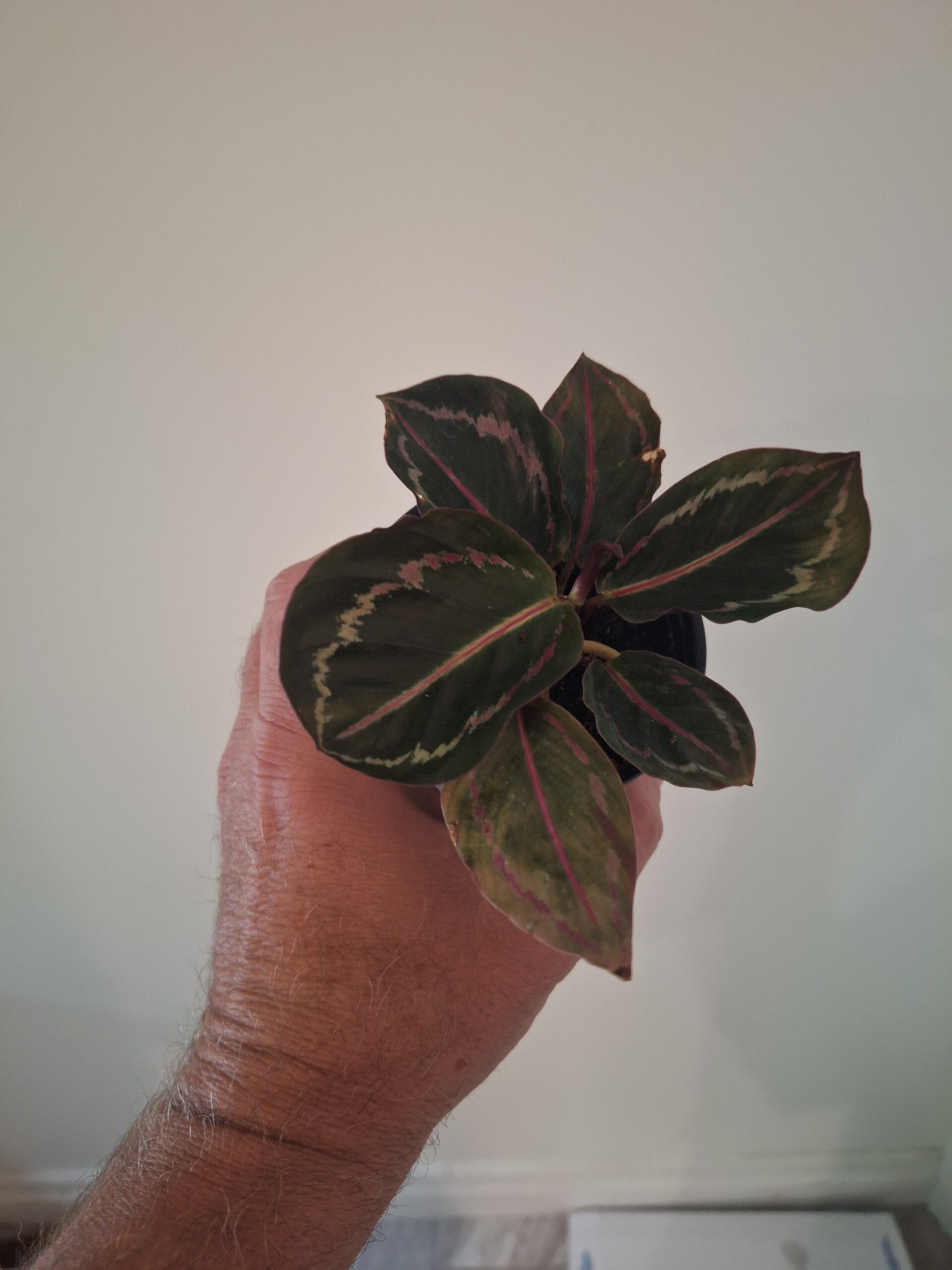
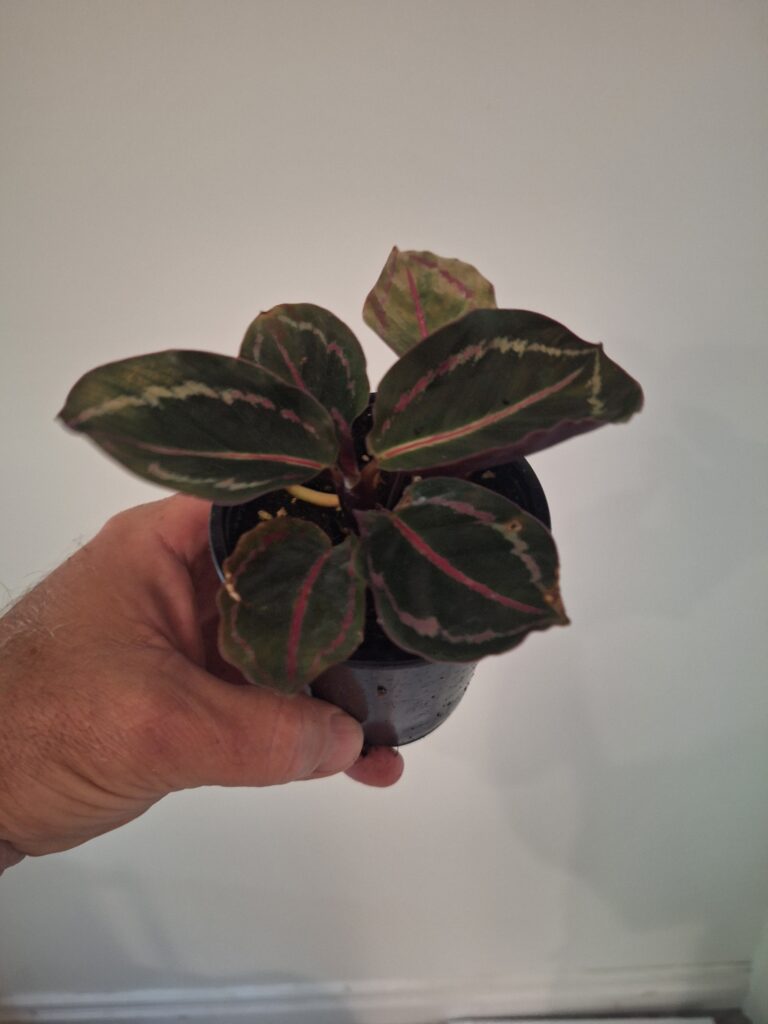
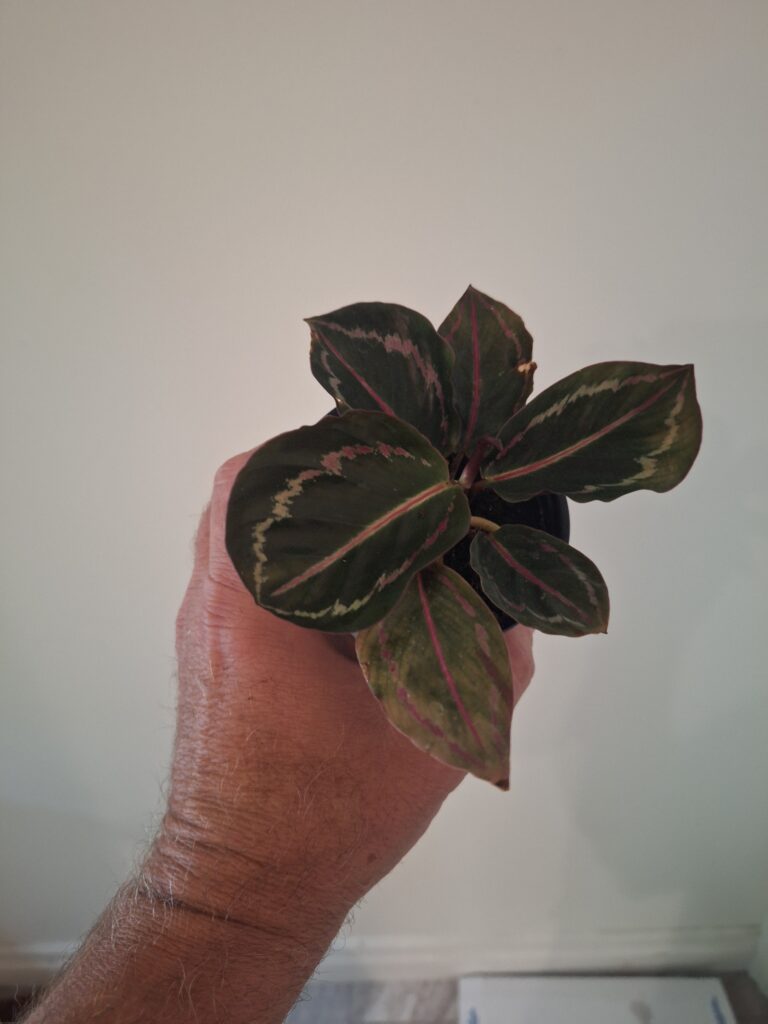
If you’re searching for a houseplant that brings bold colour and elegance into your home, Calathea ‘Dottie’ is hard to beat. With its dark, almost black foliage highlighted by bright pink outlines and central markings, this plant looks more like a piece of living art than a traditional houseplant.
As a member of the Prayer Plant family, ‘Dottie’ not only provides beautiful foliage but also performs a daily display as its leaves subtly move between day and night positions.
History and Origins
Calathea ‘Dottie’ is a cultivated variety derived from tropical species native to the rainforests of South America, particularly Brazil. In its natural environment, Calatheas grow on the forest floor beneath towering trees, where they receive filtered sunlight, abundant humidity, and consistently moist soil.
The cultivar ‘Dottie’ was selected for its spectacular foliage colouring, which sets it apart from most other Calatheas. Its dramatic combination of dark leaves and brilliant pink patterns has made it one of the most sought-after foliage plants for contemporary interiors.
Today, it remains a favourite among houseplant collectors who appreciate unusual textures, colours, and tropical aesthetics.
Plant Description
Calathea ‘Dottie’ is an evergreen tropical perennial grown primarily for its striking foliage.
Key Features
- Deep green to nearly black leaves
- Bright pink leaf margins and midribs
- Rich purple undersides
- Compact, clumping growth habit
- Decorative year-round foliage
- Daily leaf movement
Most plants grow approximately 30 to 60 cm (12 to 24 inches) tall and wide, making them ideal for tabletops, plant stands, shelves, and decorative containers.
The contrast between the dark foliage and pink markings creates a dramatic visual effect that works beautifully in both modern and traditional interiors.
Why Is It Called a Prayer Plant?
Like many members of the Marantaceae family, Calathea ‘Dottie’ exhibits a fascinating behavior known as nyctinasty.
During the day, the leaves spread outward to maximize light exposure. In the evening, they slowly fold upward into a more vertical position, resembling hands folded in prayer.
This daily movement adds an engaging and dynamic element to the plant’s appeal.
Ideal Growing Conditions
Light Requirements
Calathea ‘Dottie’ thrives in:
- Bright indirect light
- Filtered sunlight
- East-facing windows
- North-facing windows
- Well-lit rooms away from direct sun
Bright indirect light helps maintain the vivid pink coloration and healthy foliage.
Avoid direct sunlight, which can:
- Fade the pink markings
- Scorch leaves
- Cause brown patches
- Create excessive stress
The plant tolerates lower light conditions but may grow more slowly.
Temperature
As a tropical plant, Calathea ‘Dottie’ prefers warm temperatures throughout the year.
Ideal temperatures include:
- 18°C to 27°C (65°F to 80°F)
Avoid exposing the plant to:
- Cold drafts
- Air conditioning vents
- Sudden temperature changes
- Temperatures below 15°C (59°F)
Consistent warmth is essential for healthy growth.
Watering Requirements
Calathea ‘Dottie’ prefers evenly moist soil but does not tolerate soggy roots.
Watering Tips
- Allow the top layer of soil to dry slightly before watering.
- Water thoroughly when needed.
- Never allow the soil to become completely dry.
- Ensure excess water drains freely.
Many growers find that filtered, distilled, or rainwater helps prevent leaf tip browning, particularly where tap water contains high mineral levels.
Consistency is more important than frequency.
Soil Requirements
The ideal soil is:
- Rich in organic matter
- Well-draining
- Moisture-retentive
- Light and airy
A tropical plant mix containing peat, coco coir, perlite, and fine orchid bark works well.
Proper drainage is critical for preventing root rot while maintaining the consistent moisture that Calatheas prefer.
Fertilizing
Feed during the growing season from spring through early fall.
A balanced liquid fertilizer applied monthly at half strength is usually sufficient.
Excess fertilizer may cause:
- Brown leaf margins
- Salt buildup
- Root stress
Calatheas generally benefit from light, consistent feeding rather than heavy fertilization.
Pruning and Maintenance
Routine maintenance is minimal.
Regular care includes:
- Removing yellow or damaged leaves
- Trimming brown tips when necessary
- Wiping dust from foliage
- Rotating the plant for even growth
Clean leaves maximize the plant’s ability to absorb light and showcase its stunning colours.
Repotting
Repot every two to three years or when the root system outgrows the container.
Signs repotting is needed include:
- Slower growth
- Crowded roots
- Soil drying too quickly
- Reduced vigor
Choose a container only slightly larger than the existing pot.
Overpotting can lead to excess moisture retention.
Propagation
Calathea ‘Dottie’ is typically propagated through division.
How to Divide
- Remove the plant from its container.
- Gently separate healthy clumps.
- Ensure each division has roots and foliage.
- Replant in fresh potting mix.
- Keep evenly moist during establishment.
Division is best performed during spring or early summer when growth is most active.
Common Pests and Problems
Like many tropical foliage plants, Calathea ‘Dottie’ may occasionally encounter issues.
Potential Pests
- Spider mites
- Mealybugs
- Scale insects
- Fungus gnats
Common Growing Issues
Brown Leaf Edges
Usually caused by:
- Dry air
- Low humidity
- Mineral-heavy water
- Overfertilization
Curling Leaves
May indicate:
- Underwatering
- Dry conditions
- Temperature stress
Yellow Leaves
Often result from:
- Overwatering
- Poor drainage
- Waterlogged soil
Fading Colour
Commonly caused by excessive direct sunlight.
Most problems can be corrected by adjusting environmental conditions.
Interesting Facts About Calathea ‘Dottie’
The Leaves Are Almost Black
The foliage is so dark that many people initially mistake it for an artificial plant.
The Pink Markings Intensify with Proper Care
Bright indirect light helps maintain the vivid pink patterns that make this cultivar famous.
Every Evening Brings a New Show
The daily leaf movement is often subtle but fascinating to observe over time.
It’s Grown for Foliage, Not Flowers
Although it can produce flowers, the dramatic leaves are the true attraction.
It’s a Designer Favourite
Its bold colours and architectural appearance make it a popular choice for modern interior design and plant styling.
Why You Should Grow Calathea ‘Dottie’
If you’re looking for a houseplant that combines dramatic colour, tropical beauty, and unique behavior, Calathea ‘Dottie’ is an exceptional choice. Its dark foliage, bright pink markings, and fascinating leaf movements create year-round interest unlike almost any other indoor plant.
Provide bright indirect light, elevated humidity, warm temperatures, and evenly moist soil, and this stunning Prayer Plant will become a showpiece in your indoor garden.