Scindapsus pictus ‘Silver Satin’
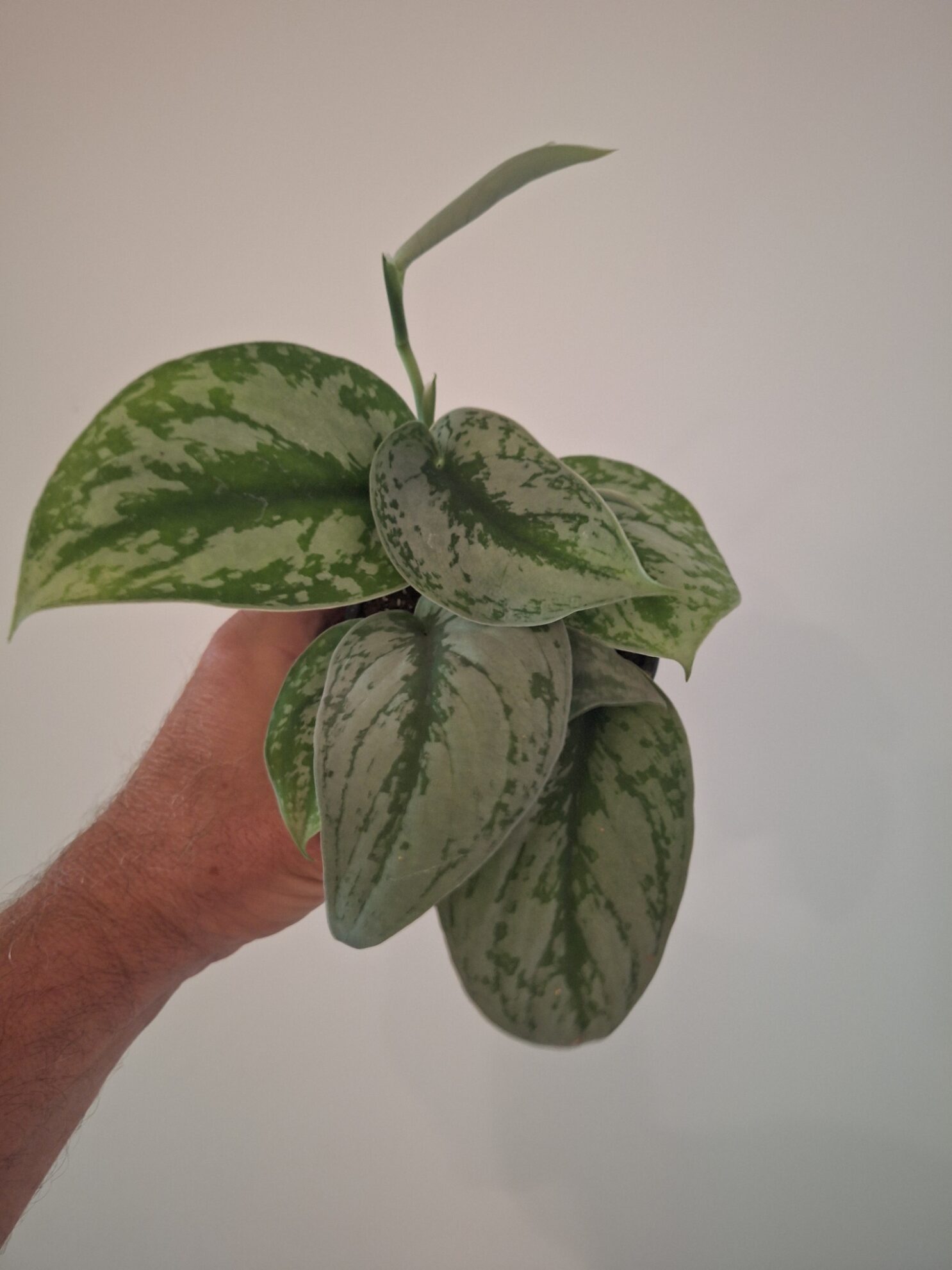
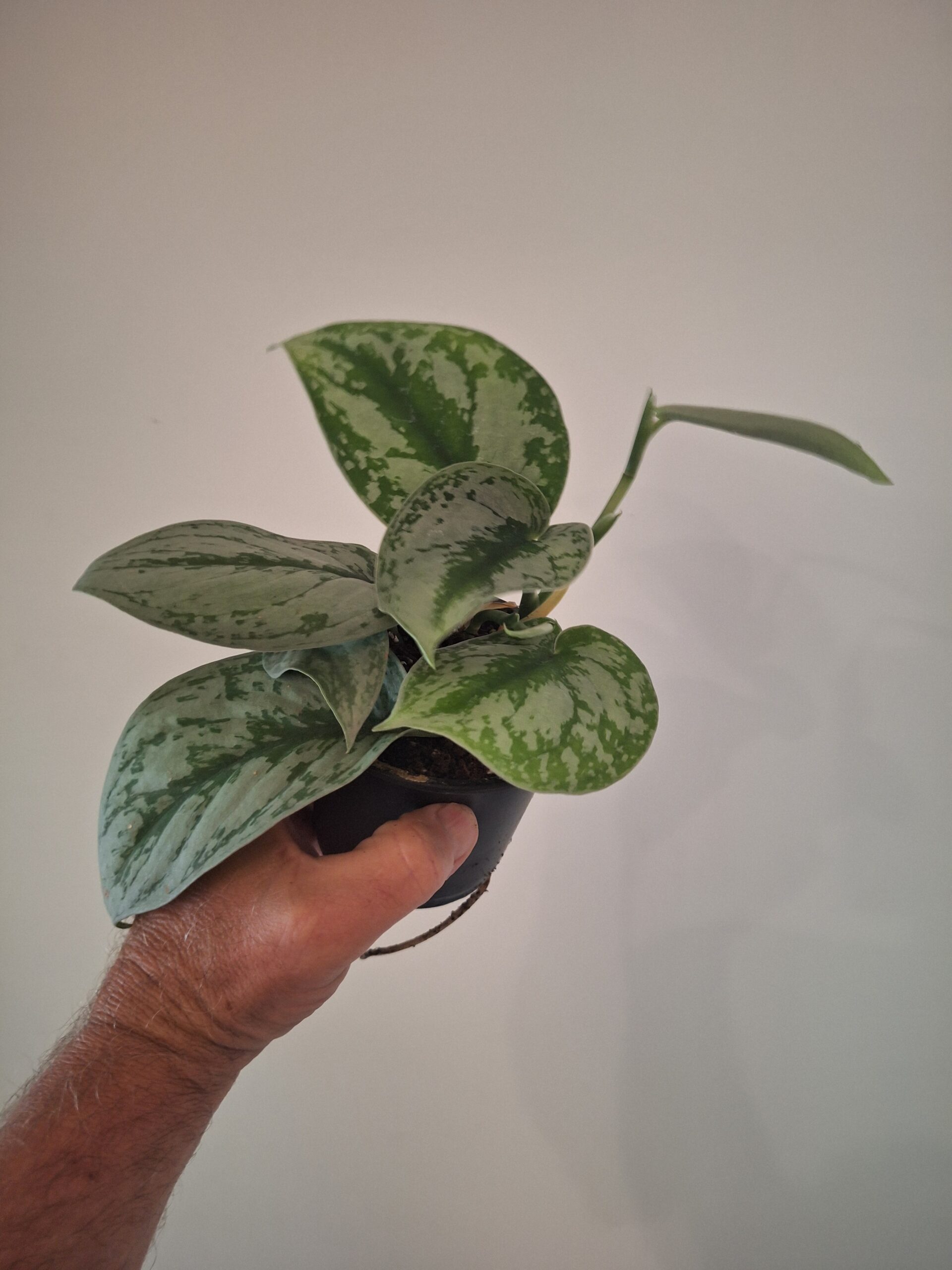
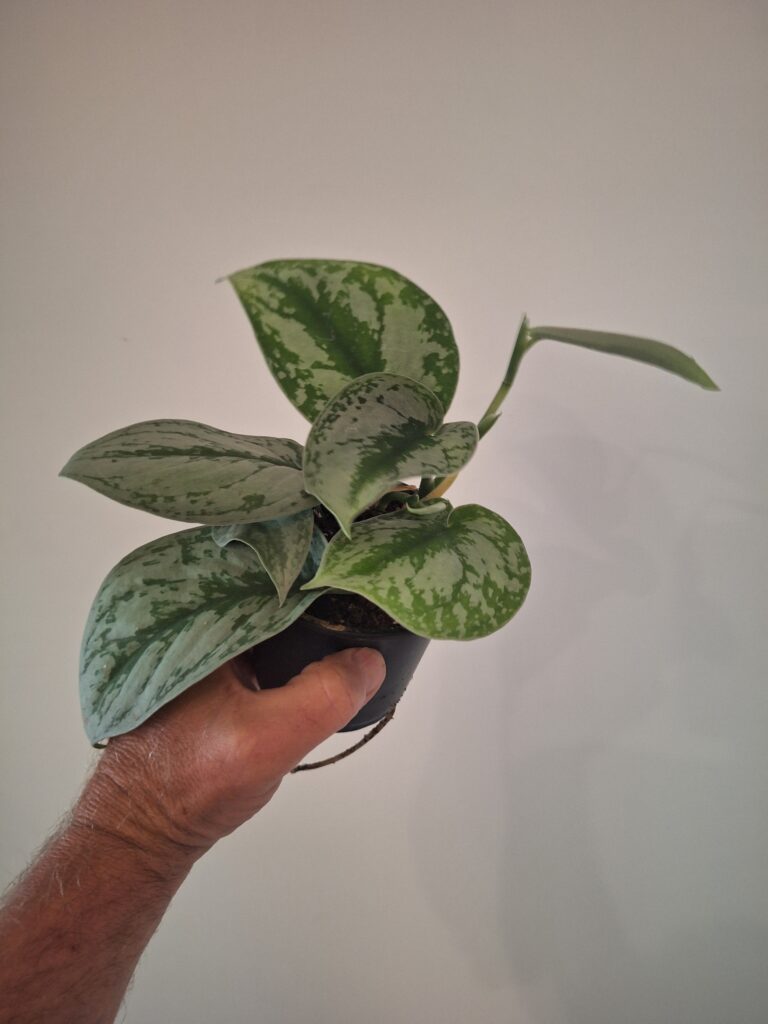
If you’re looking for an indoor plant that combines beauty with ease of care, Scindapsus pictus ‘Silver Satin’ is an excellent choice. Its distinctive heart-shaped leaves appear almost hand-painted, featuring shimmering silver variegation on a deep green background. Whether cascading from a hanging basket, climbing a moss pole, or trailing from a shelf, this tropical vine brings sophistication and lush greenery to indoor spaces.
Despite its common name, Satin Pothos is not a true pothos. It belongs to the Araceae family and is closely related to philodendrons and other tropical aroids.
History and Origin
Scindapsus pictus is native to the tropical rainforests of Southeast Asia, where it grows beneath the forest canopy and climbs tree trunks using aerial roots. It thrives in warm, humid environments with filtered sunlight, conditions that provide important clues for successful indoor cultivation.
The species name pictus means “painted,” referring to the beautiful silver markings that decorate its foliage. The cultivar ‘Silver Satin’ is particularly valued for its pronounced silvery variegation and luxurious, almost velvety leaf texture.
Plant Description
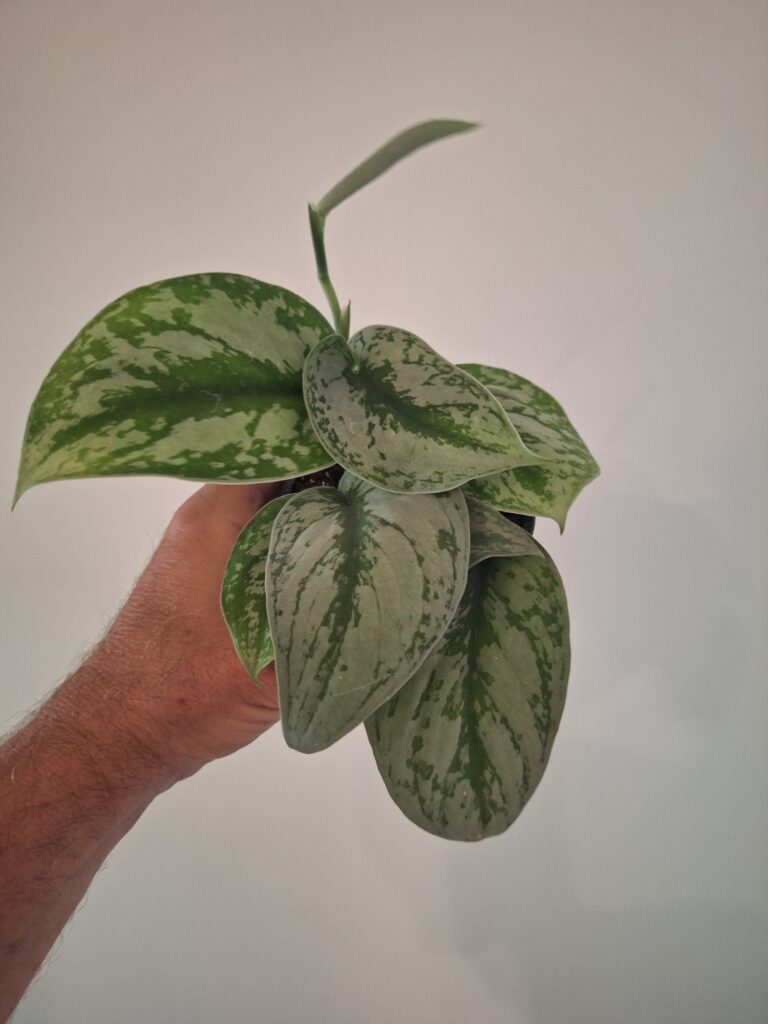
Silver Satin is an evergreen vining plant with attractive foliage that serves as its primary ornamental feature.
Key Characteristics
- Heart-shaped leaves with silver variegation
- Velvety, satin-like leaf texture
- Trailing or climbing growth habit
- Slow to moderate growth rate
- Attractive year-round foliage
- Compact and adaptable indoor size
When grown indoors, vines can reach several feet in length, creating a lush, tropical appearance.
Ideal Growing Conditions
Light
Silver Satin performs best in:
- Bright indirect light
- Filtered sunlight
- East-facing windows
- Locations near bright windows
Avoid prolonged exposure to direct afternoon sun, which can scorch the leaves and fade the variegation.
While the plant tolerates lower light levels, brighter conditions encourage fuller growth and more pronounced silver markings.
Temperature
As a tropical plant, Silver Satin prefers warm indoor temperatures.
Ideal temperatures range from:
- 18°C to 29°C (65°F to 85°F)
Protect the plant from:
- Cold drafts
- Sudden temperature changes
- Air conditioning vents
- Chilly windows in winter
Humidity
Silver Satin appreciates moderate to high humidity levels.
To improve humidity:
- Use a room humidifier
- Group plants together
- Place the pot on a pebble tray
- Grow it in naturally humid rooms
Although adaptable to average household humidity, the plant displays its best growth and foliage quality when humidity levels are slightly elevated.
Watering Requirements
One of the most important aspects of Silver Satin care is proper watering.
Best Practice
- Allow the top few centimetres of soil to dry before watering.
- Water thoroughly until excess moisture drains from the pot.
- Never allow the plant to sit in standing water.
Silver Satin is more tolerant of occasional dryness than consistently soggy soil. Overwatering remains the most common cause of plant decline.
Soil Requirements
The ideal growing medium should be:
- Well-draining
- Rich in organic matter
- Light and airy
- Moisture-retentive without becoming waterlogged
A high-quality indoor potting mix amended with perlite or orchid bark works exceptionally well.
Always use containers with drainage holes to prevent root rot.
Fertilizing
Feed the plant during spring and summer when it is actively growing.
A balanced liquid houseplant fertilizer applied monthly is usually sufficient to promote healthy foliage and steady growth.
Reduce fertilizing during autumn and winter when growth naturally slows.
Pruning and Maintenance
Silver Satin requires very little maintenance.
Pruning can help:
- Encourage bushier growth
- Control vine length
- Remove damaged leaves
- Improve the plant’s overall shape
Wipe leaves occasionally with a damp cloth to remove dust and keep the foliage looking its best.
Propagation
One of the joys of growing Silver Satin is how easily it can be propagated.
Stem cuttings with at least one node can be rooted in:
- Water
- Moist potting mix
- Perlite
New roots typically develop within a few weeks, making propagation a simple way to create additional plants or share cuttings with friends.
Common Pests and Problems
Silver Satin is generally pest-resistant but may occasionally encounter:
Pests
- Spider mites
- Mealybugs
- Scale insects
Regular inspection and good plant hygiene usually keep infestations under control.
Common Issues
Yellow Leaves
- Usually caused by overwatering.
Brown Leaf Tips
- Often the result of low humidity or inconsistent watering.
Leggy Growth
- Typically indicates insufficient light.
Root Rot
- Caused by overly wet soil and poor drainage.
Most problems can be prevented by providing proper light, watering, and airflow.
Interesting Tidbits
It’s Not Actually a Pothos
Although commonly sold as Satin Pothos, Scindapsus pictus belongs to a completely different genus from true pothos plants.
The Silver Patterning Is Unique
No two leaves are exactly alike. The silver markings vary from leaf to leaf, giving each plant a distinctive appearance.
It Can Climb Like It Does in Nature
When provided with a moss pole or trellis, Silver Satin produces larger leaves and develops a more dramatic tropical appearance.
The Leaves Feel Different
Unlike many common houseplants, the foliage has a soft, velvety texture that contributes to its luxurious appearance.
It’s a Long-Lived Houseplant
With proper care, Silver Satin can thrive for many years, becoming a cherished feature of an indoor plant collection.
Final Thoughts
Scindapsus pictus ‘Silver Satin’ is a beautiful and reliable houseplant that offers the perfect combination of elegance and simplicity. Its shimmering foliage, adaptable nature, and forgiving care requirements make it an excellent choice for homes, offices, and indoor plant enthusiasts of all experience levels.
Whether grown as a trailing vine or trained to climb, Silver Satin delivers year-round beauty and brings a touch of the tropical rainforest indoors.