When most flowering plants are preparing for winter dormancy, Hamamelis virginiana puts on a spectacular show. Commonly known as American Witch Hazel, this native shrub or small tree lights up the landscape with bright yellow ribbon-like flowers from October through December, making it one of the last woody plants to bloom each year in eastern North America.
For gardeners, landscape designers, and native plant enthusiasts, Witch Hazel offers a rare combination of ornamental beauty, ecological value, and historical significance.
Origins and Native Habitat
American Witch Hazel is native to eastern North America, ranging from Nova Scotia and southern Ontario west to Minnesota, and south to Florida and eastern Texas. It naturally occurs in deciduous woodlands, forest margins, stream banks, and shaded slopes.
As a true North American native, it is exceptionally well adapted to local growing conditions and provides valuable habitat and food sources for wildlife. Indigenous peoples recognized the plant’s medicinal properties long before European settlement, using extracts from the bark and twigs for a variety of traditional applications.
Plant Description
Hamamelis virginiana is typically a large, multi-stemmed deciduous shrub or small tree growing 4.5 to 6 metres (15 to 20 feet) tall and wide, although mature specimens can occasionally reach nearly 10 metres (30 feet).
Key Features
- Growth Habit: Upright, spreading, often multi-stemmed with an irregular natural form.
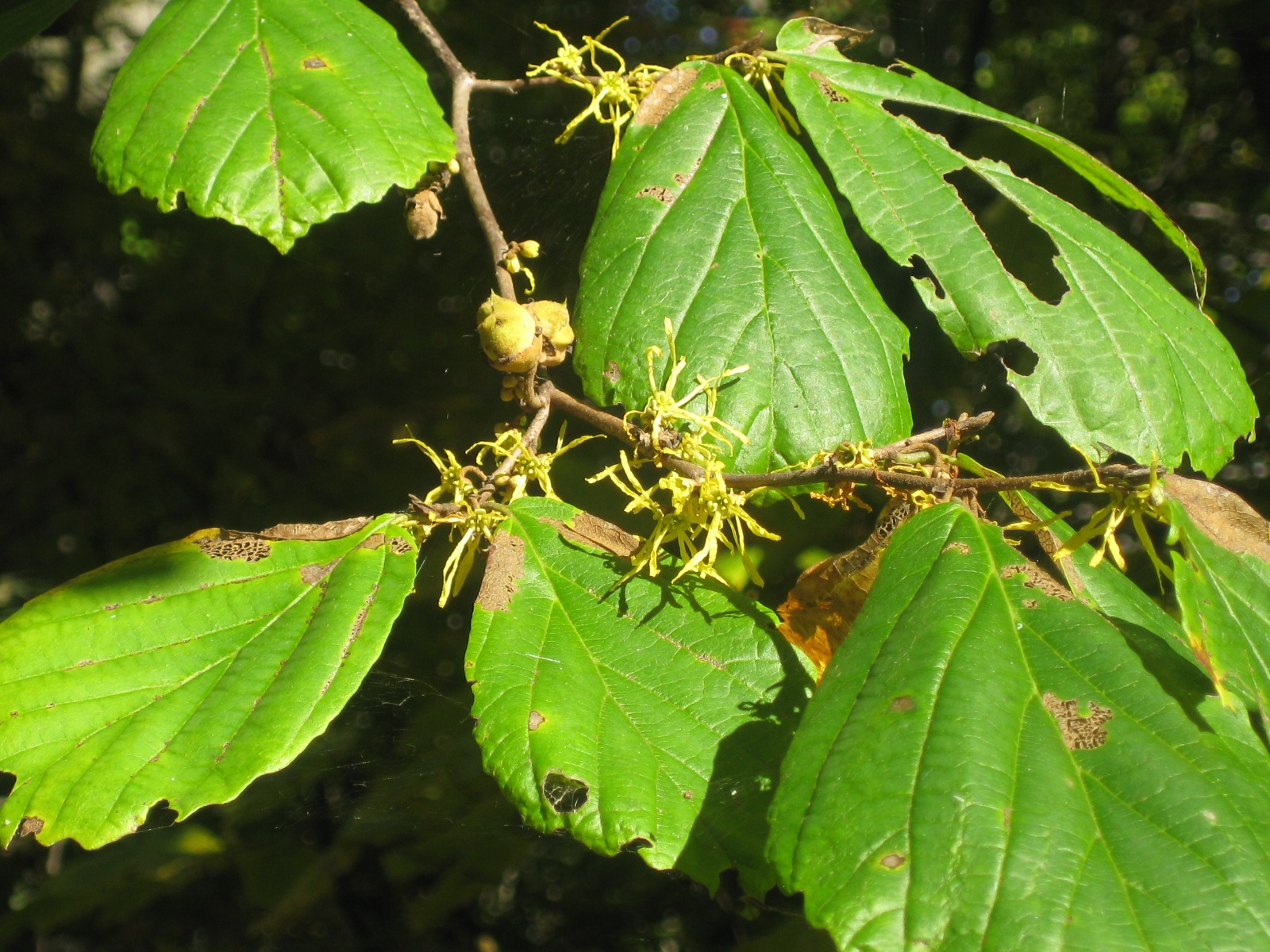
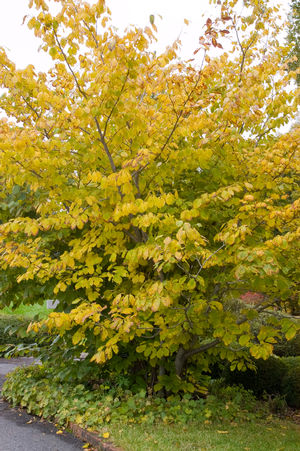
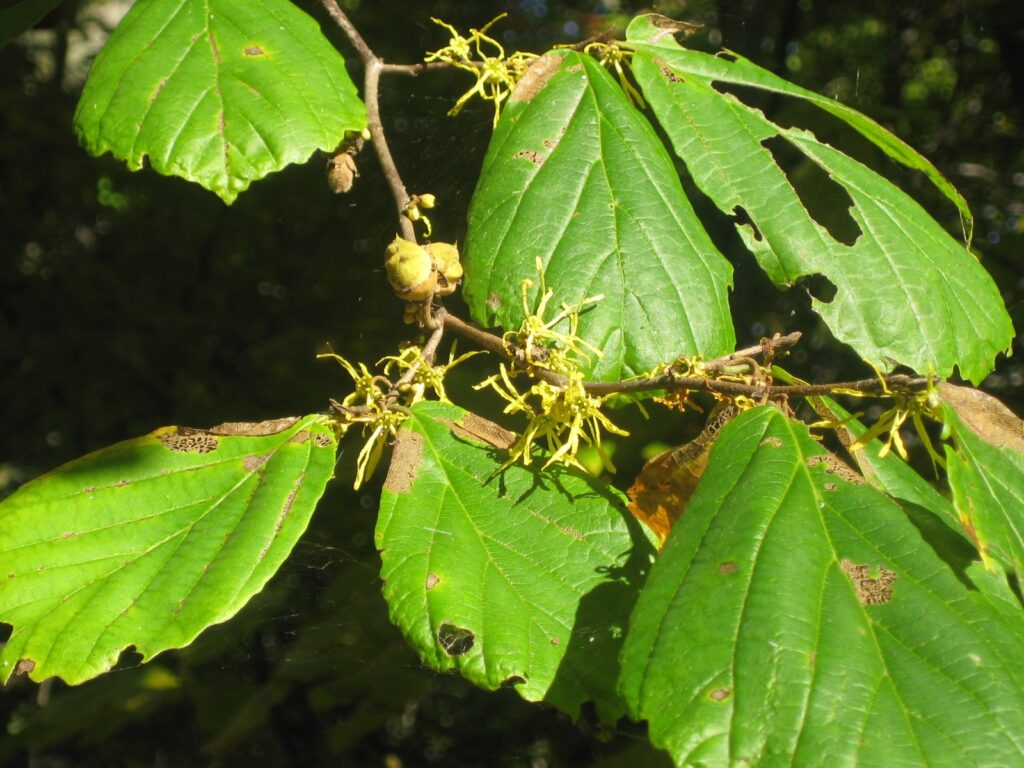
- Leaves: Broadly oval green leaves with wavy margins that turn attractive shades of yellow in autumn.
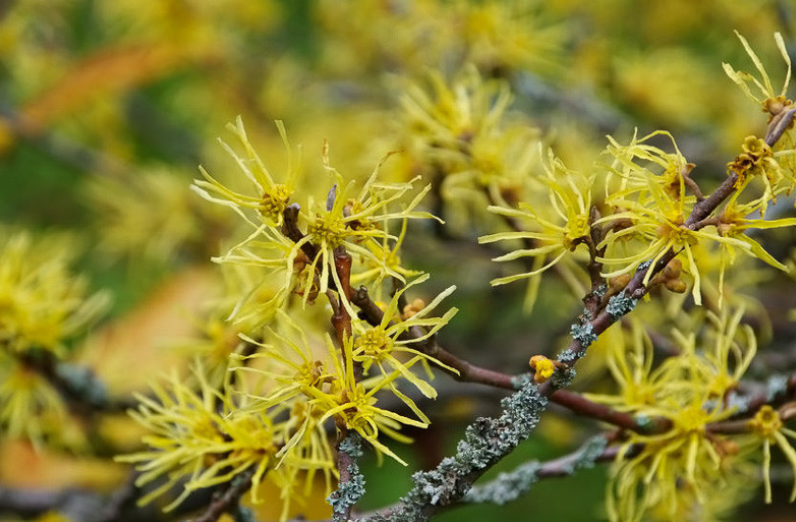
- Flowers: Fragrant, bright yellow, spider-like flowers with four narrow ribbon-shaped petals. Blooms appear from late September through December.
- Fruit: Woody seed capsules that develop over a full year before splitting open explosively to disperse seeds.
- Hardiness: USDA Zones 3 to 8, making it suitable for much of Canada and the United States.
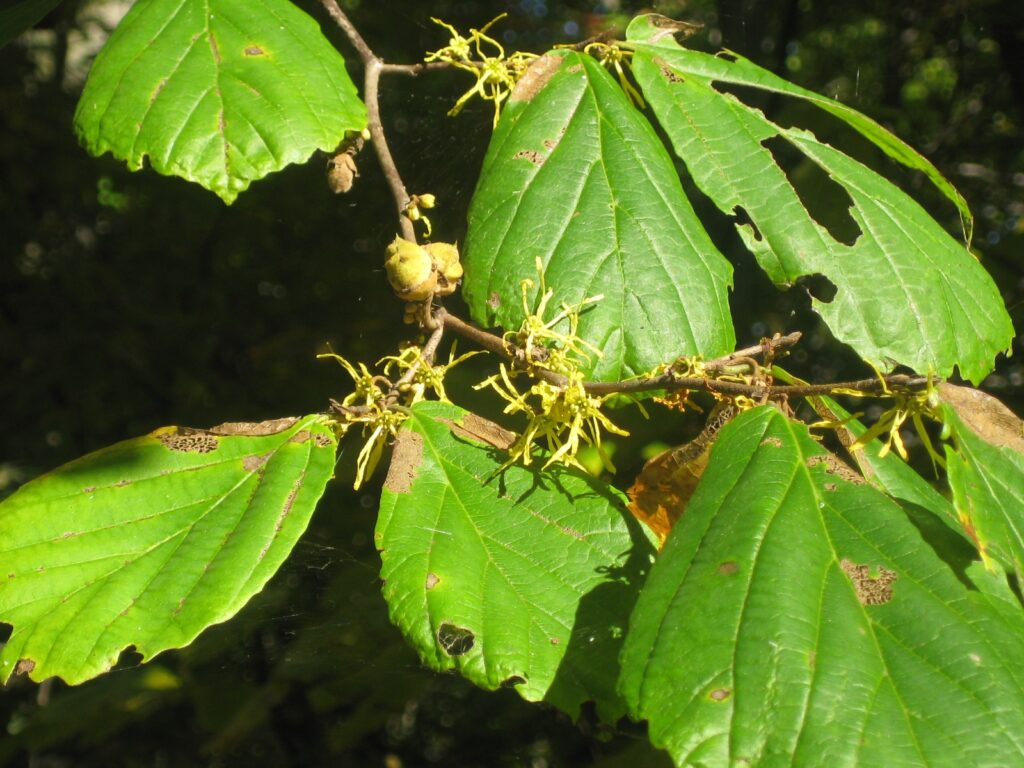
One of the plant’s most remarkable characteristics is that flowers, developing fruits from the previous year, and new buds can all be present on the same branch simultaneously.
Landscape Value
American Witch Hazel deserves far greater use in modern landscapes than it currently receives.
Exceptional Late-Season Bloom
Its primary ornamental feature is its unusual flowering period. While most shrubs bloom in spring or summer, Witch Hazel flowers when the landscape is dominated by bare branches and falling leaves. This makes it a standout specimen during the autumn and early winter months.
Four-Season Interest
Witch Hazel contributes beauty throughout the year:
- Attractive green foliage in summer
- Bright yellow fall colour
- Fragrant autumn flowers
- Interesting branching structure in winter
- Decorative seed capsules that persist into the following season
Native and Pollinator Friendly
The late-season flowers provide nectar resources when few other plants are blooming. The shrub also offers shelter and habitat for birds and small mammals.
Woodland Garden Star
Because it naturally grows in forest understories, Witch Hazel performs beautifully in:
- Woodland gardens
- Naturalized landscapes
- Native plant gardens
- Rain gardens
- Shade gardens
- Mixed shrub borders
Deer Tolerance
Although no plant is completely deer-proof, American Witch Hazel has some resistance to deer browsing, making it useful in rural and suburban settings.
Pests and Diseases
One of the greatest advantages of Hamamelis virginiana is its relatively low-maintenance nature.
Potential Insect Pests
Occasionally affected by:
- Japanese beetles
- Gall aphids
- Scale insects
- Leafminers
- Leafrollers
- Various caterpillars
These pests rarely cause serious long-term damage.
Potential Diseases
Possible disease concerns include:
- Powdery mildew
- Leaf spot diseases
Fortunately, most issues are cosmetic rather than life-threatening and seldom require chemical intervention.
Fascinating Witch Hazel Facts
It Blooms When Frost Is in the Forecast
American Witch Hazel is among the last native shrubs to flower before winter arrives. Its petals can curl up during cold weather and unfurl when temperatures rise.
It Launches Seeds Like a Tiny Catapult
The mature seed capsules explode with enough force to propel seeds up to 10 metres (33 feet) from the parent plant. Some gardeners have even reported hearing the capsules “pop” on warm autumn days.
The Name Has Nothing to Do with Witches
The word “witch” likely comes from an old English word meaning flexible or bendable, referring to the use of forked branches as divining rods.
A Famous Medicinal Plant
Witch Hazel extract, distilled from the bark and twigs, remains one of the most widely used botanical products in North America. It has been used for generations in skin-care and personal-care products.
Flowers and Fruit at the Same Time
One of the most unusual features of American Witch Hazel is that flowers and mature fruit can be found on the plant simultaneously, a characteristic rarely seen among temperate woody plants.
Why Ontario Gardeners Should Grow Witch Hazel
For Ontario gardeners looking to increase biodiversity and extend seasonal interest, Hamamelis virginiana is an outstanding choice. It is native, hardy, adaptable to a variety of soil conditions, and provides beauty when most landscapes are entering dormancy. Its unique flowering period offers welcome colour in late fall while supporting late-season pollinators and wildlife.
Whether planted as a woodland specimen, incorporated into a native plant garden, or used in a naturalized landscape, American Witch Hazel delivers year-round value with minimal maintenance.