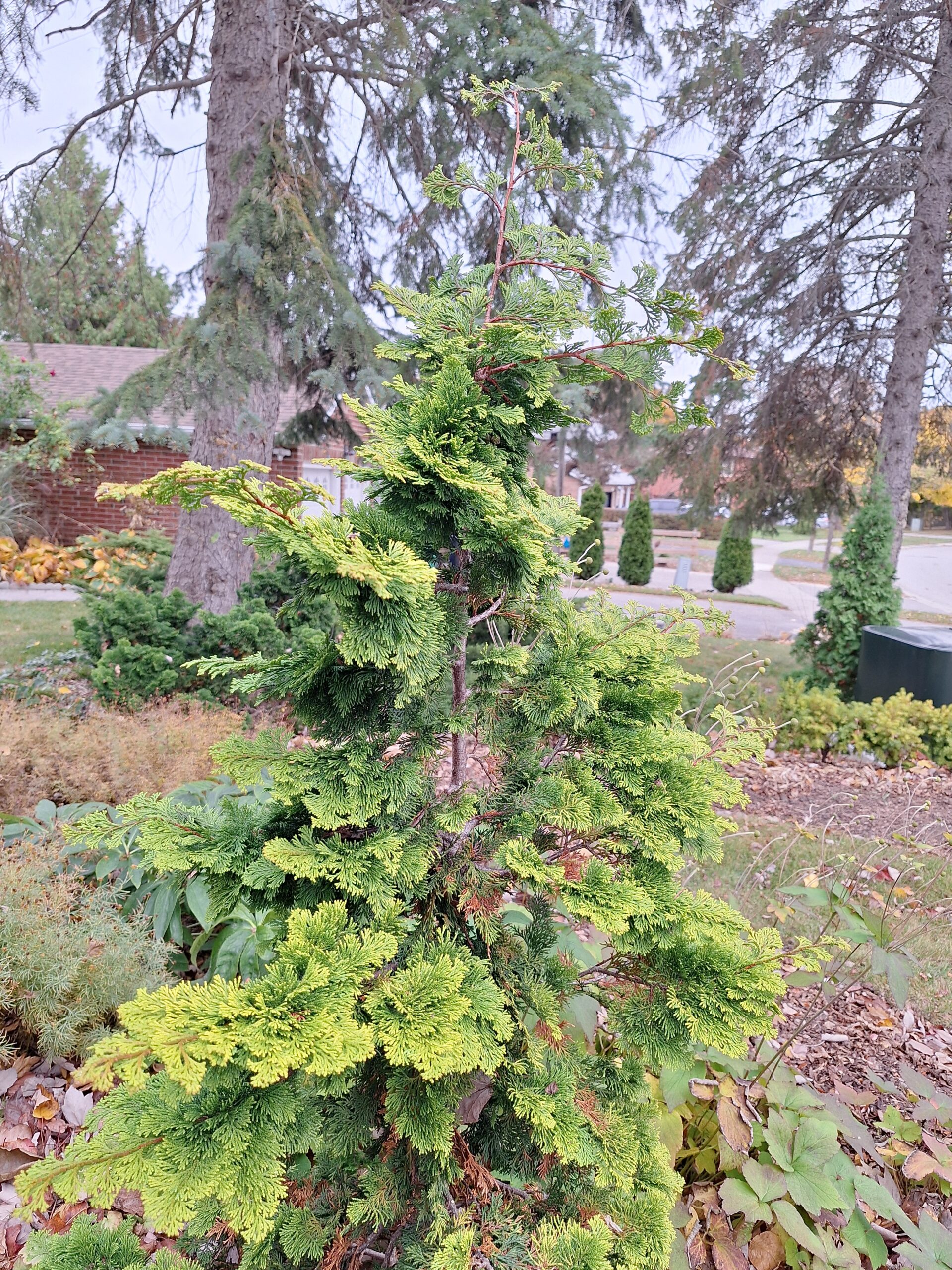
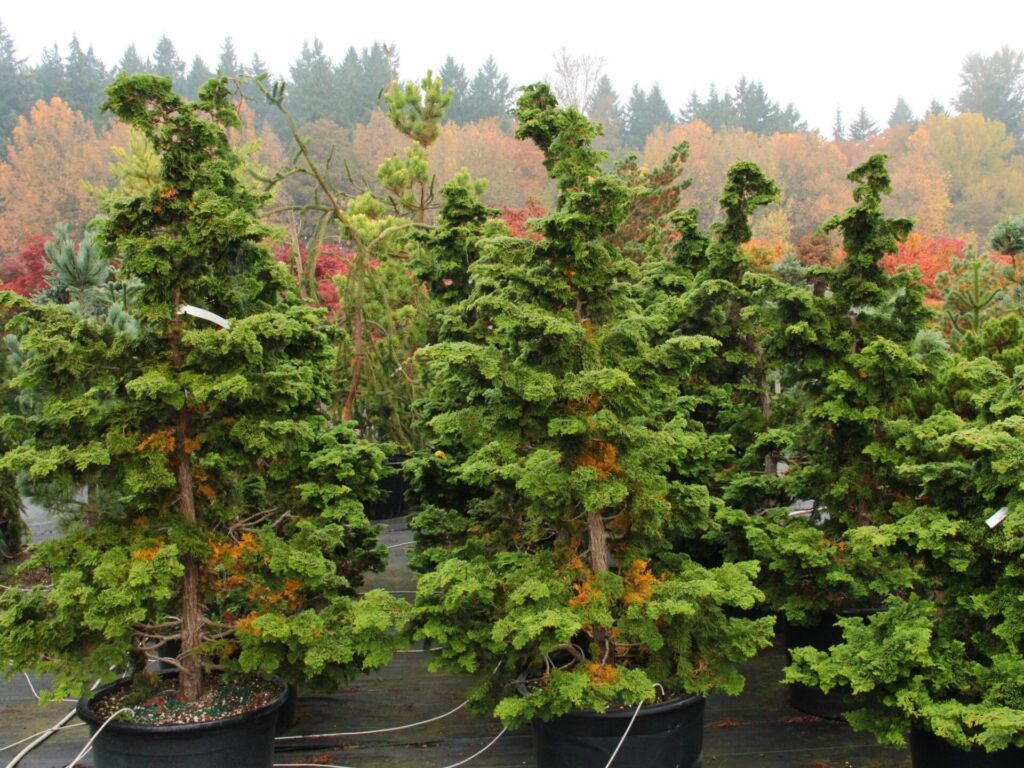
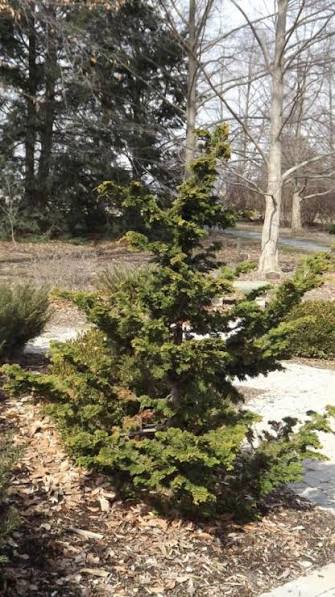
Few conifers combine elegance, longevity, and cultural significance quite like Chamaecyparis obtusa ‘Gracilis’, commonly known as the Slender Hinoki Cypress. With its deep green, shell-like sprays of foliage and naturally pyramidal form, it has become a favourite specimen tree in Ontario landscapes while maintaining a strong connection to its Japanese heritage.
Origins: From the Mountains of Japan
‘Gracilis’ is a cultivated form of Hinoki Cypress (Chamaecyparis obtusa), a species native to the mountainous regions of central Japan and parts of Taiwan. The species has been treasured in Japan for centuries, both as an ornamental tree and as a source of exceptionally durable timber.
The cultivar name “Gracilis” comes from Latin, meaning graceful or slender, an appropriate description of its elegant, narrow pyramidal habit. Historical records indicate that the cultivar was introduced from Japan into Europe around 1862, where it quickly gained popularity among collectors of unusual conifers.
Unlike the species, which can reach more than 30 metres in its native forests, ‘Gracilis’ remains much smaller and slower growing, typically reaching 3–6 metres tall in cultivated landscapes.
Landscape Uses in Ontario
For Ontario gardeners and landscape designers, ‘Gracilis’ fills a valuable niche. It provides year-round structure without becoming overwhelmingly large.
Excellent Uses Include:
- Specimen plantings where its unique texture can be appreciated.
- Foundation plantings for larger homes and commercial buildings.
- Japanese-inspired gardens alongside maples, stones, and water features.
- Mixed conifer collections where contrasting textures are desired.
- Four-season landscapes providing winter interest.
- Screens and privacy plantings when arranged in small groups.
In Ontario, it performs best in:
- USDA Zone 5 and warmer (many protected Zone 4 sites as well).
- Moist but well-drained soils.
- Slightly acidic soils.
- Full sun to light shade.
- Sheltered locations protected from winter winds. Although we have one in Hamilton that is pretty exposed and doing very well.
One of its greatest strengths is its architectural quality. Even without pruning, the tree develops a naturally refined form that suits both formal and informal landscapes.
Why We Love It
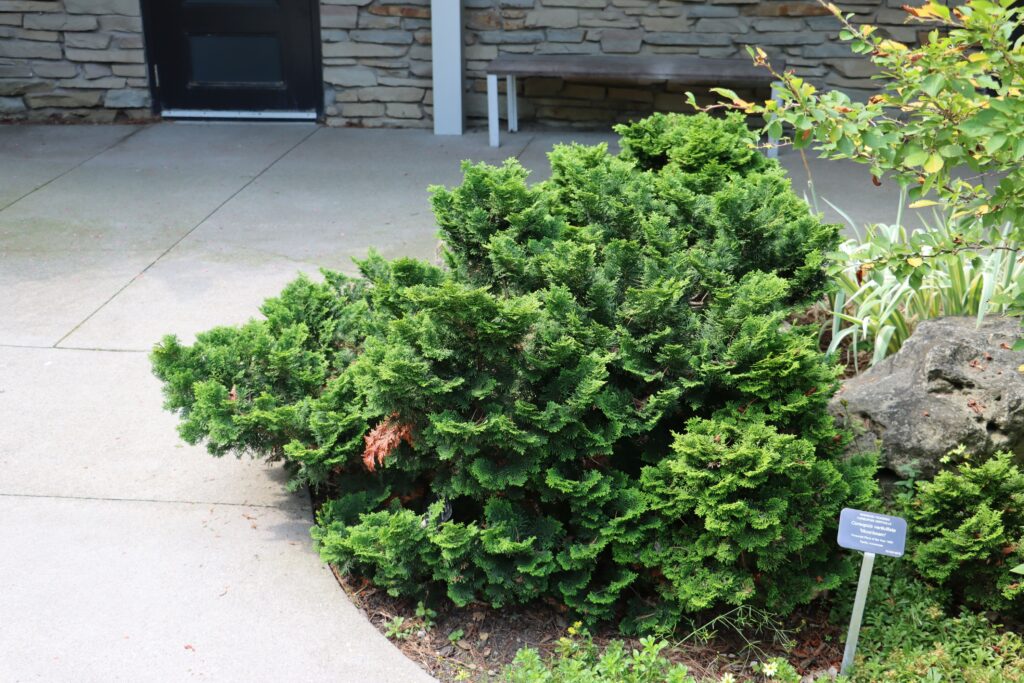
The foliage is unlike most conifers. Instead of sharp needles, it forms flattened sprays that resemble small green fans or seashells. The rich green colour persists through winter, offering welcome contrast against snow-covered landscapes.
Its slow growth also means less maintenance, making it particularly attractive for homeowners seeking long-term landscape value.
Pest and Disease Pressures
Fortunately, Hinoki Cypress is generally considered a relatively trouble-free conifer. However, several issues can occur.
Insect Pests
Juniper Scale
This sucking insect can cause yellowing, thinning foliage, and reduced vigour. Scale infestations are most common on stressed plants.
Disease Concerns
Phytophthora Root Rot
The most serious threat is often poor drainage. Wet soils encourage Phytophthora root diseases, leading to yellowing foliage, branch dieback, and eventual death. Good drainage is essential.
Juniper Blight and Tip Blights
Several fungal diseases can kill shoot tips and small branches, particularly during prolonged wet weather or where airflow is poor.
Cultural Problems Often Mistaken for Disease
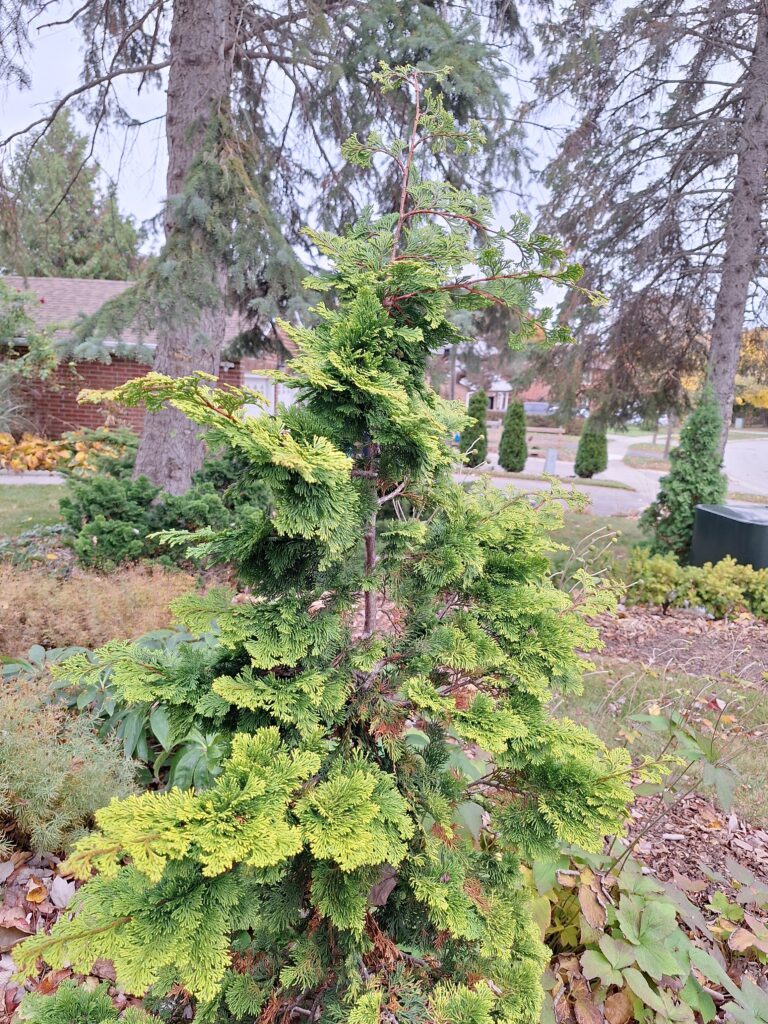
Many gardeners become alarmed when interior foliage browns during autumn. In many cases this is simply normal shedding of older foliage, not a disease problem. Environmental stress from drought, road salt, winter wind, or compacted soil can also cause browning.
Folklore and Cultural Significance
Few landscape plants carry such a rich cultural story.
In Japan, Hinoki is regarded as a sacred tree and has long been associated with purity, spirituality, and longevity. Its wood was traditionally reserved for temples, shrines, palaces, and other important buildings.
The famous Hōryū-ji Temple, one of the oldest surviving wooden structures in the world, was constructed using Hinoki timber. Some portions of the structure have stood for well over a millennium.
Perhaps the strongest cultural connection comes from the Ise Grand Shrine, Japan’s most sacred Shinto shrine. Traditionally rebuilt every 20 years, it uses carefully selected Hinoki timber harvested from protected forests. Certain Hinoki trees grown for this purpose are regarded as “divine trees” (goshinboku) (pardon me if I messed that up).
The Japanese name Hinoki is often translated as “tree of the sun” or “fire tree.” The species has come to symbolize endurance, renewal, and harmony with nature.
Its fragrant wood is also used in traditional soaking tubs (ofuro), shrines, and ceremonial objects. The aroma is widely associated with relaxation, purification, and forest bathing (“shinrin-yoku”), further enhancing the tree’s reputation as a symbol of tranquility.
A Blog-Worthy Closing Thought
When you plant Chamaecyparis obtusa ‘Gracilis’, you’re doing more than adding another evergreen to a landscape. You’re introducing a living descendant of the forests that supplied timber for Japan’s ancient temples and shrines. Its graceful form, low-maintenance nature, and year-round beauty make it perfectly suited to Ontario gardens, while its centuries-old cultural heritage gives it a story that few landscape plants can match.