Why does your GTA lawn keep dying in the same spots no matter how much you water it? The problem is not how much water you are applying. It is when, where, and how it is reaching your roots. A proper lawn irrigation services plan is built around your soil type, grass variety, yard layout, and seasonal needs. Without those four factors, water either misses the roots or drowns them.
Why GTA Yards Need a Different Approach to Watering
Clay-heavy soil in Hamilton, Burlington, and Milton holds water longer than sandy soil does. Over-watering that soil pushes oxygen out of the root zone and invites fungal disease.
Under-watering during a dry July in Mississauga or Oakville causes roots to stay shallow and weak. Neither problem gets solved by guessing. A zone-based plan built around your specific soil prevents both.
What Zone-Based Watering Actually Means
The lawn is divided up into zones based on sunlight, grade, and plant types. Each zone is scheduled to be watered at different times. The shade garden requires much less water than the sunny lawn turf.
Does Your Yard Actually Need an Irrigation System Installed?
Not every property needs underground pipes. Some yards do well with scheduled surface watering managed by a professional lawn maintenance service on a fixed weekly or bi-weekly program.
It is best suited for use in larger yards, yards that slope, and yards with more than one type of planting material. The most important thing is to match the type of irrigation system to your yard’s needs. A second assessment by lawn irrigation services professionals confirms which setup best fits your property.
What a Proper Seasonal Irrigation Schedule Seems Like
A lawn care service that ignores seasonal shifts causes more damage than drought ever could. Here’s how irrigation should be done during every season:
- Spring: Water lightly and infrequently, since the roots will not yet have grown deep after winter dormancy. Excessive irrigation in April can be detrimental to the grass.
- Summer: Water deeply two to three times a week before 9 AM. This pushes roots downward into cooler, more stable soil and builds stronger turf through peak heat.
- Fall: Reduce watering as temperatures drop. Grass slows its growth and needs far less moisture to stay healthy heading into winter.
Why Timing Matters as Much as Volume
Watering at noon means much of the moisture will be lost to evaporation before it reaches the plant’s roots. Evening watering leaves the lawn wet overnight, which encourages fungi. The time to water the grass should be only in the morning.
How Proper Irrigation Connects to Your Overall Lawn Health
Water is only one piece of the equation. Landscaping services that integrate their irrigation plans with fertilization and aeration schedules will achieve better outcomes than companies that only irrigate.
Compacted soil repels water no matter how well your irrigation is timed. Aeration opens the ground, so water actually reaches the root zone. A proper lawn care service gives roots something to absorb once they have consistent access to moisture.
A lawn maintenance service that manages irrigation without addressing soil health is treating the symptom, not the cause. Both need to work together for real results.
Conclusion
Irrigation should be more than merely watering on a certain schedule and praying everything goes well. Rather, it should incorporate a plan that fits your soil, landscaping, and seasonal needs.
If your lawn is still patchy, dry in spots, or struggling despite frequent watering, the plan is the problem. A professional landscaping services provider can assess your yard and build a watering program that actually fits it. The right irrigation setup gives GTA yards a real foundation to stay healthy through every season.
Frequently Asked Questions
What is a lawn irrigation system?
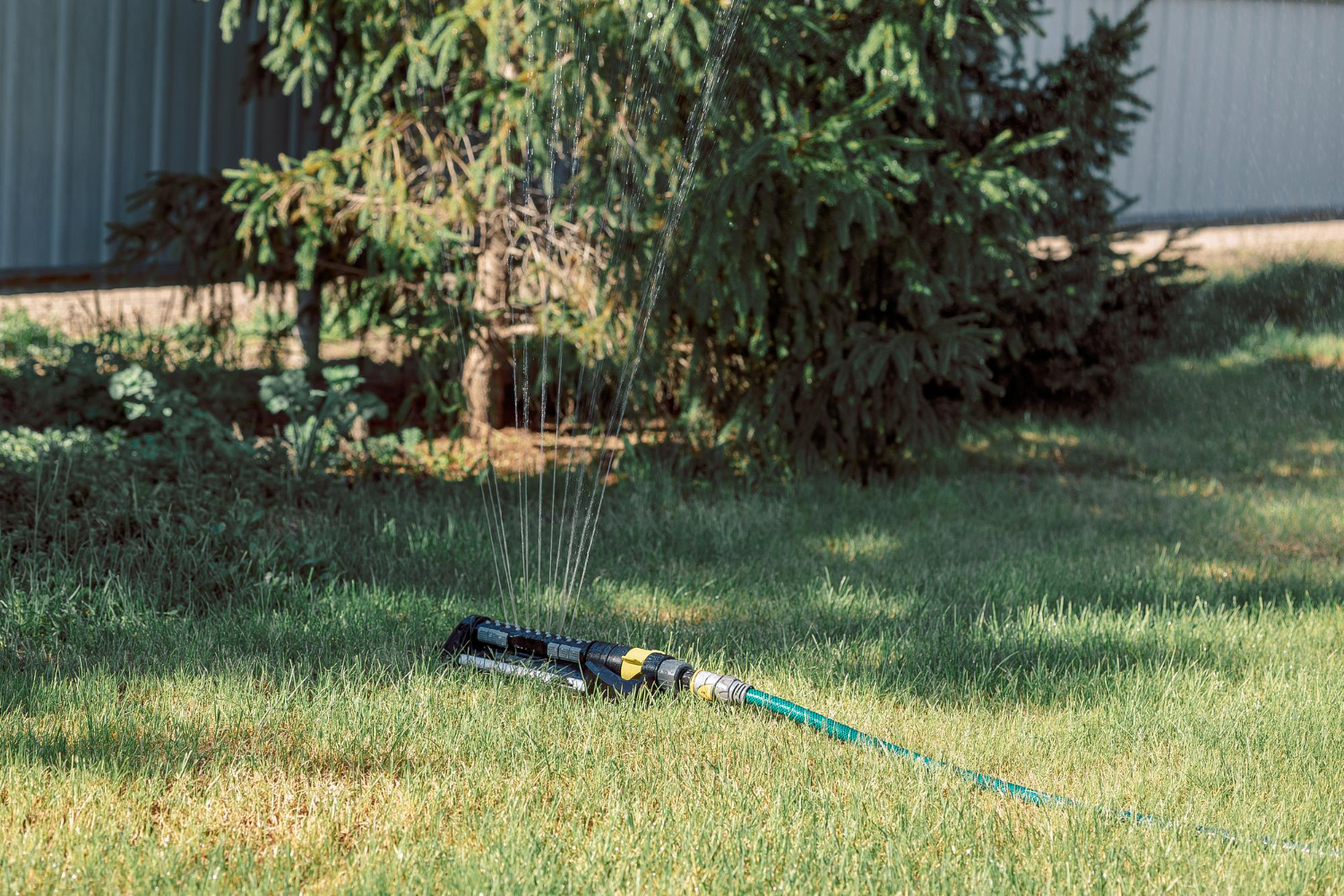
A lawn irrigation system distributes water on your lawn in a regulated manner. Sprinkler-based irrigation systems will irrigate vast areas, such as open lawns and large garden beds. The drip system uses emitters on tubes and pipes to deliver water to plants’ root zones.
What are the 7 types of irrigation?
Irrigation systems are classified into seven categories: surface irrigation involves moving water through the natural movement over the land surface; sprinkler irrigation involves the sprinkling of water through the air above an extensive area; drip irrigation involves irrigating through a drop-by-drop method; subsurface irrigation involves delivering water through pipes underground; local irrigation involves irrigating selected plants; rotational irrigation involves rotating sprinklers; and manual irrigation involves irrigating through human hands.
What is the best way to irrigate a lawn?
The best time to water a lawn is early morning when grass is active and absorbs moisture most effectively. Any excess water evaporates naturally, keeping blades dry and decreasing the risk of disease. Watering midday is not recommended because most of the water evaporates before it ever reaches the roots.