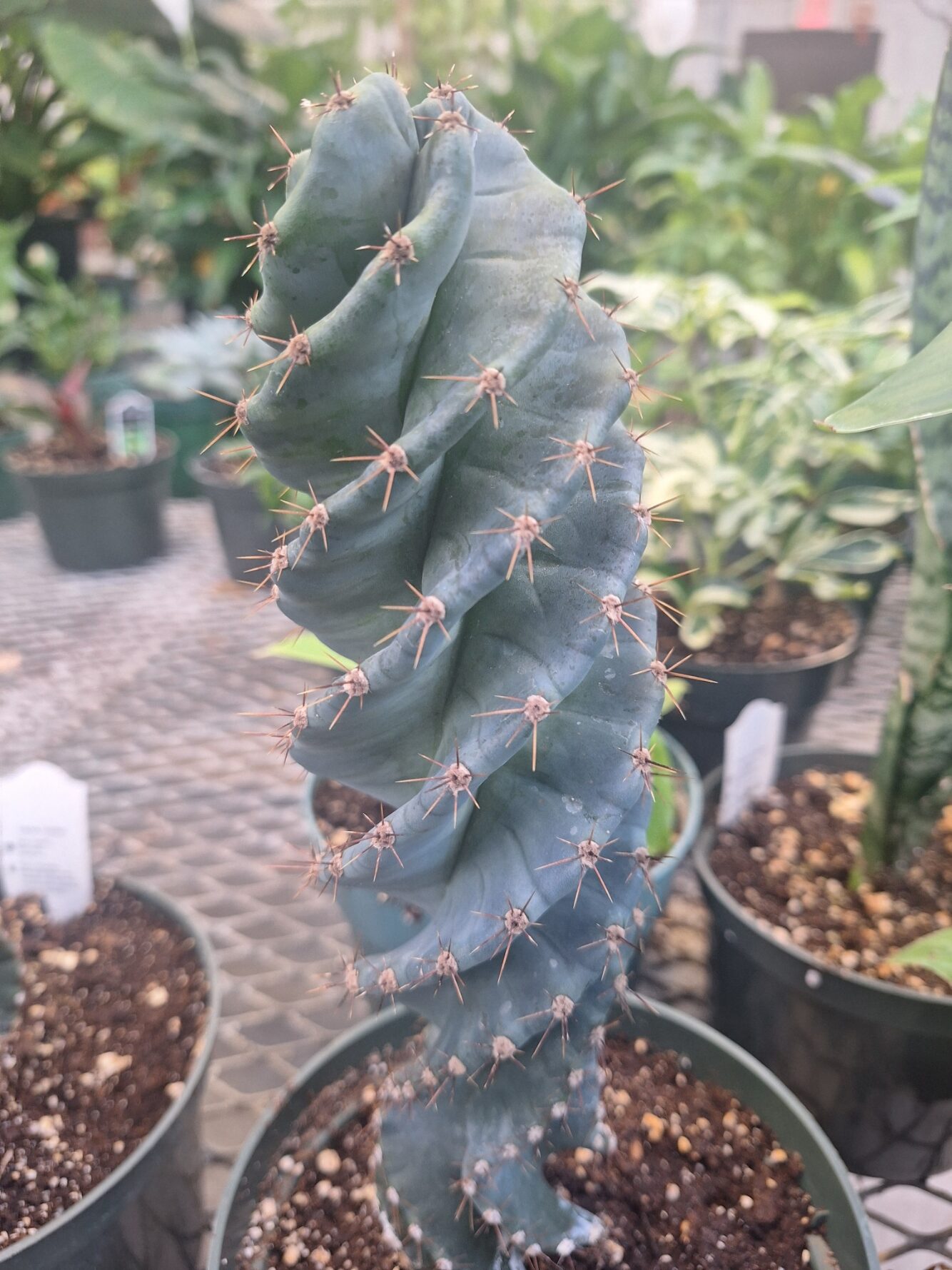
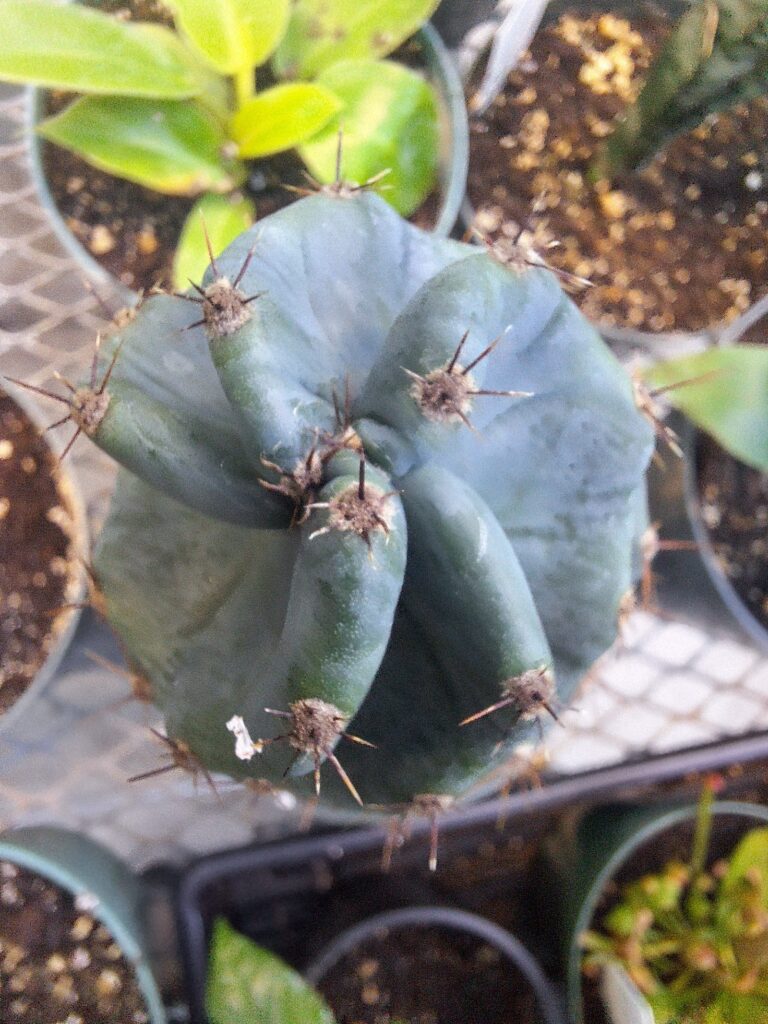
I was at Humber College on Friday teaching my Level 1 Horticulture Technician Apprentices, and during our break I did what any plant‑obsessed instructor does—I wandered into the greenhouse. Amid the succulents and tropicals, one plant practically posed for me: Cereus forbesii ‘Spiralis’, commonly known as the Spiral Cactus.
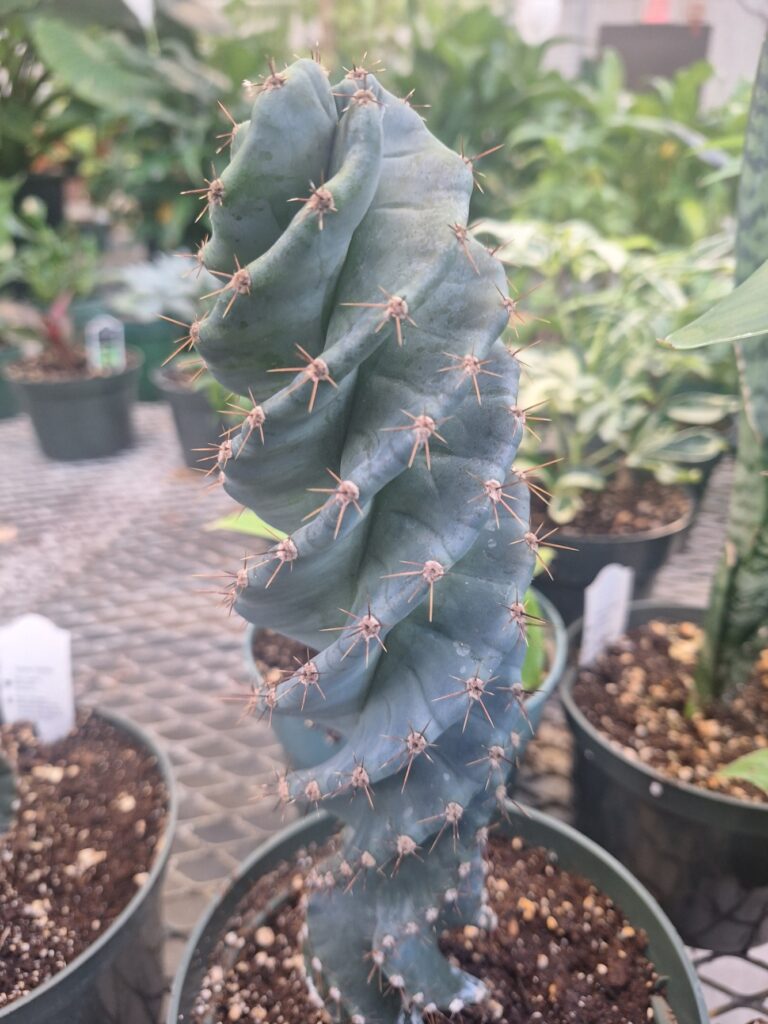
If you’ve never seen one, imagine a cactus that looks like it stepped straight out of a botanical Dr. Seuss book—twisting, architectural, and impossible to ignore. Naturally, I stopped in my tracks.
🌵 Why Spiral Cactus Makes a Great Indoor Plant
The appeal of Cereus forbesii ‘Spiralis’ goes way beyond its whimsical shape:
- Architectural form
Its dramatic corkscrew growth habit makes it a natural focal point in any room. Even one specimen transforms a space. - Low maintenance
This plant is basically the introvert of the cactus world—quiet, undemanding, and perfectly happy being left alone most of the time. - Well-suited to bright indoor environments
If you’ve got a bright window, this cactus will reward you with steady growth and a sculptural silhouette. - Clean, modern aesthetic
Its smooth blue‑green skin and spiraling ribs fit beautifully in contemporary interiors, minimalist spaces, or even mixed tropical collections.
🌍 Origins: Nature’s Natural Spiral
The species Cereus forbesii comes from South America—primarily Bolivia and Argentina, where it grows in arid, rocky regions. The spiral form is a naturally occurring mutation that growers selected and cultivated.
What makes it especially fascinating is that spiraling doesn’t occur from day one—young plants often start straight and begin twisting as they mature. It’s one of the few plants where patience literally pays off in geometry.
🌱 Care Tips for Keeping Your Spiral Cactus Happy
Light:
Give it bright, direct sun for several hours a day. A south‑ or west‑facing window is ideal.
Water:
Let it dry out completely between waterings. In winter, scale back even more—once every 4–6 weeks often works.
Soil:
Use a gritty cactus/succulent mix. Good drainage is everything. We use Pro-Mix HP
Temperature:
They prefer warm indoor conditions but appreciate cooler nights (just like in their native desert climates).
Repotting:
They don’t mind being slightly pot‑bound. Move up only one pot size at a time.
Bonus:
With enough light and age, they may even bloom with large, fragrant night flowers—an impressive reward.
💬 Do You Grow One? Let’s Talk Spirals!
If you’ve had experience with Cereus forbesii ‘Spiralis’—successes, struggles, photos, or tips—I’d love to hear about it.
Drop your thoughts in the comments or reach out directly. Always great to learn from fellow plant people!