When it comes to professional interior plant installations, every detail matters—right down to what covers the surface of the soil. One of the most effective and attractive materials we use is reindeer moss, a natural, preserved lichen that adds beauty, functionality, and design flexibility to indoor plant displays.
Below are the key reasons why reindeer moss has become a go‑to choice for interior plant technicians, designers, and plantscapers.
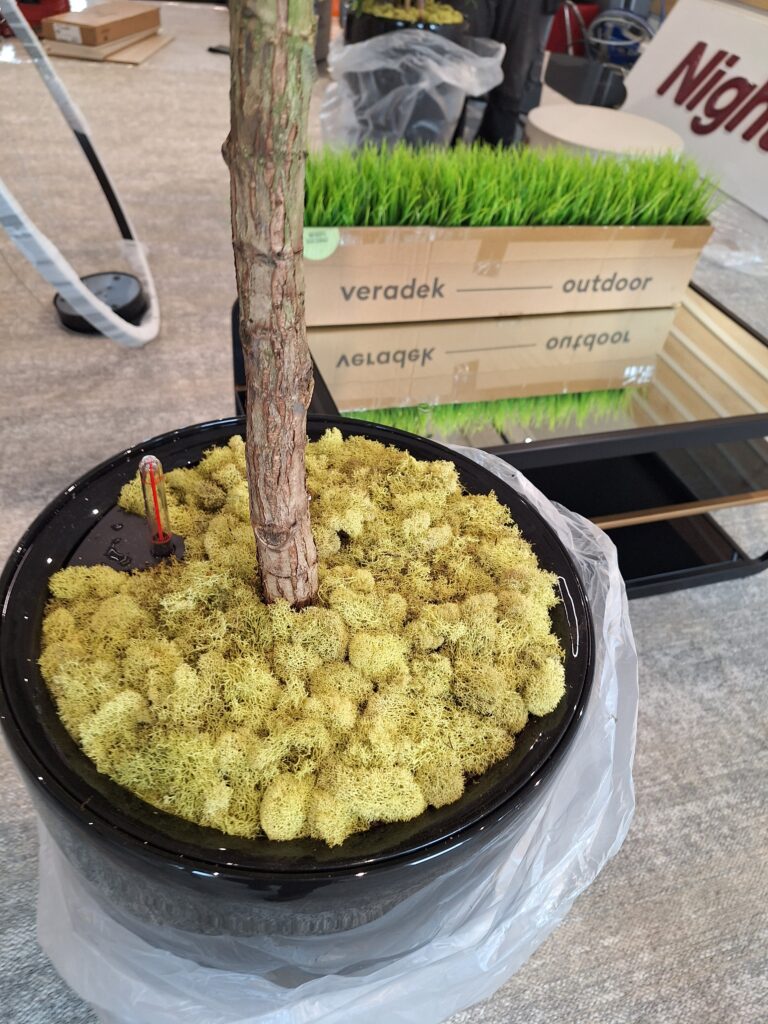
- Reindeer Moss Creates a Clean, Finished, Aesthetic Look
Commercial and residential interiors rely on clean, polished visuals—and exposed soilless mix isn’t always the most attractive.
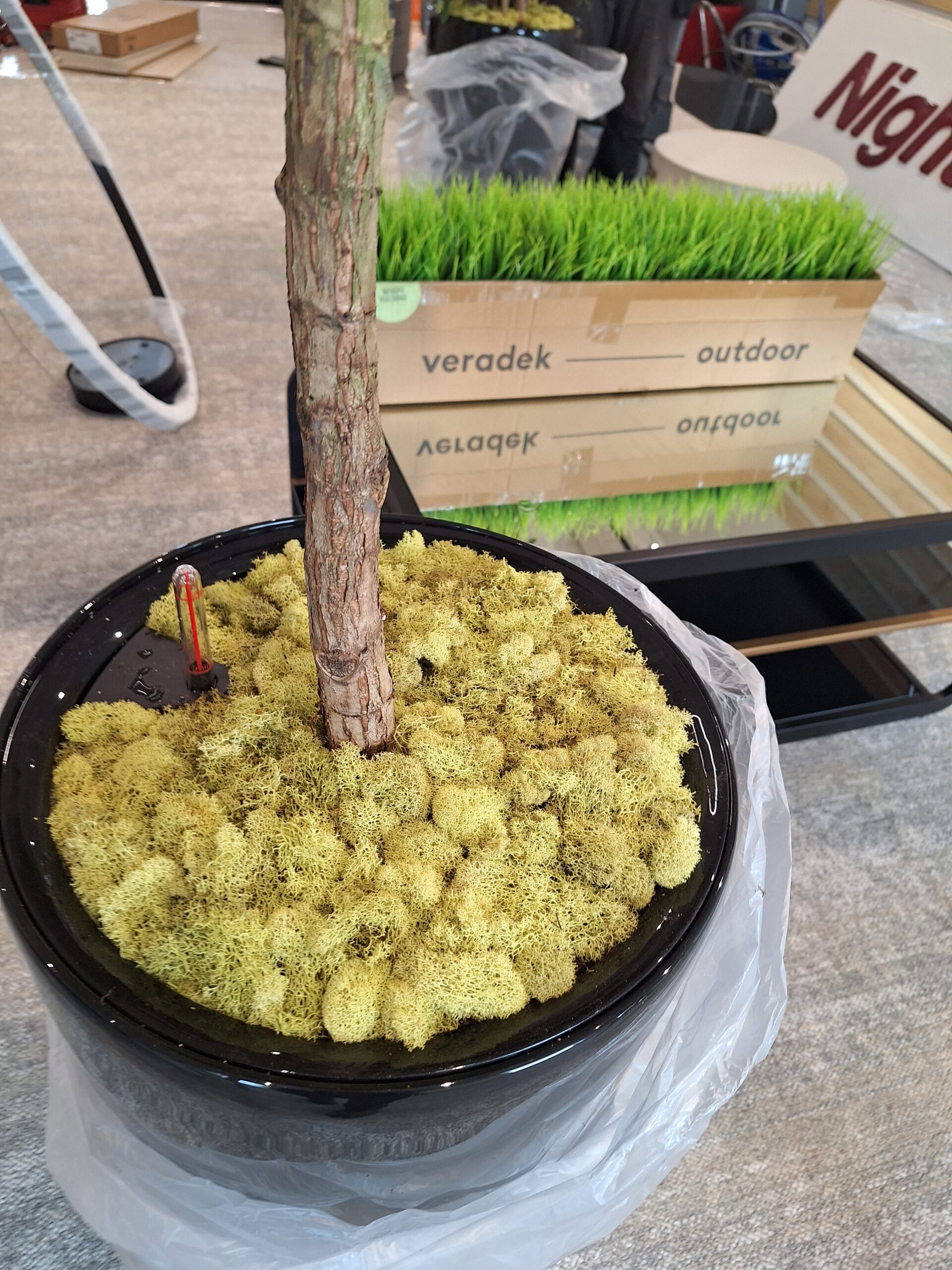
We use a high‑quality soilless growing medium that includes ingredients like perlite and vermiculite, which are fantastic for plant health but can look distracting in a modern interior.
Reindeer moss:
- Softens the overall appearance of the planter
- Hides perlite, vermiculite, and other light‑coloured soil components
- Creates a natural, high‑end design finish
This simple finishing touch elevates the look of interior plantscapes, making the installation appear intentional, curated, and professionally maintained.
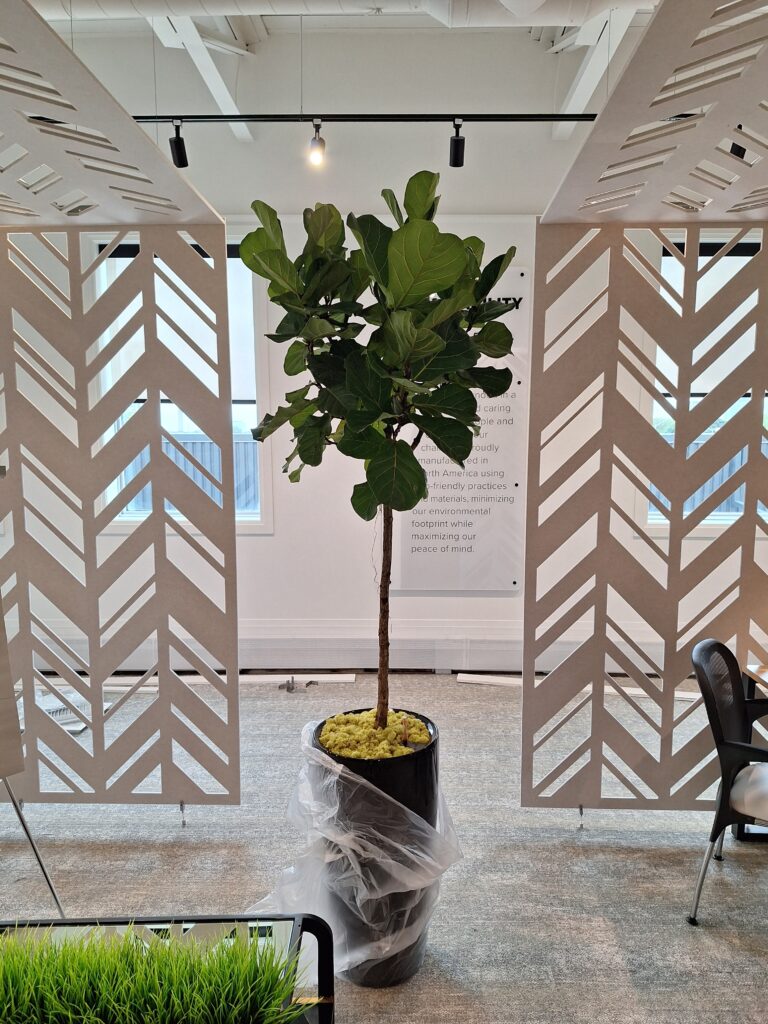
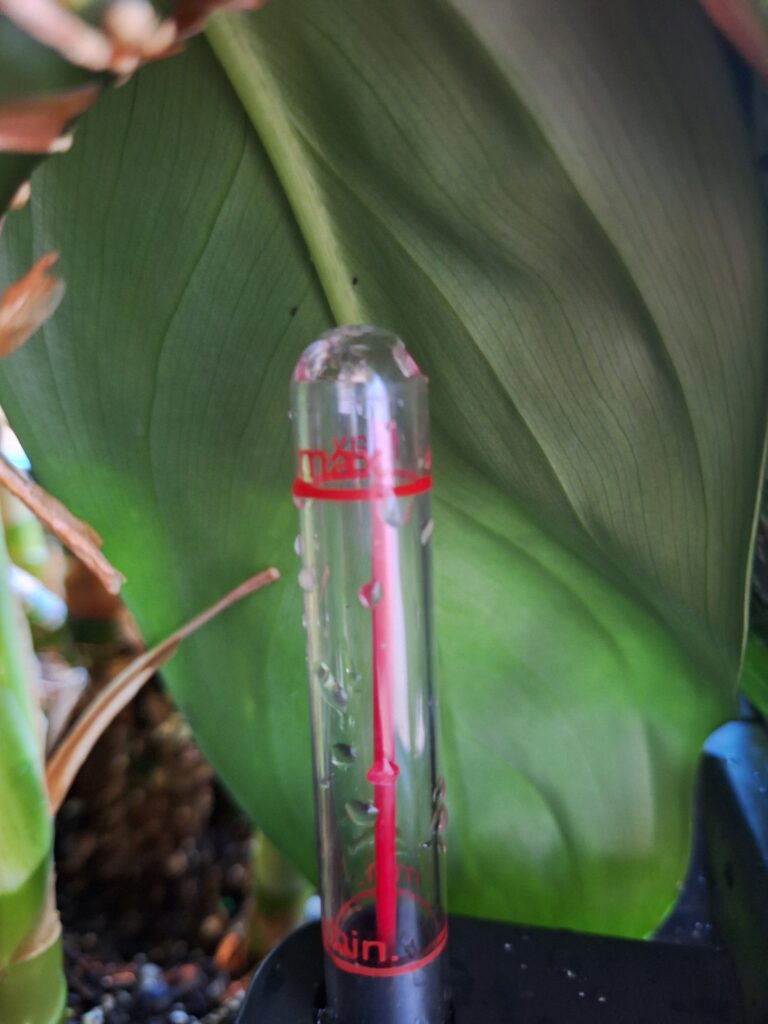
- It Helps Protect Lechuza Planters—and Prevents Overwatering
We install many of our plants in Lechuza self‑watering planters, which rely on a built‑in water reservoir system. These pots are designed so that plants draw moisture from below—mimicking a natural capillary action. When clients or staff accidentally water from the top, it can disrupt the system, cause oversaturation, and compromise plant health.
Reindeer moss acts as a friendly visual cue:
- It discourages people from watering from the top
- It signals that the planter is professionally maintained
- It keeps the Lechuza sub‑irrigation system working exactly as designed
A simple layer of moss can save a lot of unnecessary plant stress.
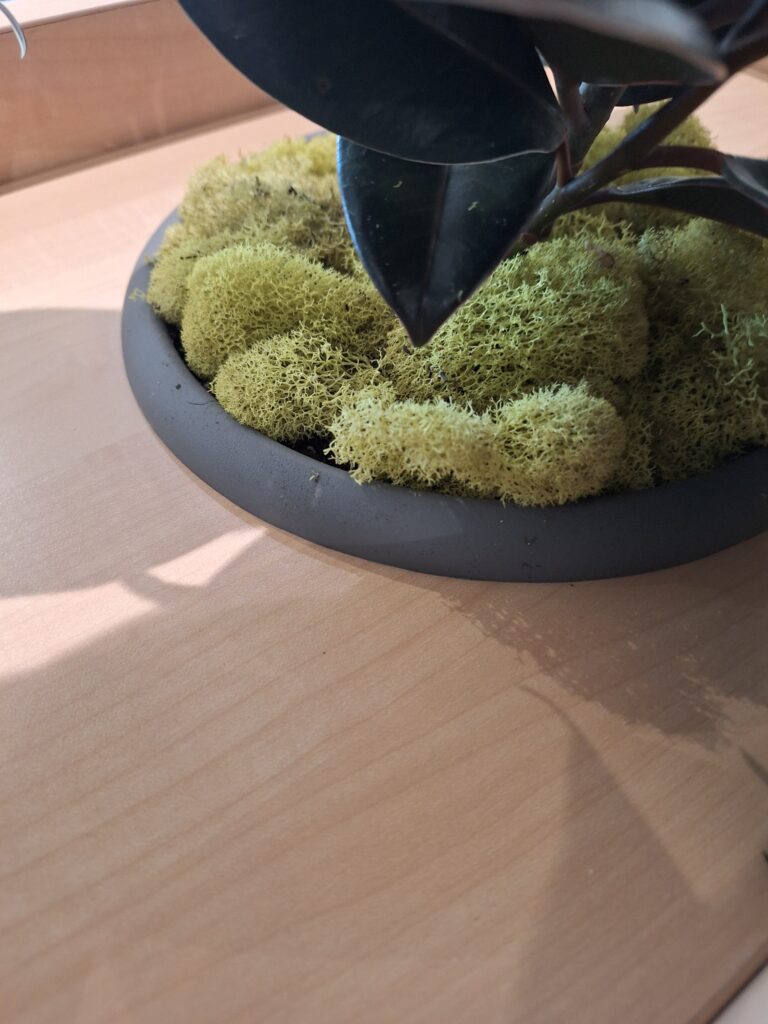
- Multiple Colour Options Let Us Match Any Design Style
One of the biggest advantages of reindeer moss in interior design is its colour versatility. Because it’s preserved, it comes in a variety of hues—from natural greens to bright whites, charcoals, and even vibrant accent colours.
This gives us the ability to:
- Match your interior décor
- Complement specific furniture or architectural features
- Create a cohesive, branded look
- Add subtle texture or visual contrast
Whether your style is minimalist, biophilic, modern, or bold, reindeer moss helps tie the entire installation together.
So… What Do You Think?
Have you used reindeer moss in your interior design projects?
Do you prefer natural tones or bold colours?
Have you noticed a difference in how your plantscapes look and feel with moss as a finishing layer?
Drop a comment—I’d love to hear your thoughts.
And if you’d like help planning or refreshing your interior plant installation, feel free to reach out anytime for a free consultation.