Every autumn, homeowners face the same question: Should I leave the leaves on my lawn or clean them up? While there is growing awareness about the ecological benefits of leaves in garden beds and naturalized areas, leaving a thick layer of leaves on your lawn can cause significant damage.
As a horticulturist and landscape professional, I often encourage a balanced approach. Leaves have value in the landscape, but your lawn is not the best place for them to accumulate. Here are five important reasons to remove excess leaves from your turf before winter.
- Leaves Block Sunlight
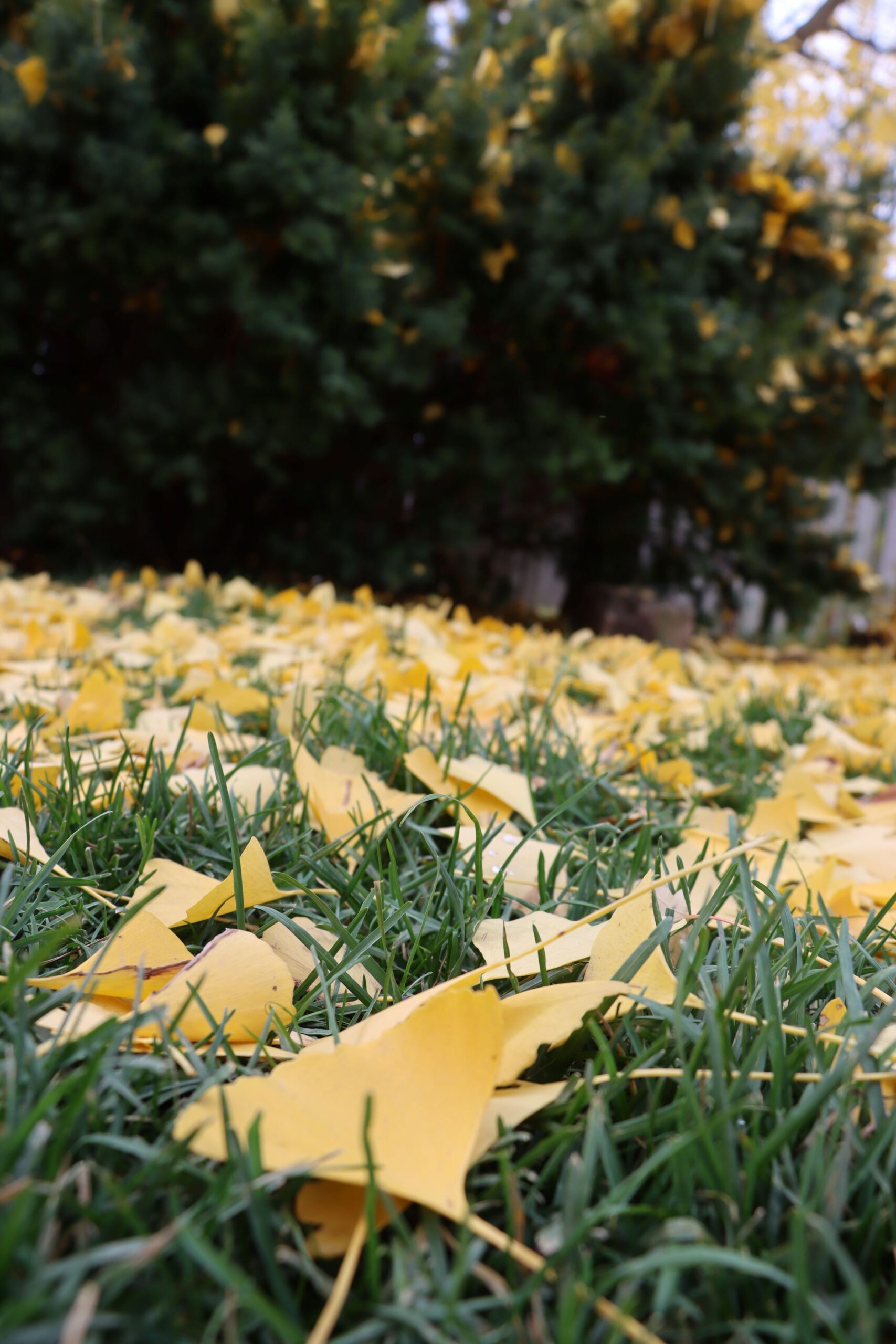
Grass plants need sunlight to continue photosynthesis and store energy for winter survival. A heavy layer of fallen leaves acts like a blanket, preventing sunlight from reaching the grass blades.
When turf is deprived of light for extended periods, it weakens and enters spring with reduced vigor. This often leads to thin patches, poor colour, and slower recovery when growing conditions return.
- Excess Leaves Trap Moisture
A thick mat of leaves holds moisture against the soil surface. While moisture is essential for plant growth, too much can create ideal conditions for fungal diseases and turf decline.
Wet leaves limit air circulation and keep grass damp for extended periods. This can contribute to snow mould and other fungal issues that become visible when the snow melts.
- Leaves Smother Grass
As leaves become wet and compressed, they form a dense layer that physically smothers the turf underneath.
Grass plants require access to light, air, and water. A thick blanket of leaves restricts all three. Areas buried beneath heavy leaf accumulation often emerge in spring as dead or severely weakened patches requiring overseeding or repair.
- Matted Leaves Create Ideal Conditions for Pests
Piles of leaves can provide shelter for unwanted pests throughout the fall and winter. Rodents, insects, and certain lawn pests may use leaf piles as protection from predators and harsh weather.
While healthy ecosystems include many beneficial insects, excessive leaf accumulation on lawns can sometimes create more problems than benefits, especially in highly maintained residential landscapes.
- Leaves Increase Spring Cleanup and Recovery Costs
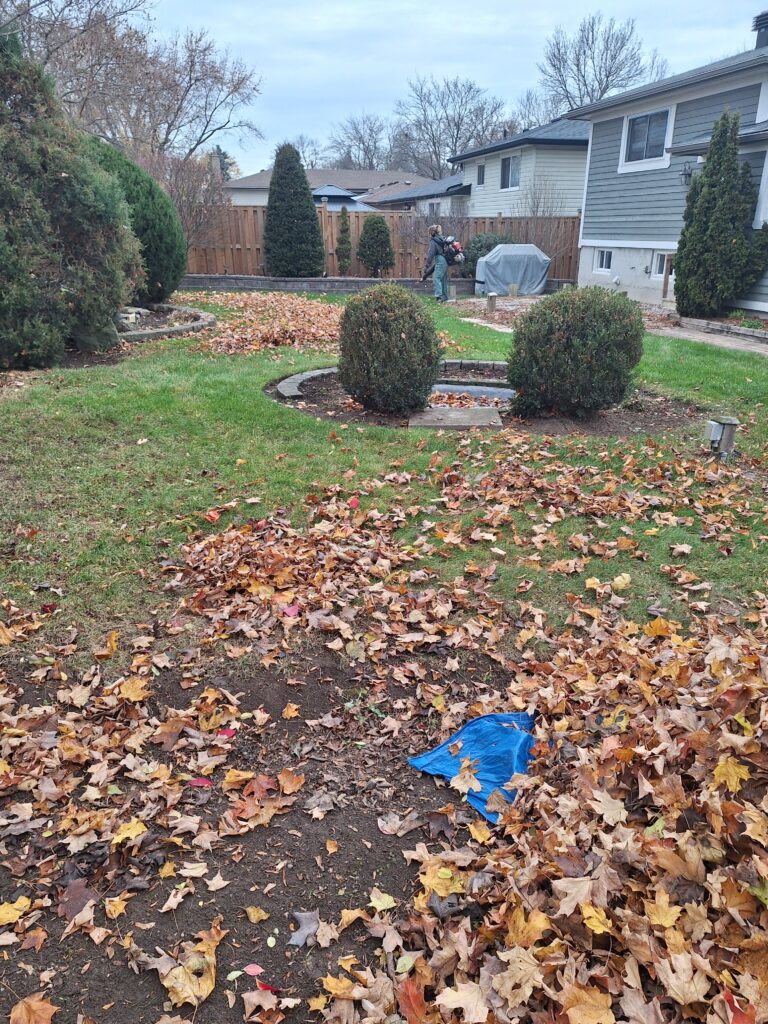
Many homeowners postpone leaf cleanup until spring, only to discover significant lawn damage once the snow melts.
Removing leaves in the fall is typically easier, less expensive, and far less damaging to the lawn than trying to repair dead turf in spring. Fall cleanup helps lawns green up faster, grow more evenly, and start the season in better overall condition.
A Balanced Approach to Fall Leaves
It is important to note that leaves are not the enemy. In fact, they provide valuable habitat for many beneficial insects and can be an excellent source of organic matter.
A practical compromise is to:
- Remove heavy leaf accumulations from lawns.
- Use shredded leaves as mulch in garden beds.
- Leave leaves in naturalized areas where appropriate.
- Compost excess leaves for future use in the garden. Or make sure they go to a compost facility.
This approach supports biodiversity while still protecting the health of your lawn.
Final Thoughts
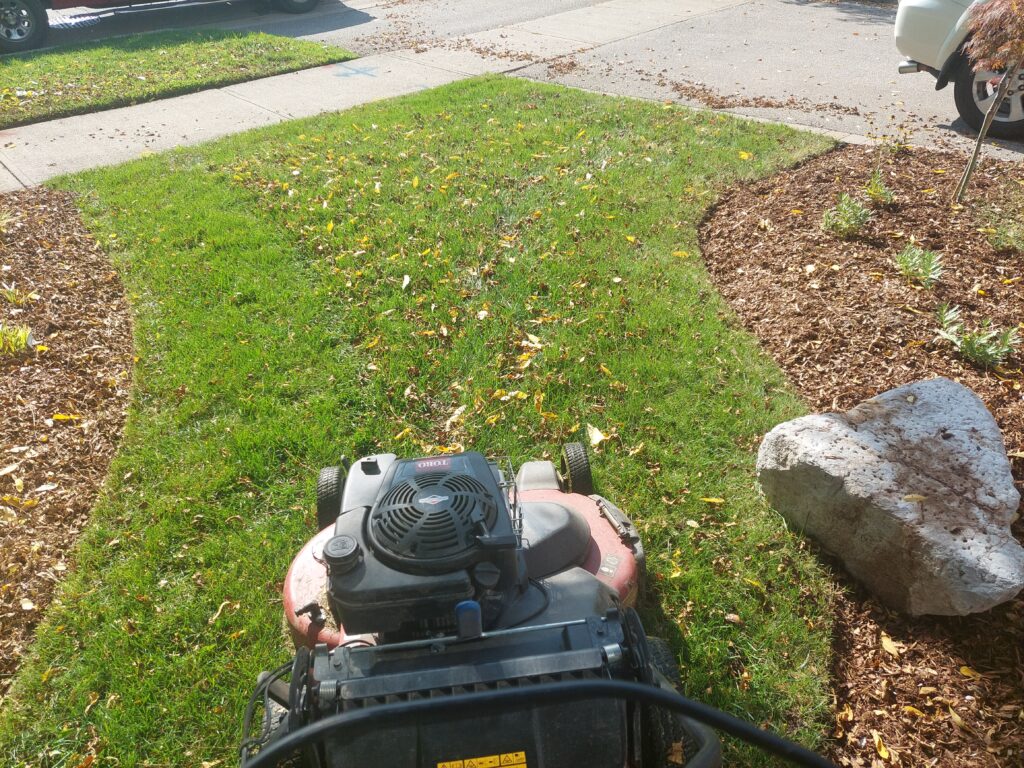
If your goal is a healthy, green lawn next spring, don’t leave a thick blanket of leaves sitting on the grass all winter. Removing excess leaves is one of the most important fall lawn care practices homeowners can undertake. A little effort in autumn can prevent turf damage, reduce disease pressure, and help your lawn emerge stronger and healthier when spring arrives.