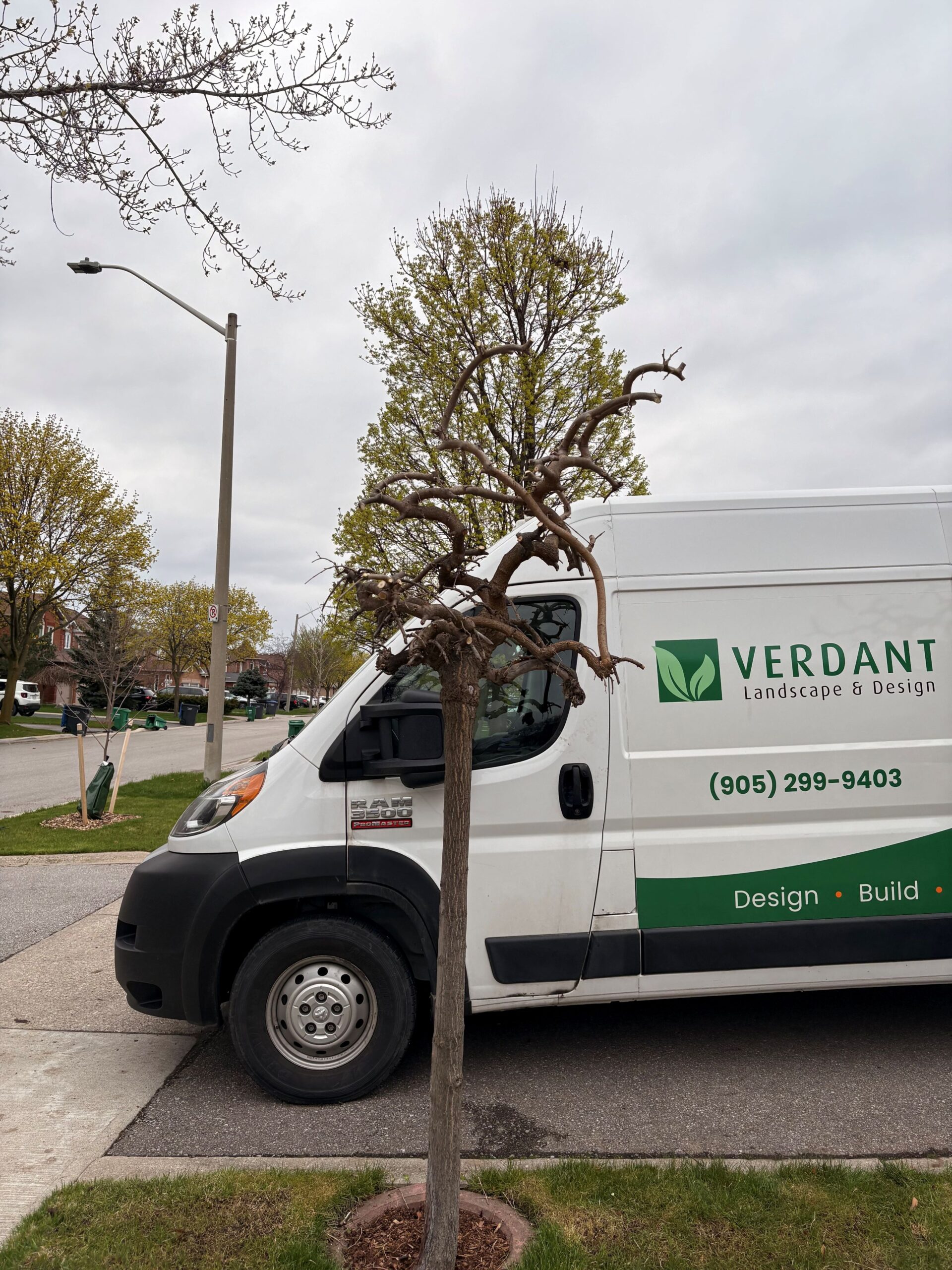
Pollarding is a traditional tree‑management pruning technique in which a tree is cut back to a permanent framework of branches (called pollard heads) on a regular cycle. New growth repeatedly emerges from these same points, creating a dense, controlled canopy of young shoots.
Unlike topping (which is indiscriminate and damaging), pollarding is planned, repeated, and started early in a tree’s life. When maintained correctly, it limits tree size, manages form, and can extend the usable life of certain species in confined spaces.
Pollarding Weeping Mulberry Trees
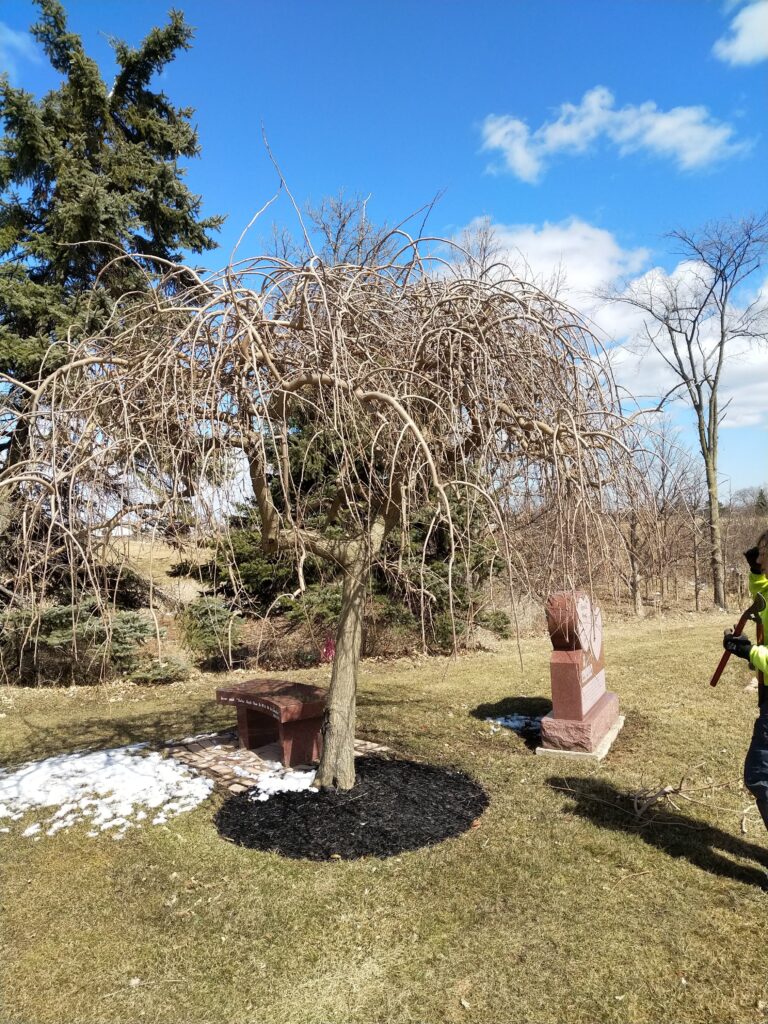
Weeping mulberries (Morus alba and cultivars such as ‘Pendula’) respond very well to pollarding. These trees are vigorous growers and can quickly become oversized or unruly if left unmanaged.
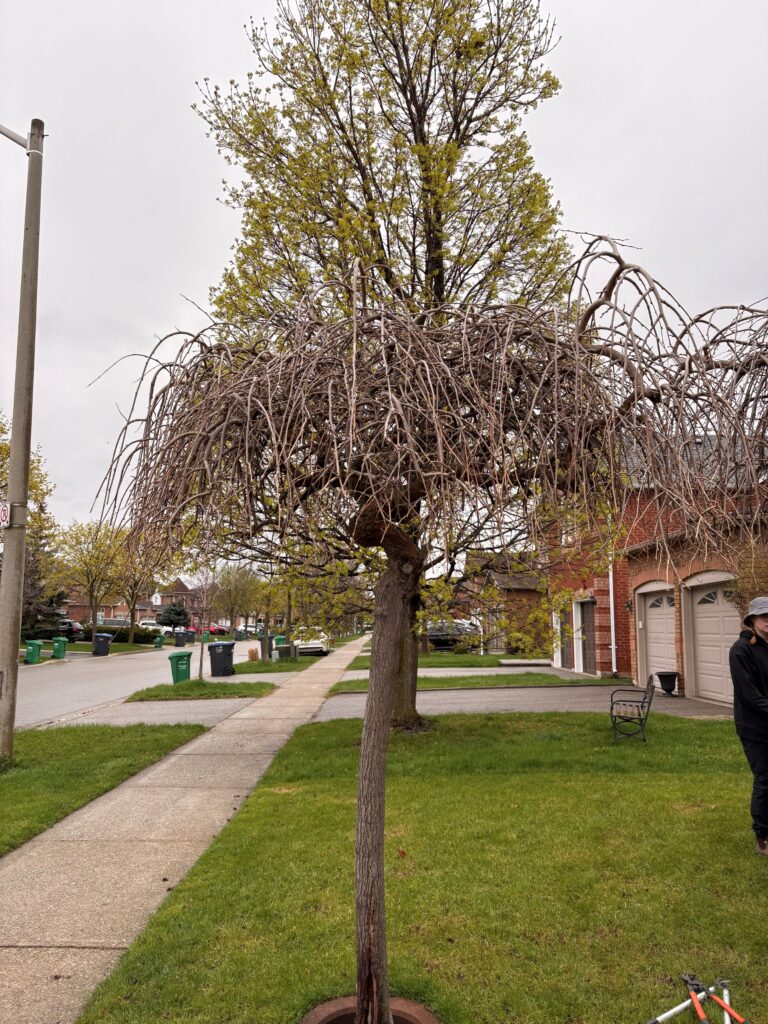
When pollarded:
- Long, weeping shoots are cut back to a consistent framework
- The tree produces strong, uniform new growth each season
- The weeping form is preserved in a controlled, architectural way
- Fruit production can be reduced (often a benefit in cultivated landscapes)
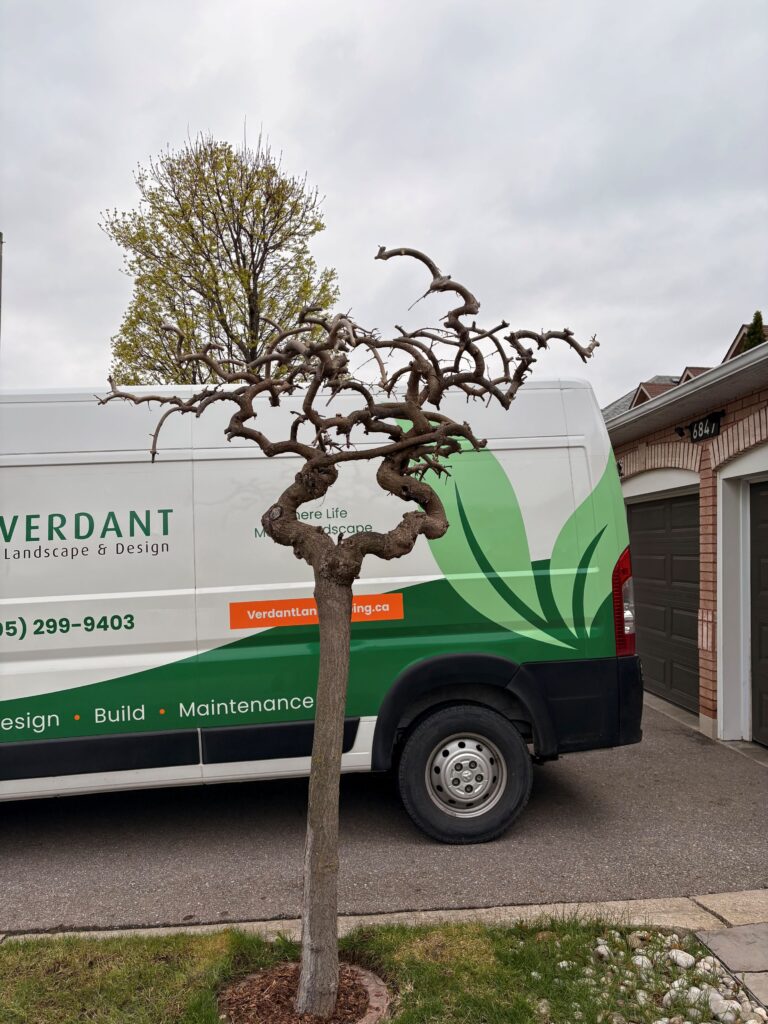
Pollarding is commonly used in gardens, courtyards, and urban landscapes where weeping mulberries need to remain a predictable size and shape.
Best Time to Pollard: End of Dormancy
Late winter to very early spring (end of dormancy) is the ideal time to pollard most deciduous trees, including weeping mulberry.
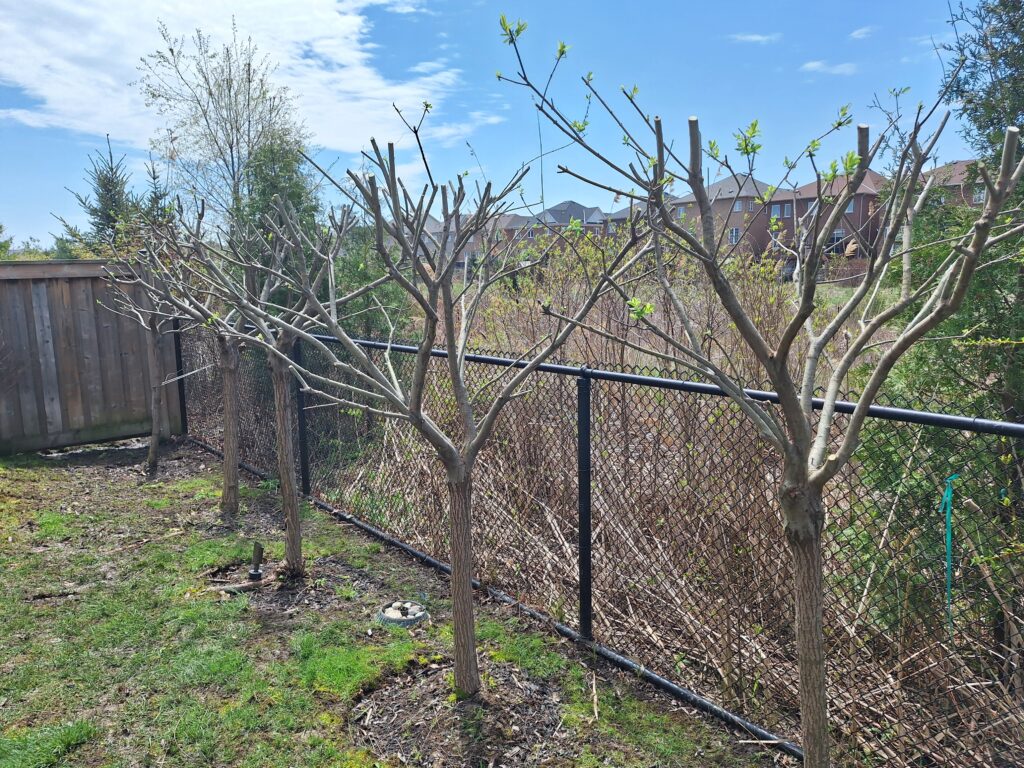
Benefits of pollarding at this time:
- The tree’s energy reserves are intact
- Wounds close rapidly once growth begins
- Structural form is easy to see without leaves
- Stress on the tree is minimized
- Reduced risk of disease spread and pest attraction
This timing allows the new shoots to emerge vigorously as the growing season starts.
Tree Species Commonly Pollarded
Pollarding works best on trees that tolerate and respond to heavy, repeated pruning. Commonly pollarded trees include:
- Mulberry (Morus spp.)
- Willow (Salix spp.)
- London plane tree (Platanus × acerifolia)
- Linden / Lime (Tilia spp.)
- Maple (especially Acer campestre)
- Ash (Fraxinus spp.)
- Poplar (Populus spp.)
- Hornbeam (Carpinus betulus)
- Catalpa
- Robinia (Black locust)
- Elm (historically)
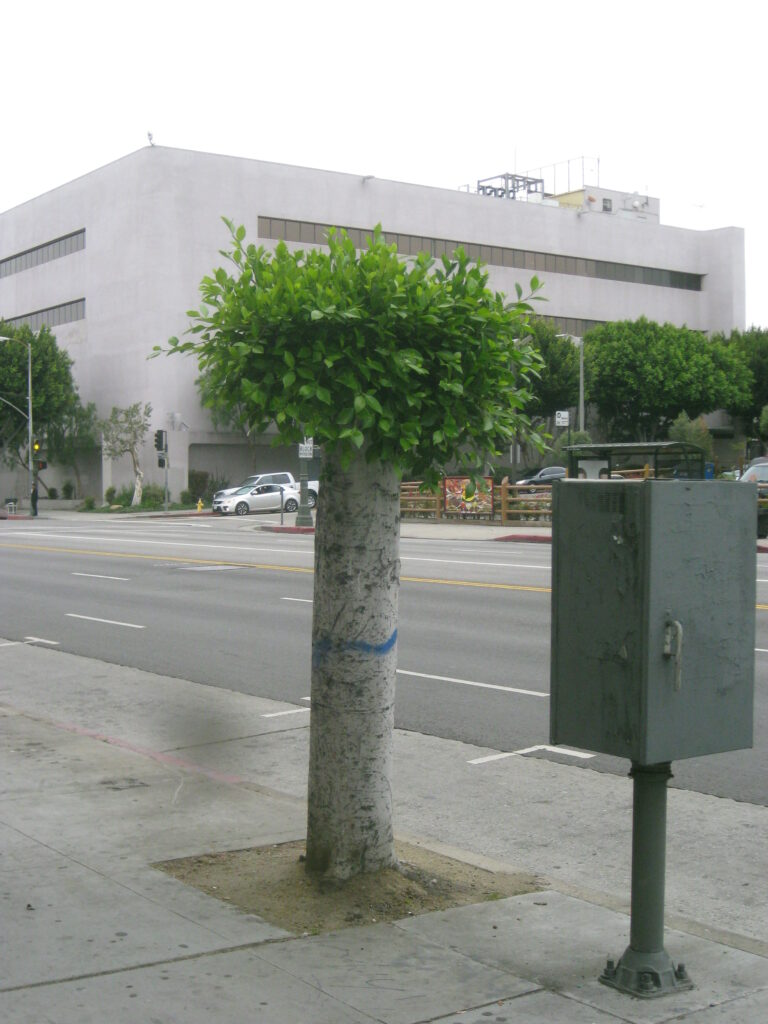
These species compartmentalize pruning wounds well and produce strong regrowth from established pollard heads.
Potential Problems With Pollarding
While pollarding can be effective, it is not appropriate for all trees or all situations.
Key concerns include:
- Requires lifelong maintenance
Once started, pollarding must be continued on a regular cycle. If abandoned, the long shoots can become heavy and structurally weak. - Poor structure if done incorrectly
Improper cuts or irregular timing can cause:
- Tear‑outs
- Weakly attached branches
- Decay entering pollard heads
- Not suitable for mature, untrained trees
Starting pollarding on an older, unprepared tree can cause severe stress and decline. - Aesthetic objections
Freshly pollarded trees can look stark or harsh in winter, which may not suit all landscapes. - Can be confused with topping
When done without knowledge or planning, pollarding can be mistaken for topping—which does harm trees.
Summary
Pollarding is a deliberate, traditional pruning system, not a one‑time cut. When applied to the right species—such as weeping mulberry—and done at the correct time (end of dormancy), it creates manageable, long‑lived, and visually striking trees. Like any skilled technique, success depends on correct timing, species selection, and consistent maintenance.