For gardeners searching for a reliable native plant that brings elegance to shady spaces, Tiarella cordifolia, commonly known as Foamflower, deserves a place near the top of the list. This low-growing woodland perennial combines delicate flower spikes, attractive foliage, and exceptional adaptability, making it a favourite among native plant enthusiasts and landscape designers alike.
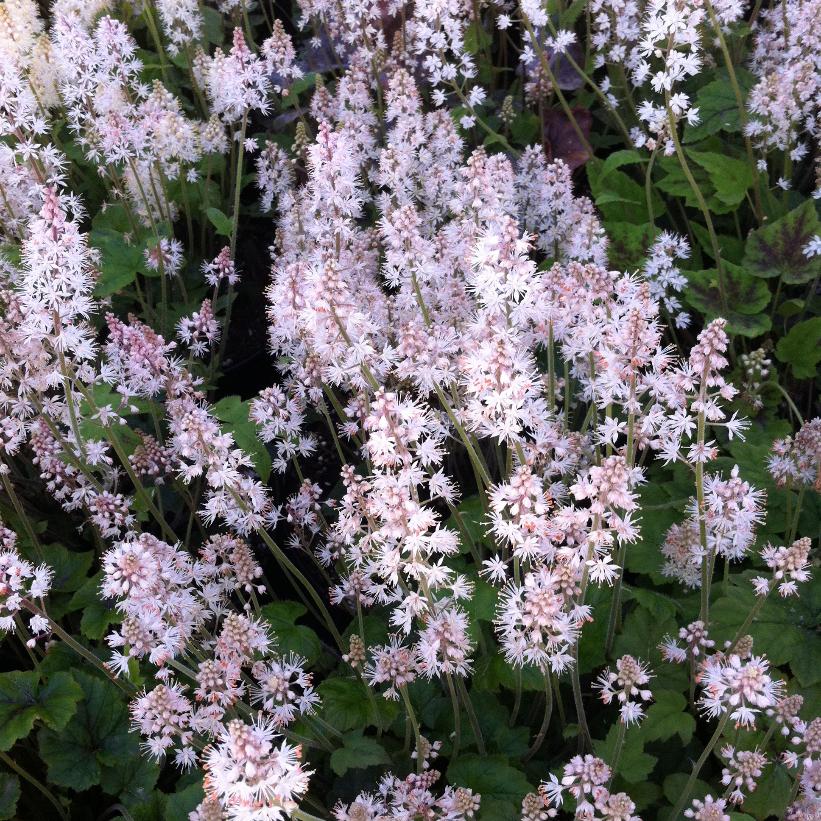
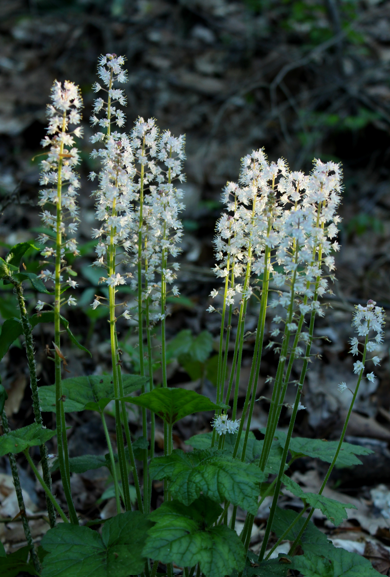
Its airy blossoms appear to float above the foliage like clouds of foam, giving rise to its memorable common name.
Origins and Native Habitat
Foamflower is native to eastern North America, where it naturally occurs in deciduous woodlands, rich forest floors, stream banks, moist ravines, and shaded slopes. Its native range extends through much of the eastern United States and into parts of Canada, including Ontario, Quebec, Nova Scotia, and New Brunswick.
As a member of the Saxifragaceae (Saxifrage) family, Foamflower evolved beneath forest canopies where it receives filtered sunlight and benefits from moisture-rich soils created by decades of leaf litter.
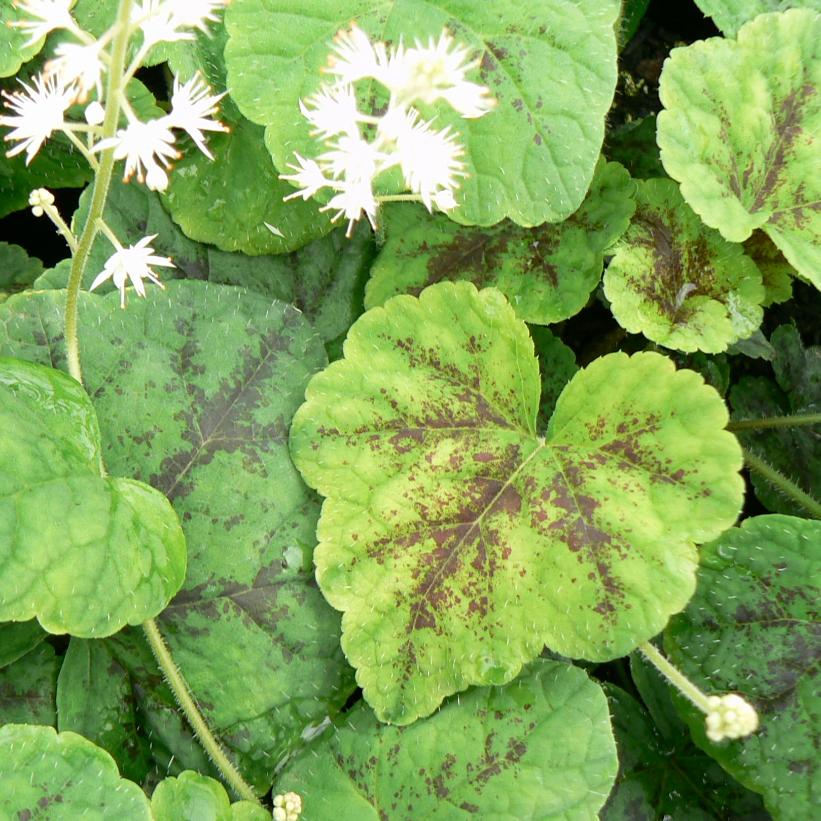
The species name cordifolia means “heart-shaped leaves,” a reference to its attractive foliage that remains ornamental long after flowering has finished.
What Does Foamflower Look Like?
Foamflower forms slowly spreading colonies through above-ground runners known as stolons. Mature plants typically reach:
- 20–30 cm (8–12 inches) tall in flower
- 30–60 cm (12–24 inches) wide
- Dense mats of heart-shaped, lobed foliage
- Upright spikes of tiny star-like white flowers in spring
The leaves often display burgundy or reddish markings along their veins and can develop attractive bronze tones in autumn and winter. In milder climates, the foliage may remain semi-evergreen.
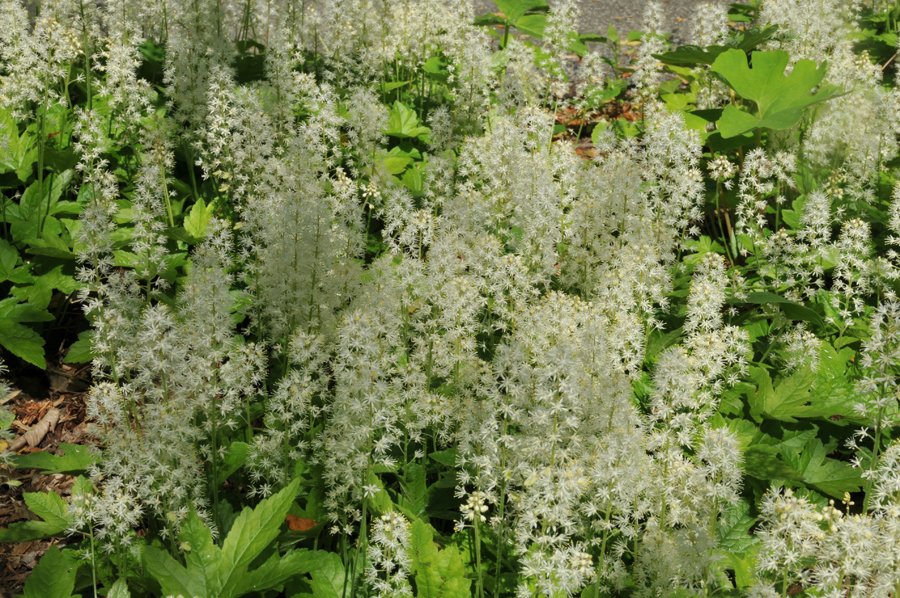
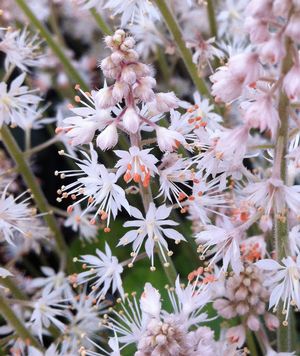
The flowers emerge in spring and persist for approximately six weeks. Each bloom features long, delicate stamens that create the soft, foamy appearance for which the plant is known.
Landscape Uses
Woodland Gardens
Foamflower is at its best when planted in naturalistic woodland settings. Paired with native ferns, wild ginger, trilliums, and sedges, it creates a layered forest-floor effect that closely mimics its natural habitat.
Groundcover for Shade
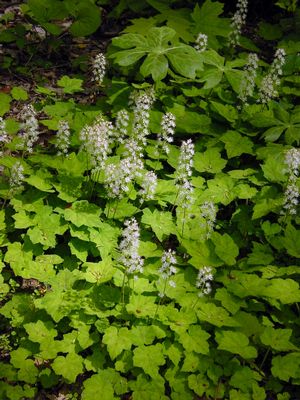
One of Foamflower’s best attributes is its ability to spread into attractive colonies. It fills gaps beneath trees and shrubs where turfgrass struggles, making it an environmentally friendly groundcover alternative.
Pollinator Gardens
Although often grown for foliage, the flowers are highly attractive to early-season pollinators. Native bees and other beneficial insects visit the blooms for nectar and pollen during spring.
Rain Gardens and Moist Areas
Because it naturally inhabits moist woodland environments, Foamflower performs well in shaded rain gardens and along stream edges where soils remain consistently moist.
Border and Edging Plant
Its tidy habit makes it ideal for:
- Front of shade borders
- Pathway edges
- Hosta gardens
- Cottage-style plantings
- Naturalized landscapes
Growing and Care Requirements
Light
Foamflower thrives in:
- Partial shade
- Dappled woodland shade
- Full shade
While it tolerates some morning sun, intense afternoon sunlight may scorch leaves and reduce vigor.
Soil
For best performance, provide:
- Humus-rich soil
- Consistent moisture
- Excellent organic matter
- Slightly acidic to neutral pH
Incorporating compost or shredded leaf mulch closely replicates the woodland soils where the plant evolved.
Water
Foamflower prefers evenly moist soil and is not particularly drought tolerant. Once established, it can withstand short dry periods but looks best when moisture is consistent.
Maintenance
This is a remarkably low-maintenance perennial.
Simple care includes:
- Removing spent flower stalks after blooming
- Cleaning damaged foliage in early spring
- Dividing mature clumps every few years if desired
- Applying leaf mulch annually
Serious pest and disease issues are uncommon. Deer and rabbits generally leave it alone, an added bonus for woodland gardeners.
Interesting Facts About Foamflower
It Has a Royal Connection
Tiarella cordifolia has received the prestigious Royal Horticultural Society Award of Garden Merit, recognizing its outstanding garden performance and reliability.
It’s Related to Heuchera
Foamflower has been hybridized with Heuchera (Coral Bells) to create the popular hybrid genus Heucherella, combining the best traits of both plants. Many modern shade-garden favourites trace their heritage back to Foamflower.
The Name “Tiarella” Means Little Crown
The genus name derives from the Greek word tiara, referring to a small crown-like structure formed by the fruit.
A Native Plant for Ontario Gardens
For Ontario gardeners, Foamflower is an excellent native choice that supports biodiversity while offering season-long ornamental value. It integrates beautifully into naturalized landscapes and aligns with current trends emphasizing ecological gardening and pollinator support.
Why Every Shade Garden Needs Foamflower
In a gardening world often dominated by exotic plants, Tiarella cordifolia stands out as a beautiful native alternative. Its cloud-like spring flowers, attractive foliage, wildlife value, and adaptability make it a top performer in shaded landscapes. Whether used as a woodland groundcover, a companion to ferns and hostas, or a pollinator-friendly perennial, Foamflower offers year-round appeal with remarkably little maintenance.
For gardeners seeking beauty, sustainability, and native plant value in one package, Foamflower truly lives up to its reputation as a woodland treasure.