Few evergreens are as iconic in Canadian and northeastern landscapes as Thuja occidentalis, commonly known as Eastern White Cedar or Arborvitae. Whether forming hedges along suburban properties, adding vertical structure to gardens, or creating year‑round privacy screens, this dependable conifer has earned its place as a landscape essential.
Let’s look at where it comes from, why its name varies across regions, the remarkable diversity of cultivars, and how to keep it healthy for decades.
🌲 Origins: A North American Native With Deep Cultural Roots
Thuja occidentalis is native to the northeastern United States and southeastern Canada, thriving in regions from the Great Lakes to the St. Lawrence Valley and across Ontario and Quebec. It naturally grows in:
- Cool, moist forests
- Swamps and low-lying wetlands
- Limestone-rich regions
Indigenous peoples valued the tree for medicinal uses and durable wood. Early European settlers quickly adopted the species as well—especially for fence posts and building materials, thanks to its remarkable rot resistance.
🌲 Why Do We Call It “Cedar” While Others Call It “Arborvitae”?
Why “Cedar”?
In Canada and parts of the U.S., Thuja occidentalis is commonly called Eastern White Cedar because early settlers associated its aroma and decay‑resistant wood with true cedars (genus Cedrus).
While not a true cedar, the name stuck—just as “red cedar” and “white cedar” refer to North American Thuja and Juniperus species.
Why “Arborvitae”?
In Europe and in the horticultural trade globally, it’s called Arborvitae, Latin for “Tree of Life.”
The name originates from the 16th century when French explorers introduced Thuja foliage to Europe, promoting its medicinal value. Its evergreen nature reinforced the symbolism of vitality and longevity.
Today, both names are correct—“cedar” is more common in Canada, while “Arborvitae” is standard in nurseries worldwide.
🌲 A Huge Range of Cultivars: Options for Every Landscape
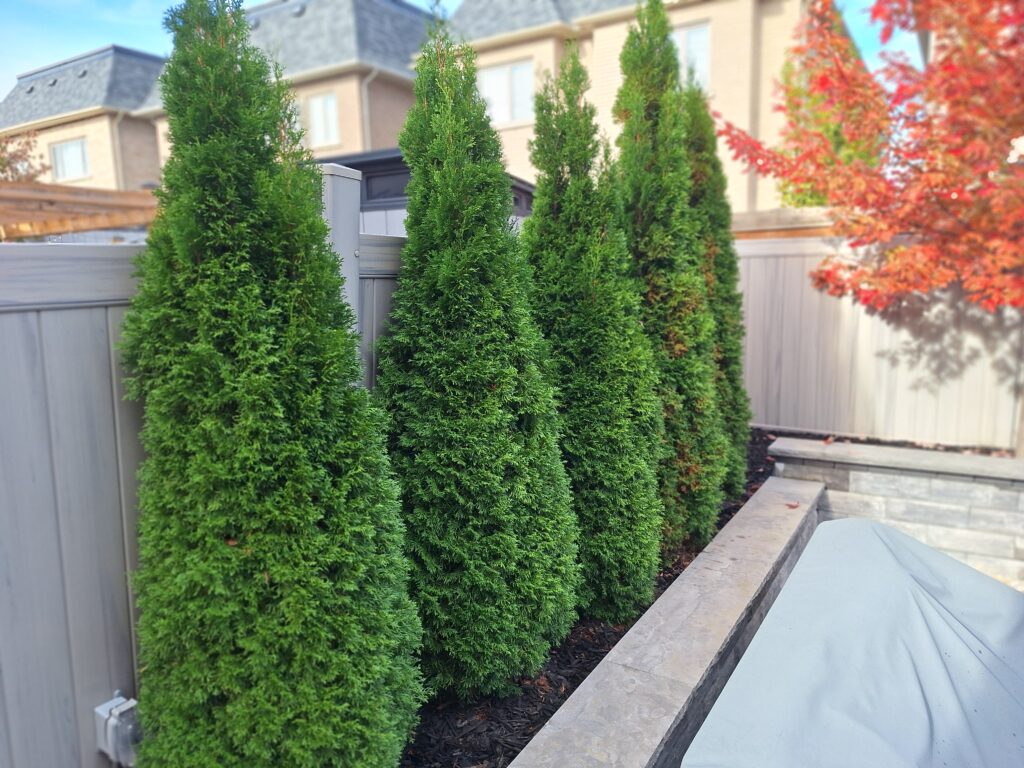
Thuja occidentalis is one of the most heavily bred conifers in the nursery trade, with cultivars ranging from tiny globes to towering columnar forms.
Popular Cultivars Include:
Columnar & Narrow Forms
- ‘Smaragd’ / Emerald Cedar – Bright green, dense, the most popular hedge plant.
- ‘Brandon’ – Cold‑hardy and reliably upright.
- ‘DeGroot’s Spire’ – Twisted, textured foliage with a tight habit.
Globe & Compact Forms
- ‘Danica’ – Small, tidy, perfect for foundation plantings.
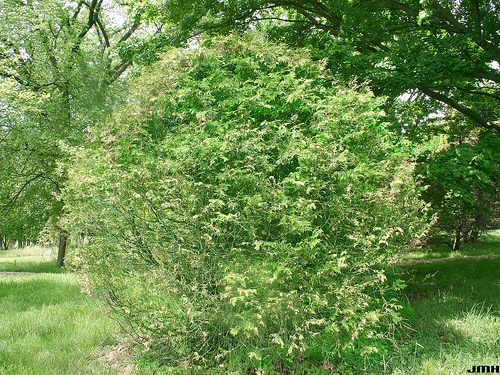
- ‘Mr. Bowling Ball’ – Fine texture and very round.
Golden Forms
- ‘Rheingold’ – Soft staghorn-like foliage turning copper in winter.
- ‘Nigra’ – Deep, dark green year‑round foliage.
With hundreds of cultivars available, there is truly a Thuja suited for every site—from formal front gardens to expansive rural properties.
🌲 Landscape Uses: Practical and Beautiful
Thuja occidentalis is prized for versatility. It’s commonly used for:
Privacy Screens & Hedges
Its dense evergreen foliage makes it ideal for year‑round screening. Cultivars like ‘Smaragd’ and ‘Brandon’ are industry standards.
Windbreaks & Snow Fences
Rows of cedars help reduce drifting snow and provide shelter for wildlife.
Foundation Plantings
Compact forms soften building lines without overwhelming small spaces.
Naturalized Landscapes
Its native status makes it perfect for restoration, wildlife habitat, and low-maintenance plantings.
Accent & Specimen Plantings
Gold or globe forms provide colour and texture contrast in modern landscape design.
🌲 Major Pests: What to Watch For
While generally durable, Thuja occidentalis can encounter a few significant issues.
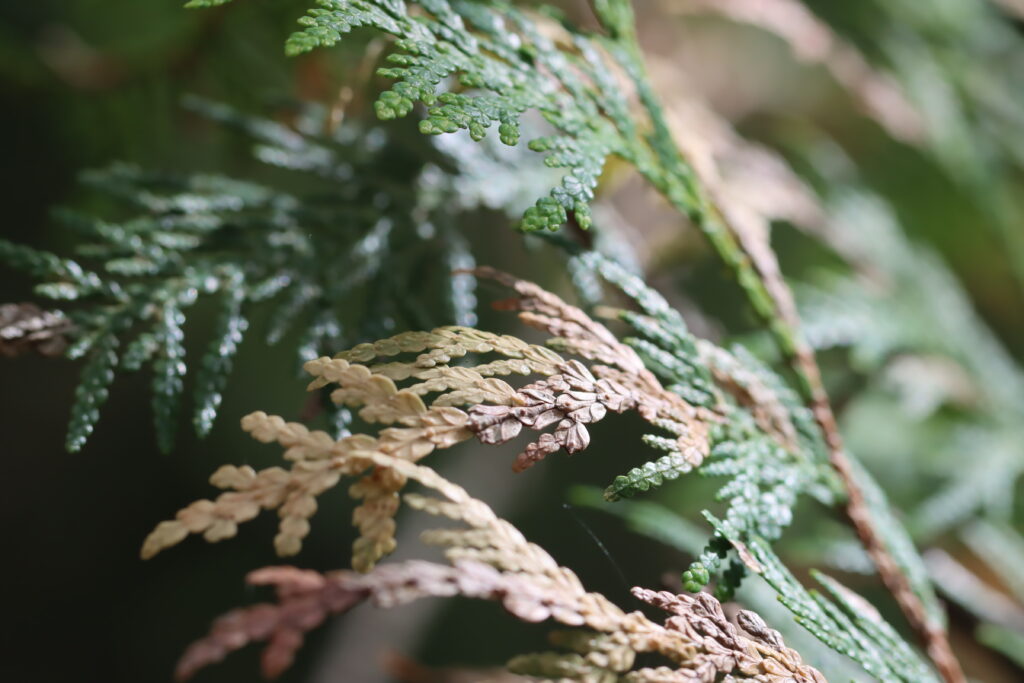
- Cedar Leaf Miner
Small larvae feed inside the foliage, causing browning and dieback. Typically noticeable in late summer.
- Cedar Mealybug
White, cottony clusters along the twigs cause stress and thinning foliage.
- Spider Mites
Especially during hot, dry summers; foliage appears stippled or bronzed.
- Deer Browsing
In many regions, deer can devastate Thuja, especially in winter.
🌲 How to Care for Thuja occidentalis
Planting
- Choose full sun to partial shade.
- Provide well‑drained soil, though Thuja tolerates clay and moist areas.
- Space according to cultivar—hedging types typically 2–3 feet apart.
Watering
- Keep consistently moist during establishment.
- Water deeply during hot, dry periods to prevent stress and browning.
Mulching
- Apply 2–3 inches of mulch to maintain soil moisture and regulate temperature.
Pruning
- Light shaping is fine; avoid cutting into old wood.
- Best time: late spring or mid-summer.
Fertilizing
- A slow‑release, balanced fertilizer in spring encourages healthy green growth.
🌲 Have Questions or Comments?
I’d love to hear from you! Whether you’re planning a hedge, troubleshooting browning foliage, or selecting cultivars for a new project, feel free to reach out.
🌿 We also offer a FREE landscape evaluation to help you choose the right plants and layout for your property.
Drop your questions in the comments or contact me directly—your landscape deserves the best guidance!