A Timeless Evergreen in the Canadian Landscape
Taxus cuspidata ‘Capitata’, commonly known as the Upright Japanese Yew, has long been a staple in Canadian horticulture. Introduced to North America in the late 1800s through botanical exchanges with Japan, the species quickly gained ground in colder climates thanks to its exceptional winter hardiness, adaptability to pruning, and deep evergreen character.
By the mid‑20th century, landscape architects across Canada—especially in Ontario and Québec—were specifying this plant for civic landscapes, estate gardens, and educational campuses. It became prized for its:
- Reliability in cold winters
- Tolerance for shade
- Dense, elegant form
- Longevity (many specimens still thriving after 50+ years)
If you walk around older neighbourhoods, churches, and institutional gardens, chances are you’ll still see mature Taxus ‘Capitata’ standing strong—an enduring reminder of classic Canadian landscape design.
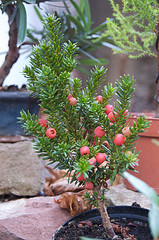
How to Grow Taxus cuspidata ‘Capitata’
Growing this yew successfully is easier than many evergreens, as long as a few key conditions are met.
Light
- Prefers full sun to light shade
- Tolerates deeper shade better than most conifers
Soil
- Thrives in well‑drained soil
- Avoid wet, heavy clay—yews dislike “wet feet”
Watering
- Regular watering during establishment
- Once rooted in, it’s remarkably drought‑tolerant
Pruning
- Extremely prune‑tolerant
- Can be shaped into:
- pyramidal forms
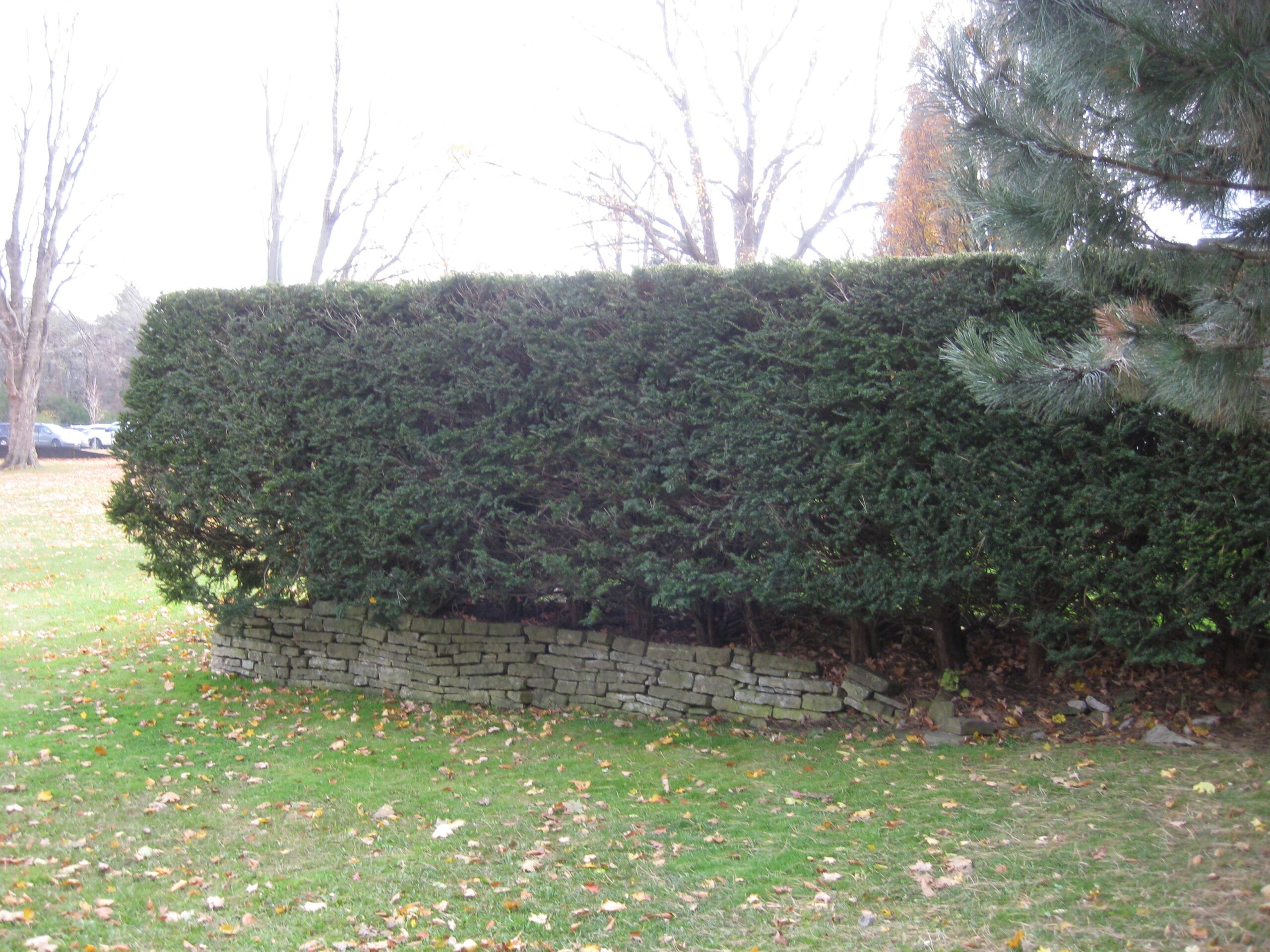
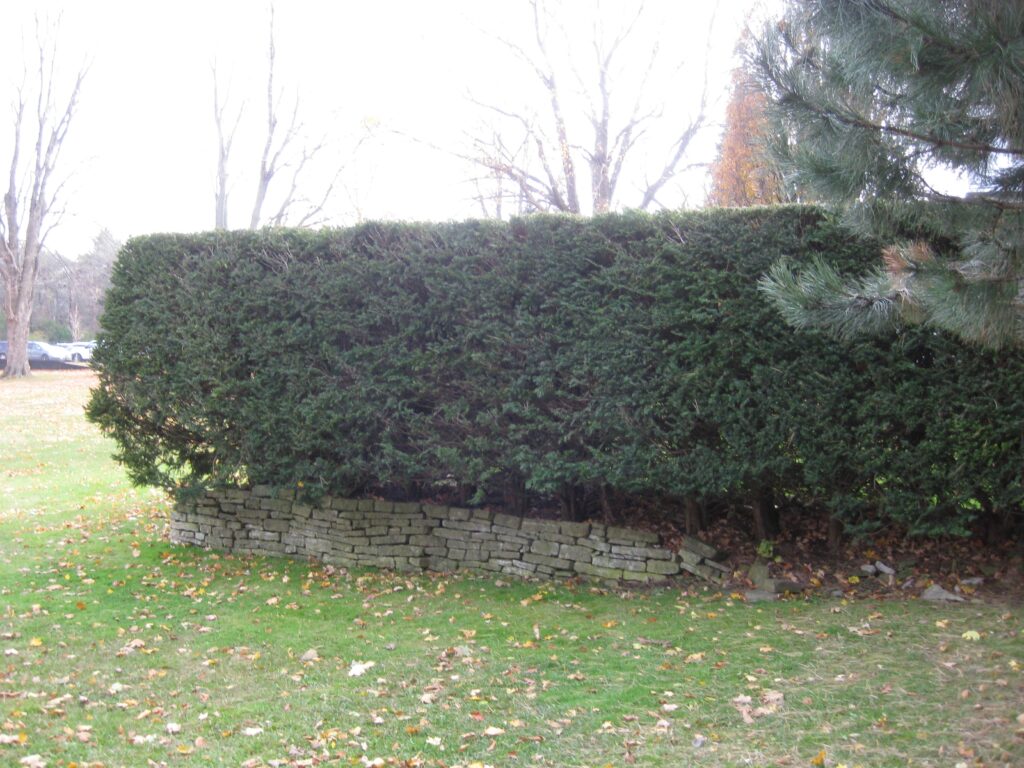
- hedges
- topiary
- or left natural – makes an amazing small evergreen tree! I love its bark.
The natural pyramidal form of the Upright Japanese Yew makes it a standout choice for structure and year‑round form in gardens.
Winter Care
- Excellent cold hardiness (Zone 4)
- Avoid salt spray—yews are sensitive to road salt
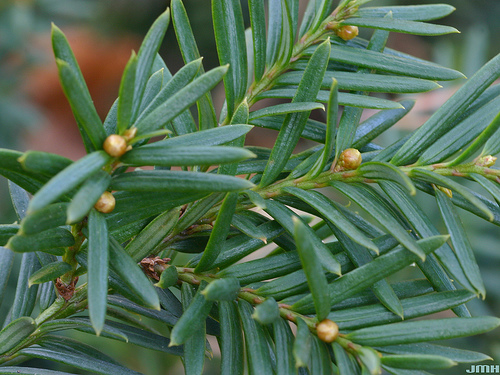
How to Use Capitata Yew in the Landscape
Upright Japanese Yew is incredibly versatile and works beautifully in both modern and traditional settings.
Best Landscape Uses
- Specimen evergreen for front gardens
- Anchor plantings at corners of homes
- Formal hedges or topiary outlines
- Background evergreen screen
- Foundation plantings needing vertical structure
- Shade gardens where other evergreens struggle
It offers a stately, architectural presence—especially valuable in winter when deciduous plants retreat.
Quick Fun Facts
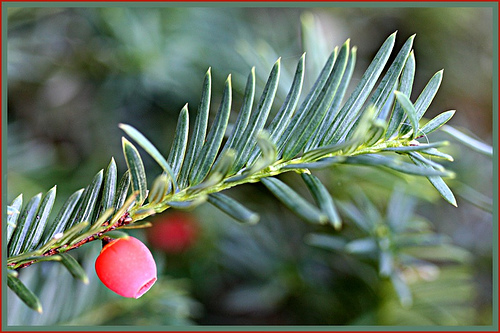
- Toxic, but beautiful: All parts (except the fleshy aril around the seed) are toxic—classic for all yews—so it’s deer‑resistant.
- Long-lived: Some specimens in Japan are believed to be over 1,000 years old.
- Cultural significance: Historically used in Japanese temple landscapes and sacred spaces.
- Highly valued wood: The wood is dense, fine‑grained, and traditionally used for carved items. Englis Yew – Taxus baccata – was traditionally uses to make long-bows.
Have Questions? We’d Love to Help.
If you’re considering adding Taxus cuspidata ‘Capitata’ to your property—or want help designing a landscape that stays beautiful year‑round—reach out with any questions or comments.
🌿 Book a FREE landscape consultation today and let’s create something beautiful together.