I have to say we are at the end of the time to complete this garden task BUT complete it we must. What I am about to share with you is a pruning technique called candling. This process needs to be completed before the growth starts to harden off.
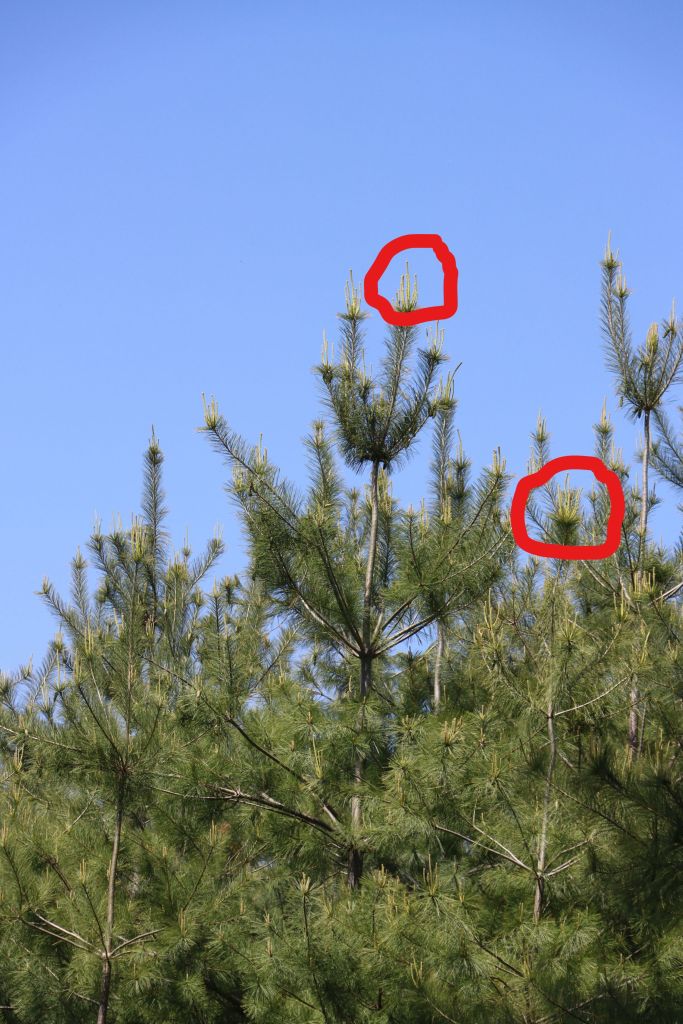
This is a photo of some glorious White Pine (Pinus strobus for my fellow plant geeks). The long finger like things are referred to as candles. If we are growing a tree such as White Pine, we leave them be as we are wanting the tree to grow to its ultimate potential.
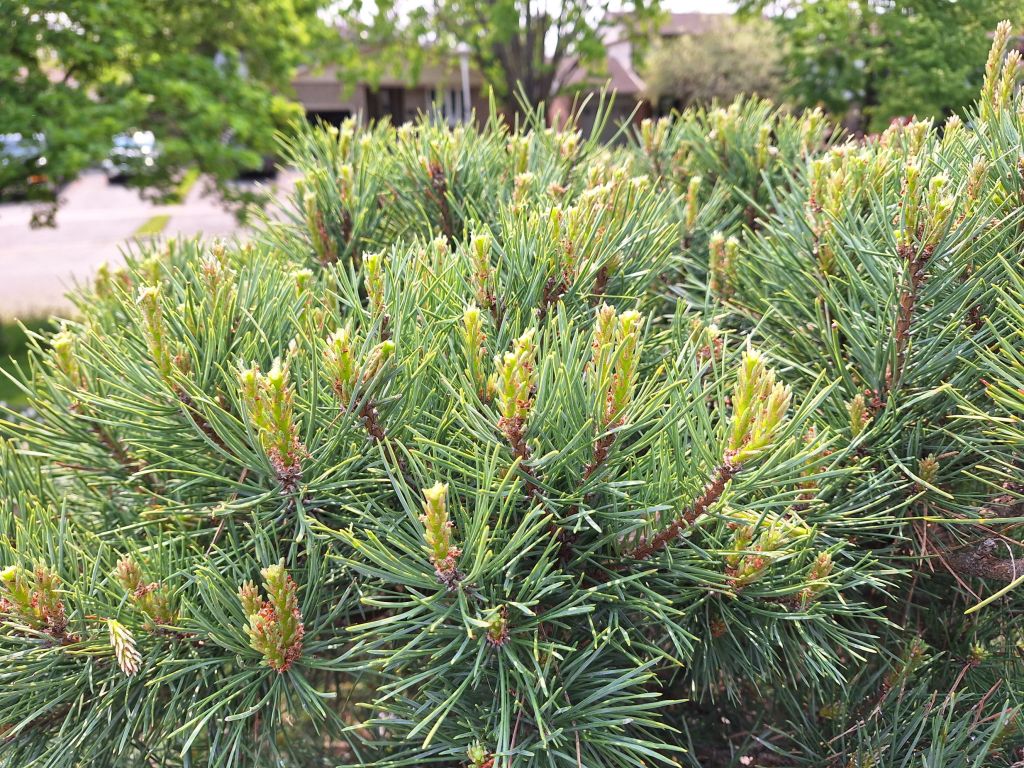
When we are growing dwarf conifers such as my dwarf Scots Pine (Pinus sylvestris ‘Nana’) we likely want to keep the plant’s growth in check.
Sidebar: People look at a plant tag at a garden centre and it says “Dwarf Scots Pine” and feel it will grow to the height THEY want it to grow. In reality the term “dwarf” in plant vernacular just means it is smaller than the “original”. So a plant that grows to 10 M may have a dwarf cousin that only grows to 7 M.
My dwarf Scots pine, according to what I have been able to glean from the all knowing GOOGLE, should grow to 6 feet or so – about 2 M. I call baloney on that one by the way. I was distracted for a decade or so and mine was about 8’ tall – +/- 2.5 M when I decided to take action.
By using the two most powerful tools in my horticulture toolkit, proper pruning techniques and PATIENCE, I now have it down to about 6 feet and want to make it a little shorter.
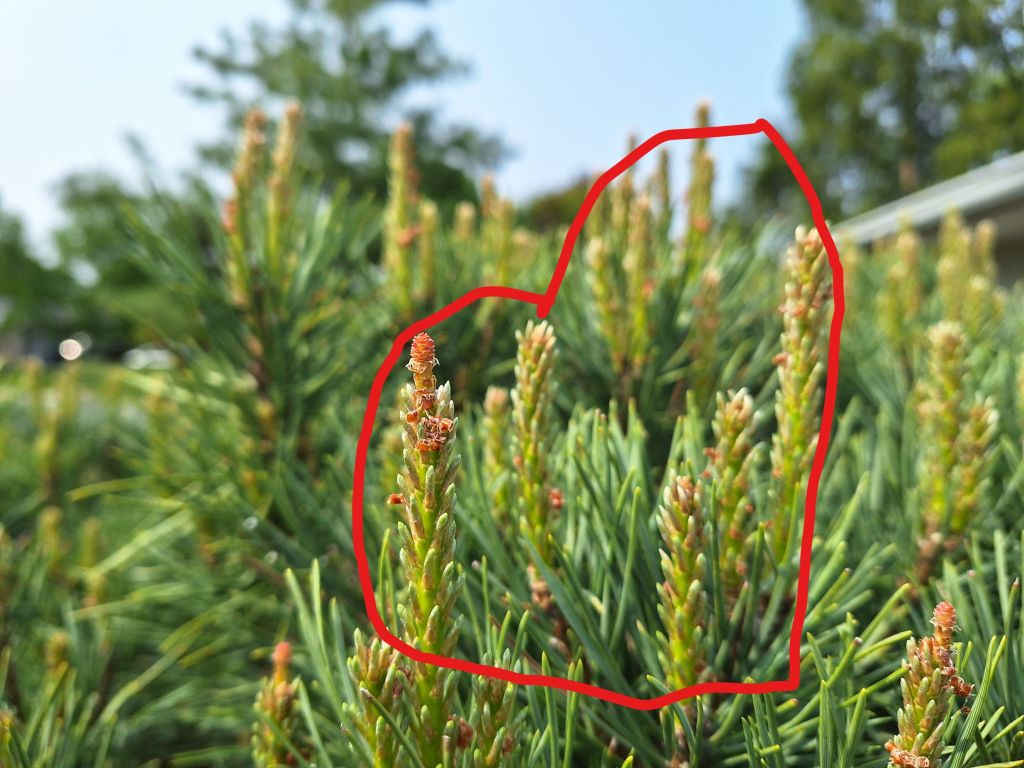
Proper pruning techniques? I prune the plant in late winter – more on that net March. At this time of the year I CANDLE my pine (and my clients’ pines and spruce). The candle is the new growth that comes from the terminal bud of the branch. It emerges carrying the new years needles with it. At the base of each cluster of needles on a pine or single needle on spruce and fir, there will develop buds for the following years growth.
SO by removing some of the candle, we are restricting growth this year AND next year as we are removing some of the potential buds.
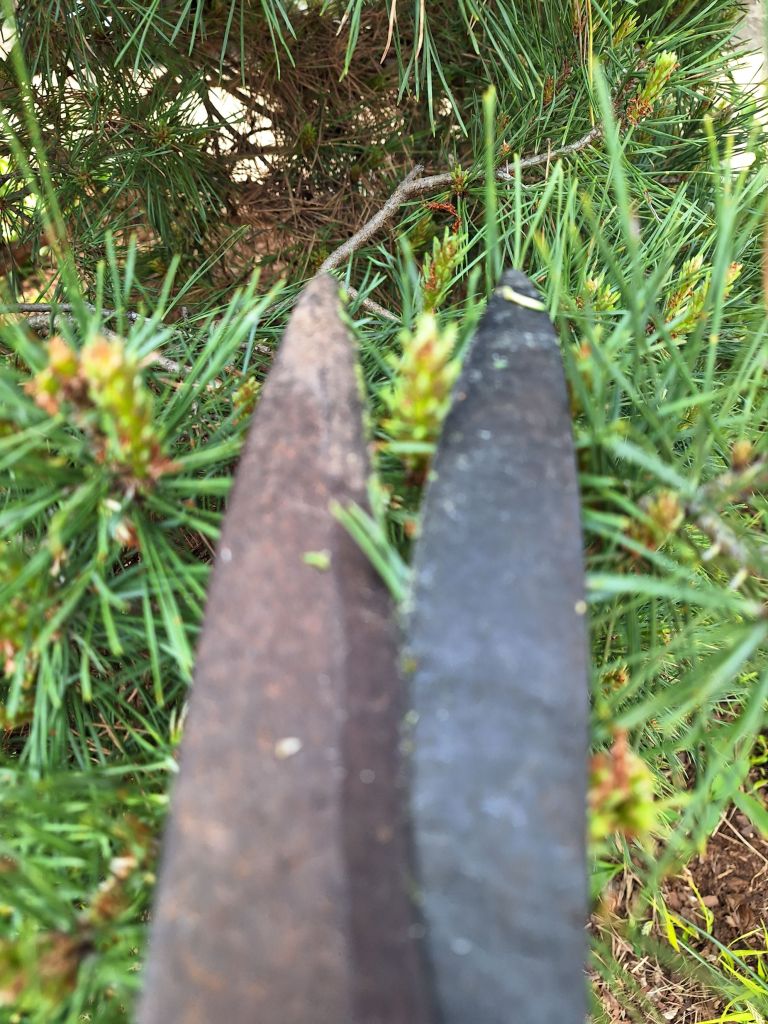
All you need to do is cut the candle. Some times I just pinch them off between my finger and thumb nail. But when there are a lot o candles, I use a pair of hedge shears. Nurseries use long, heavy knifes. Whatever works for you.
As usual, if you have any questions, please feel free to reach out to us.