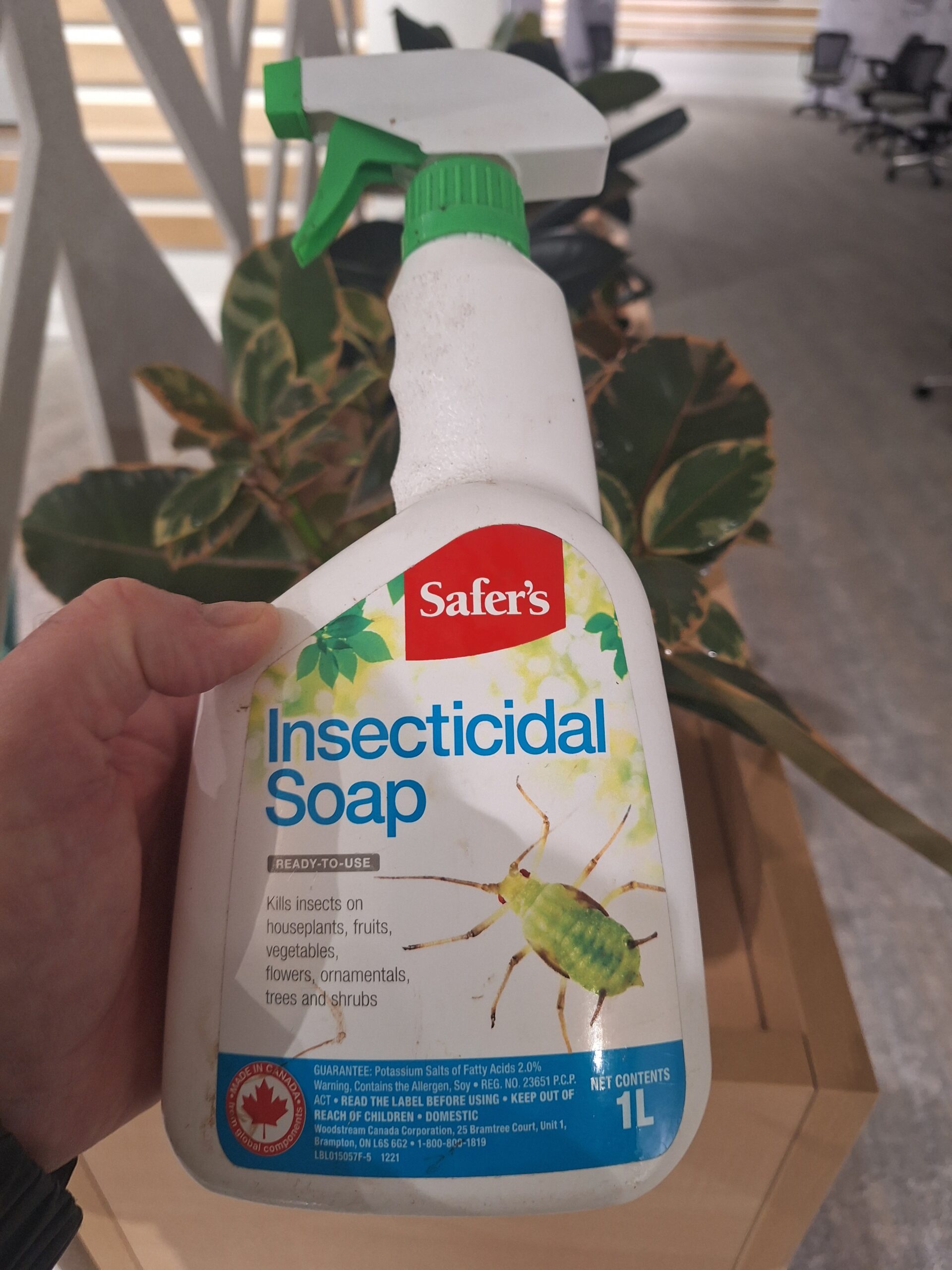
If you’ve ever dealt with a mealybug infestation—as we just did—you know how quickly these soft‑bodied pests can spread. Fortunately, Safer’s Insecticidal Soap, a Class 11 pest control product, offers an effective, plant‑safe way to get the situation under control. This product has long been a favourite among organic gardeners because it works on contact and leaves no long‑lasting residues.
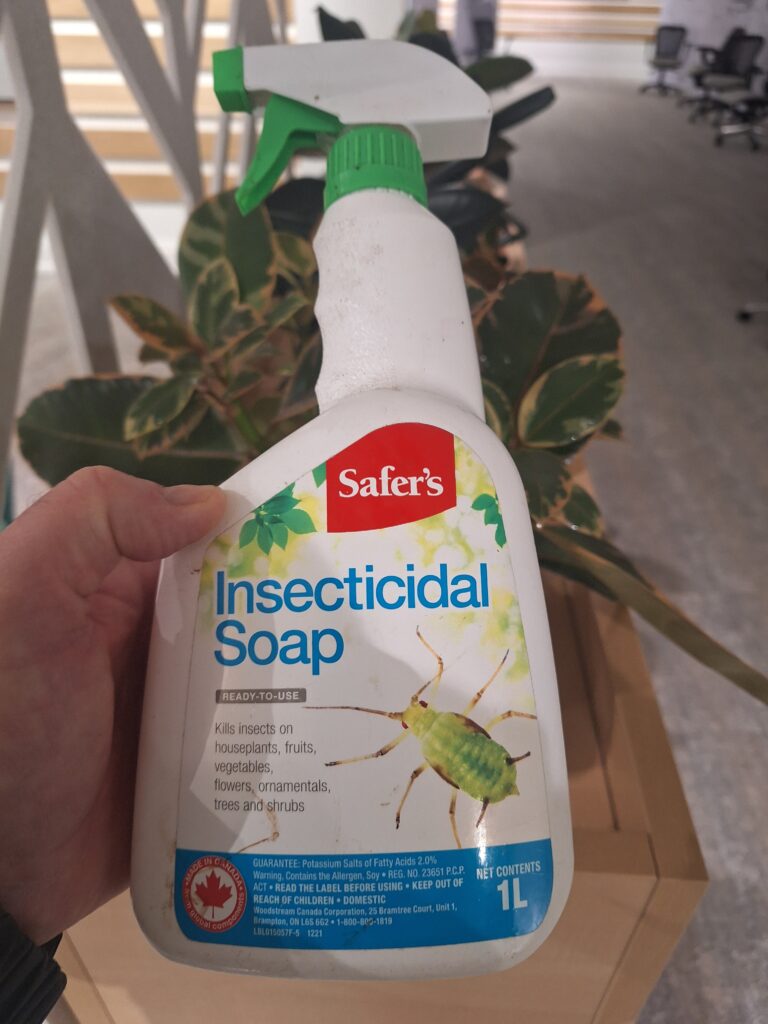
How Safer’s Soap Kills Mealybugs
The active ingredient in Safer’s Soap is potassium salts of fatty acids, derived from natural fats and oils. When sprayed directly onto the insects, these fatty acids break down the protective outer shell (the cuticle) of soft‑bodied pests like mealybugs. Once the cuticle is compromised, the insect loses internal moisture rapidly, leading to dehydration and death.
Because it kills only on contact, proper coverage is essential—especially with mealybugs, who love to hide in leaf axils, stem joints, and roots.
Why Safer’s Soap Is a Good Choice for Indoor and Outdoor Plants
- Organic‑gardening compliant, containing naturally derived ingredients.
- Effective on a wide range of soft‑bodied pests, including mealybugs, aphids, whiteflies, and spider mites.
- No residual toxicity—it works when wet but does not continue killing once it dries.
- Safe for most plants when used as directed.
For ongoing or stubborn infestations, repeat applications every 7–10 days are recommended until pests are under control.
Tell Me What You Think
Have you used Safer’s Soap before? Have questions about controlling mealybugs or other soft‑bodied pests? I’d love to hear your experiences, tips, or troubleshooting stories—drop them in the comments!
I