Hosta: The Shady Garden Powerhouse
How Many Hosta Cultivars Are There?
Hosta is one of the most diverse shade perennials available today. Estimates range widely, but current horticultural references note over 7,000 registered cultivars.
They originate from about 70 wild species, mostly native to China, Japan, Korea, and the Russian Far East.
This incredible range includes everything from tiny miniatures only a few inches across to giants over four feet tall and wide.
Landscape Uses: Why Hosta Is So Popular
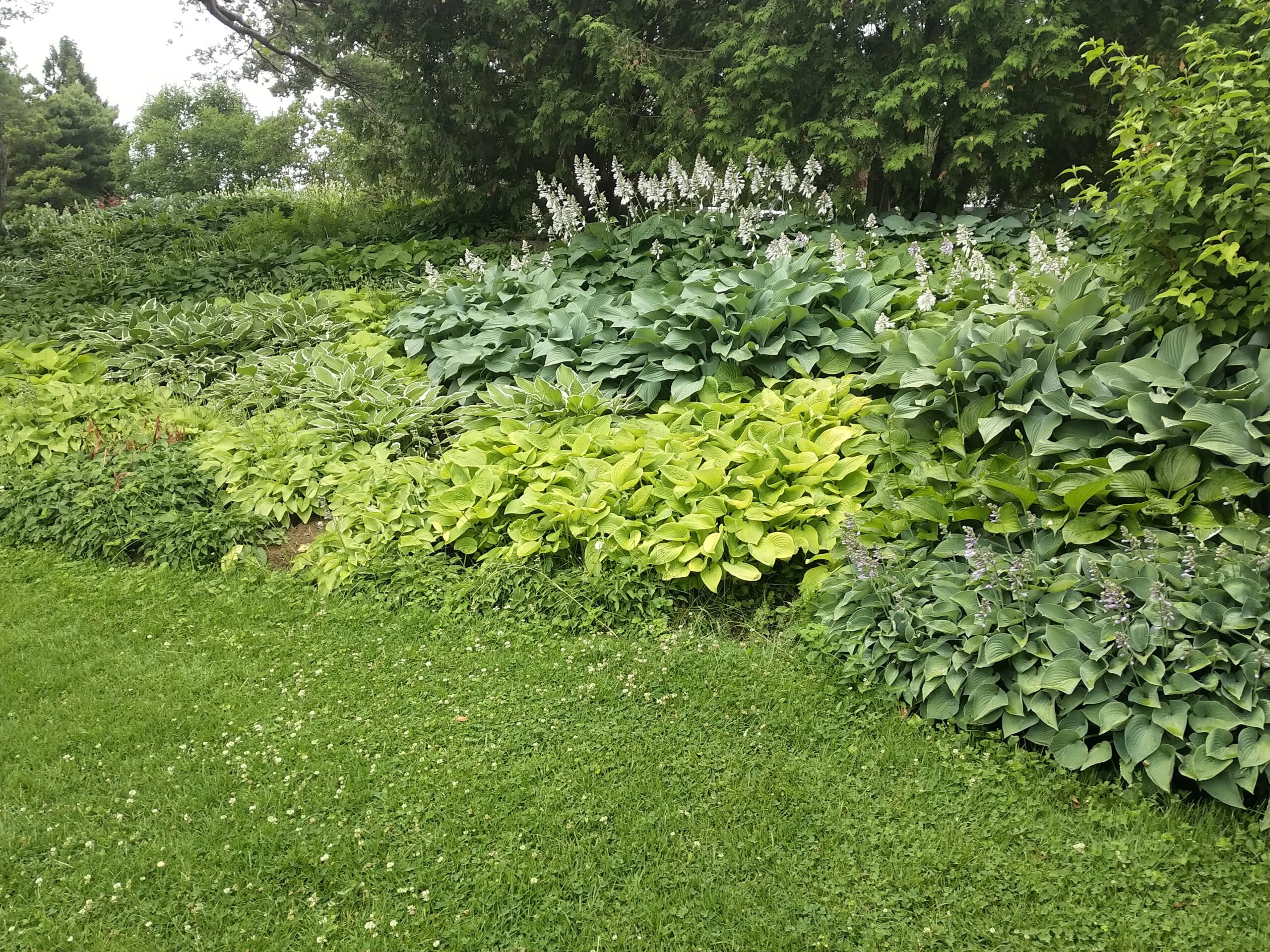
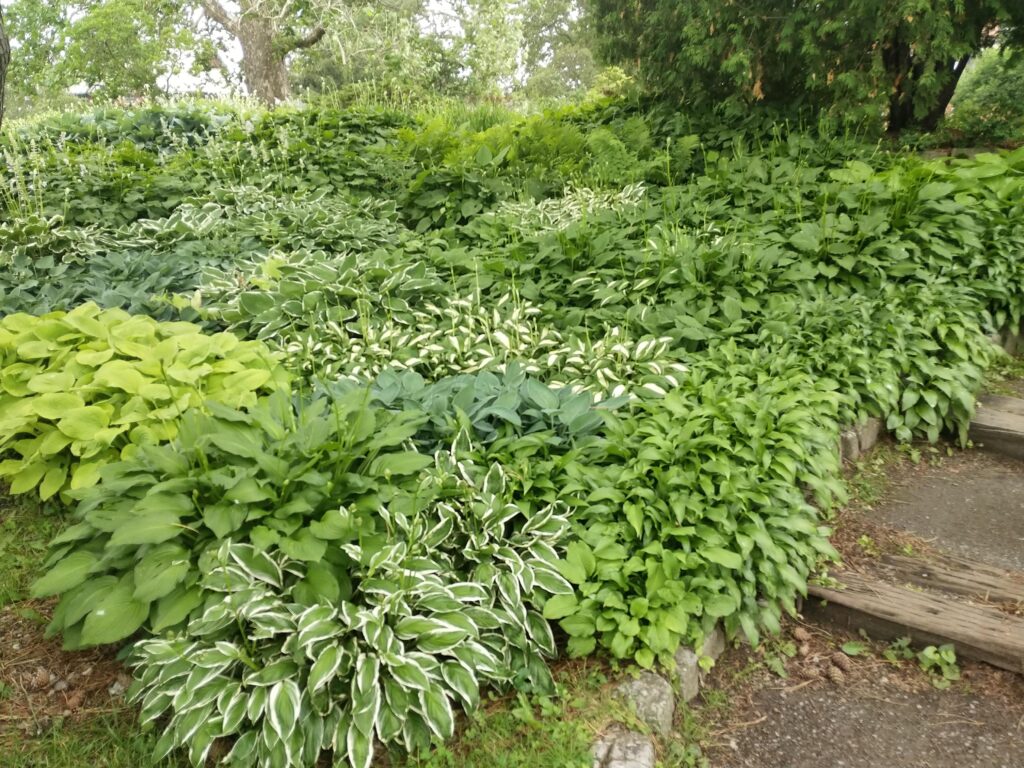
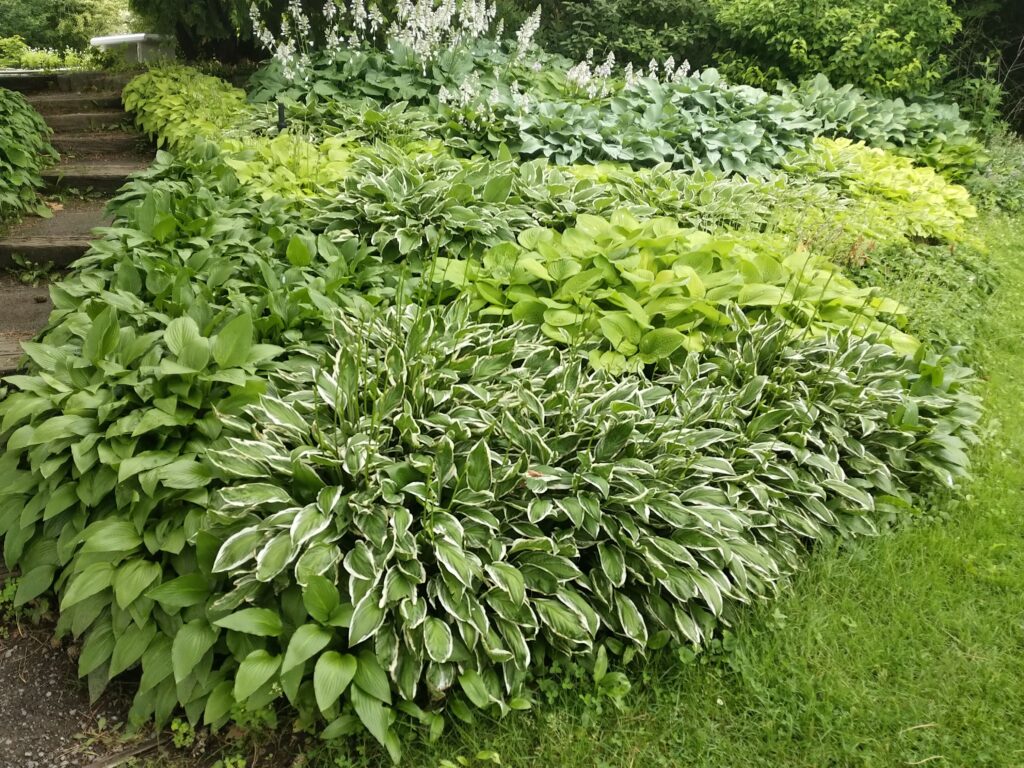
Hostas have become “the star of shady landscapes” thanks to their wide range of leaf colors, textures, shapes, and sizes.
They work beautifully as:
- Mass plantings in shade gardens or woodland borders
- Edging plants along pathways or perennial beds
- Specimens when using giant cultivars
- Foliage accents around ponds or rock gardens
- Container plants for patios and shaded courtyards
Is Hosta Overused?
Some landscape professionals argue that hosta is overused, especially in suburban shade gardens where it often becomes a default plant. However, its popularity is understandable:
- Extremely low maintenance
- Thrives in shade where many plants struggle
- Comes in thousands of forms
- Has strong visual impact with minimal effort
The key is using hosta thoughtfully—pairing it with native plants, contrasting foliage, and varied textures.
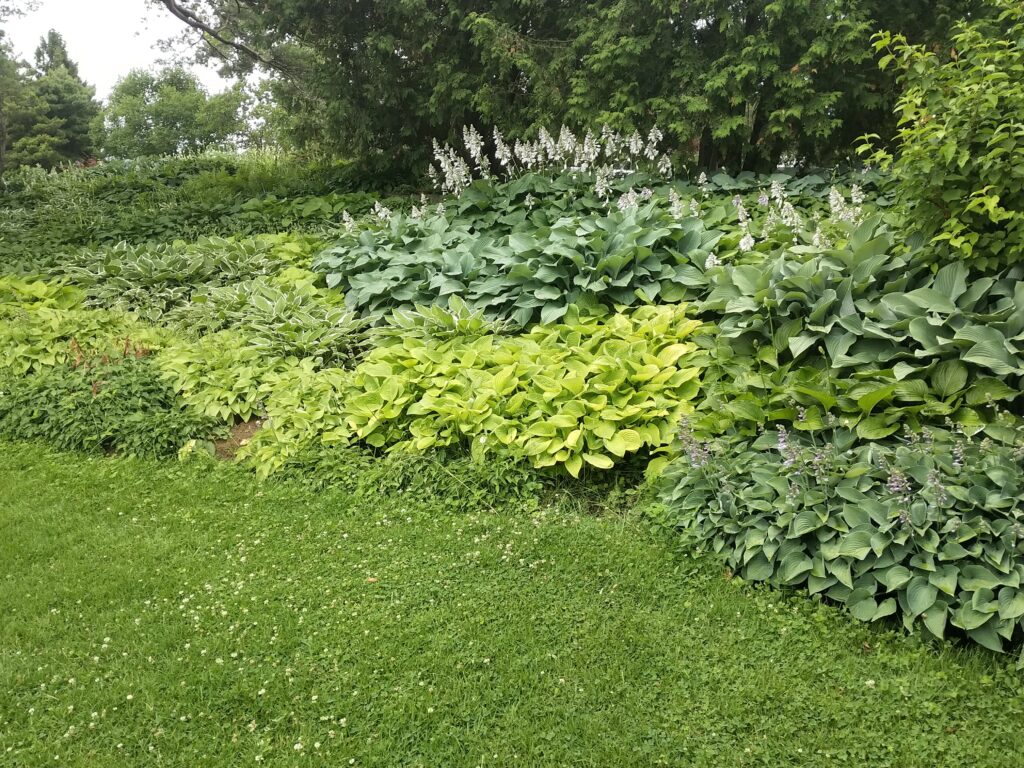
*Note: A trip to the Central Experimental Farm in Ottawa is worthwhile. Among the highlights are the ornamental plant collections.
Hosta Care Basics
Hostas are straightforward to grow when given the right conditions:
Light
- Prefer morning sun and afternoon shade or dappled shade.
- Blue-leaved varieties need deep shade to retain their color.
Soil
- Moist, well‑drained, slightly acidic soil rich in organic matter. Although they do just fine here in Milton!
- Avoid soggy soils, especially in winter.
Water
- Consistent moisture is ideal; drought causes leaf scorch. Mulch helps with this!
Maintenance
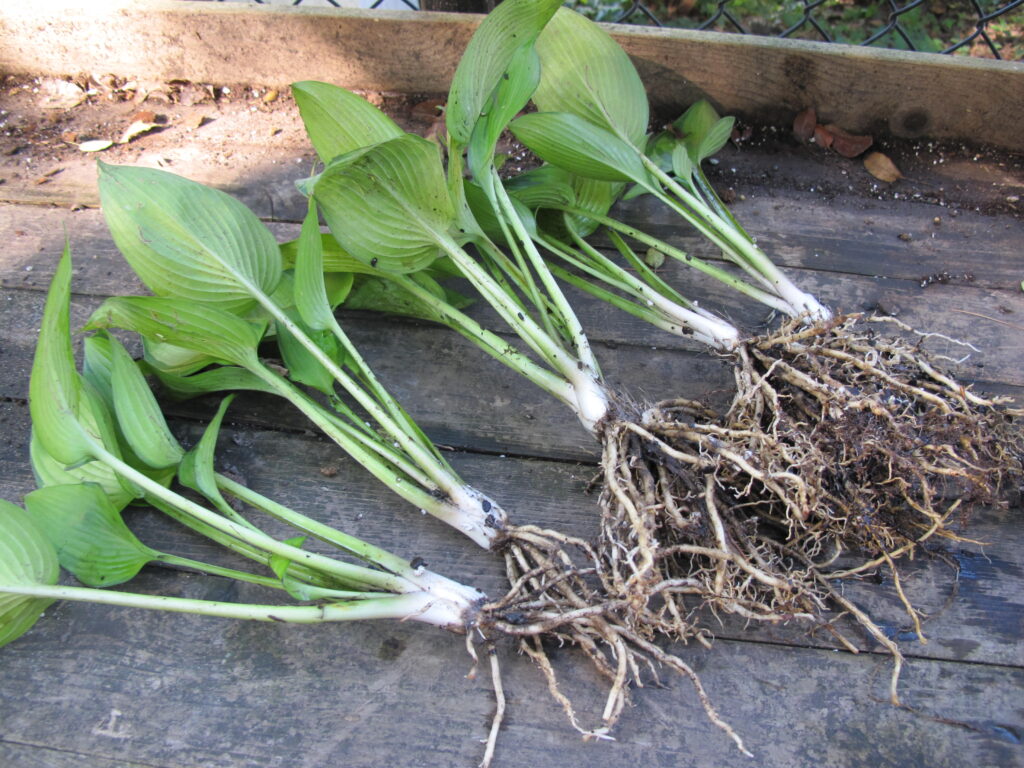
- Divide every 3–5 years in early spring. We’ve divided in pretty much every season (except winter) with success – got outstanding success, but success.
- Remove spent foliage in fall to reduce pest habitat. SLUGS!
Interesting Cultivars to Explore
With thousands to choose from, here are a few standouts:
Miniatures
- Baby Bunting
- Tiny Tears
Small but charming for rock gardens or troughs.
Giants
- Sum and Substance – massive chartreuse leaves, a collector favorite.
- Emperor Wu – towering presence with deeply ribbed foliage.
Fragrant
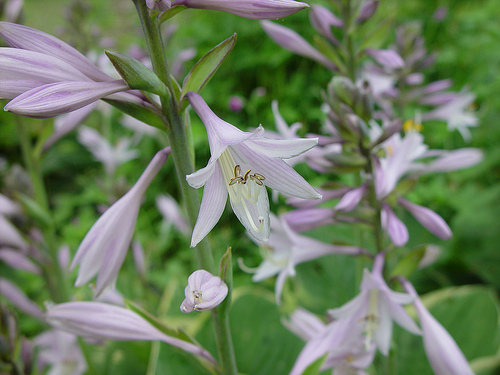
- Hosta plantaginea – notable for large, sweetly scented flowers.
Hosta Virus X (HVX)
HVX is a significant viral disease that affects many modern hosta plantings.
Symptoms
- Mottled or streaked leaves
- Ink‑bleed patterns
- Distorted or stunted growth
Concerns
- Highly contagious through tools, plant sap, and division.
- No cure—infected plants must be destroyed.
HVX is categorized among the virus diseases affecting hosta noted in horticultural extension publications.
Pests & Diseases
While hostas are relatively trouble‑free, they do have vulnerabilities.
Major Pests
- Slugs – the #1 issue, causing large irregular holes; thrive in moist hiding spots.
- Deer & Rabbits – can strip foliage down to “celery stalks.”
- Voles – feed on roots and can kill entire plants. I’ll bet we see a lot of damage this spring (2026) considering the winter we are having.
Diseases
- Anthracnose – common fungal leaf disease causing tattered foliage.
- Petiole & Crown Rot – often fatal if not caught early.
- Leaf Spot – cosmetic but common in poor conditions.
Interesting Hosta Facts
- Hosta was once placed in the genus Hemerocallis (daylilies) before being corrected.
- The name “Hosta” honors Nicholas Thomas Host, an Austrian botanist.
- Some species have leaves with a waxy glaucous coating, giving them a blue appearance.
- Hostas can live for decades, often outliving the gardeners who plant them.
Have Questions? Want a Garden Evaluation?
If you want help choosing the right hosta cultivars, addressing disease concerns, or designing a shade garden that goes beyond the ordinary, We’re always happy to help.
🌿 Ask your questions anytime
🌿 Or book a free garden evaluation to explore plant options tailored to your property
Let’s create something beautiful—and healthy—together.