Hakonechloa macra ‘Aureola’: A Graceful Ornamental Grass for Shaded Landscapes
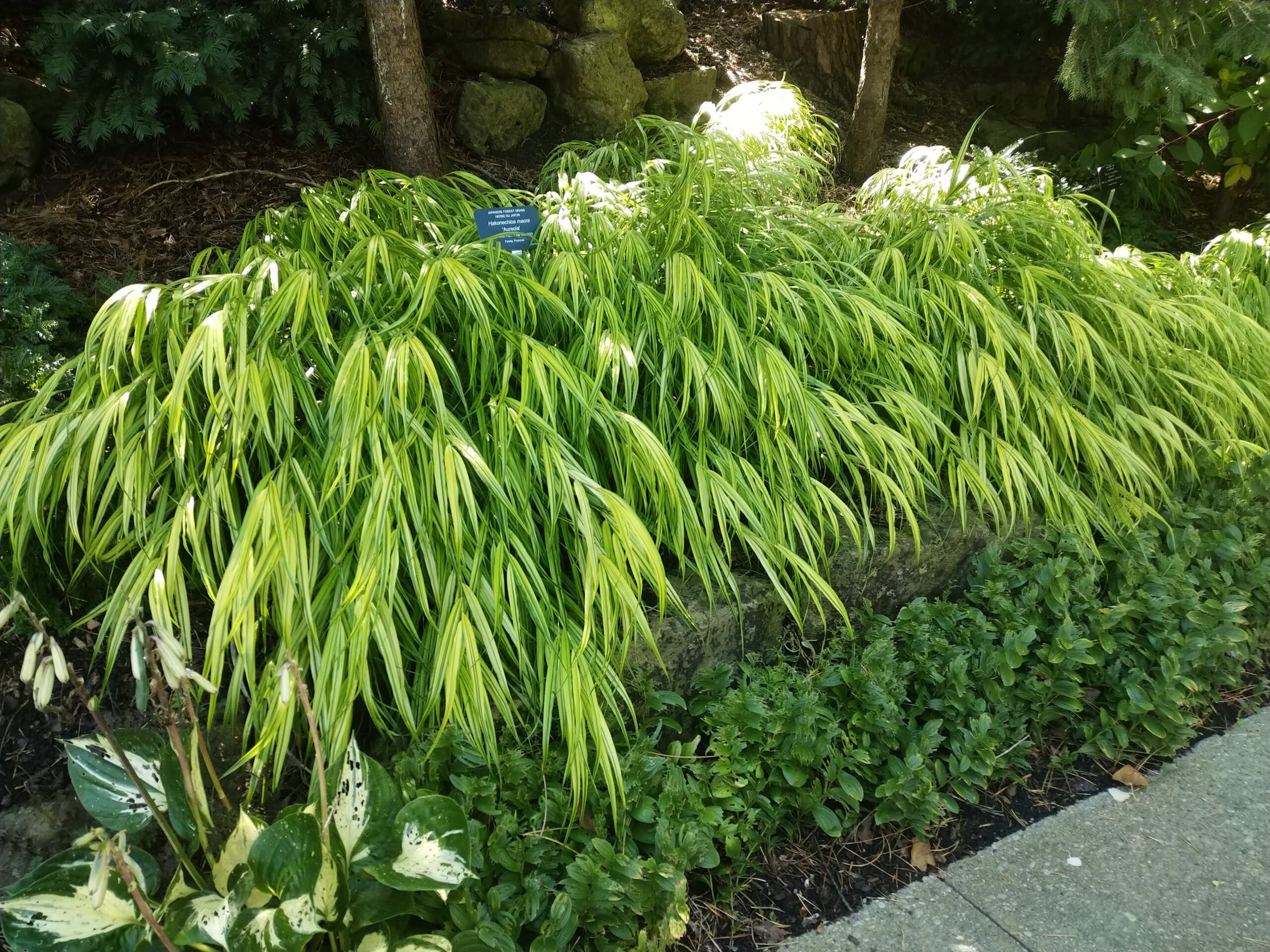
When most people think of ornamental grasses, they picture plants thriving in full sun. However, Hakonechloa macra ‘Aureola’, commonly known as Golden Japanese Forest Grass, is one of the few ornamental grasses that truly excels in shade. With its cascading fountain-like habit and striking gold-striped foliage, it brings elegance, texture, and movement to areas where many other plants struggle.
Named the Perennial Plant of the Year in 2009, ‘Aureola’ has become a favourite among landscape designers for its ability to brighten woodland gardens and shaded borders.
Origins of Hakonechloa macra ‘Aureola’
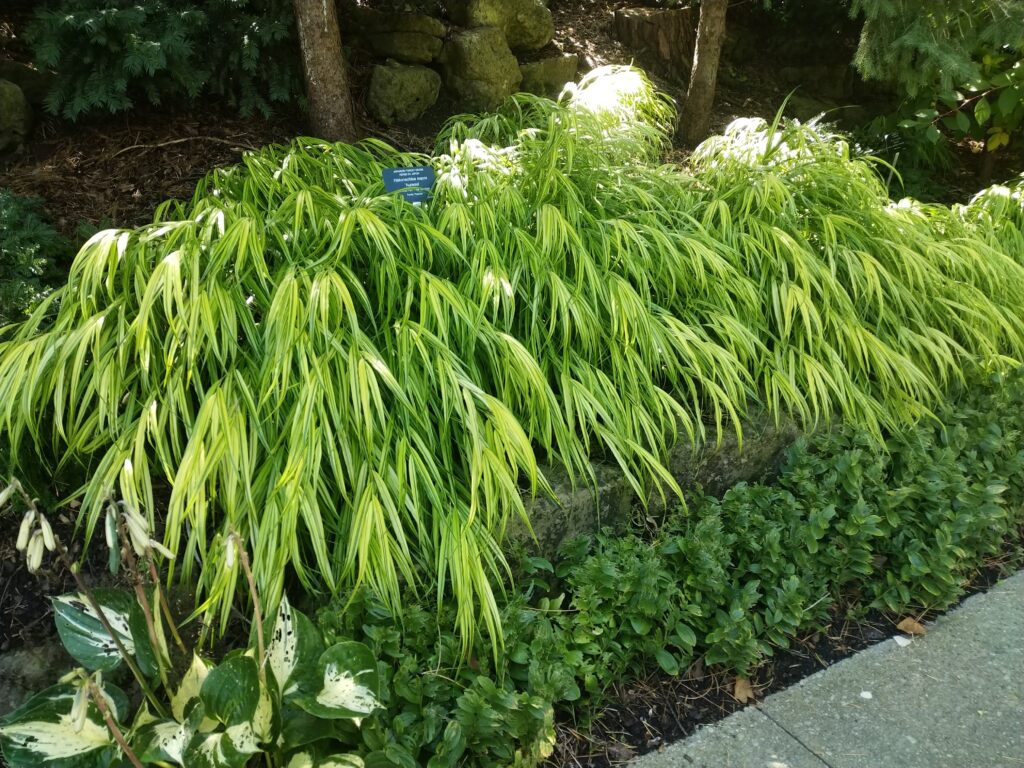
Hakonechloa macra is native to the moist mountain forests and woodland regions of central Japan, particularly around Mount Hakone, from which both its botanical and common names are derived. In its natural habitat, it grows on wooded slopes, rocky outcrops, and moist forest floors.
The cultivar ‘Aureola’ was selected for its striking foliage, featuring bright golden-yellow blades highlighted with narrow green stripes. It remains one of the most popular and widely planted forms of Japanese Forest Grass.
Why ‘Aureola’ Makes an Excellent Landscape Plant
Brilliant Foliage Colour
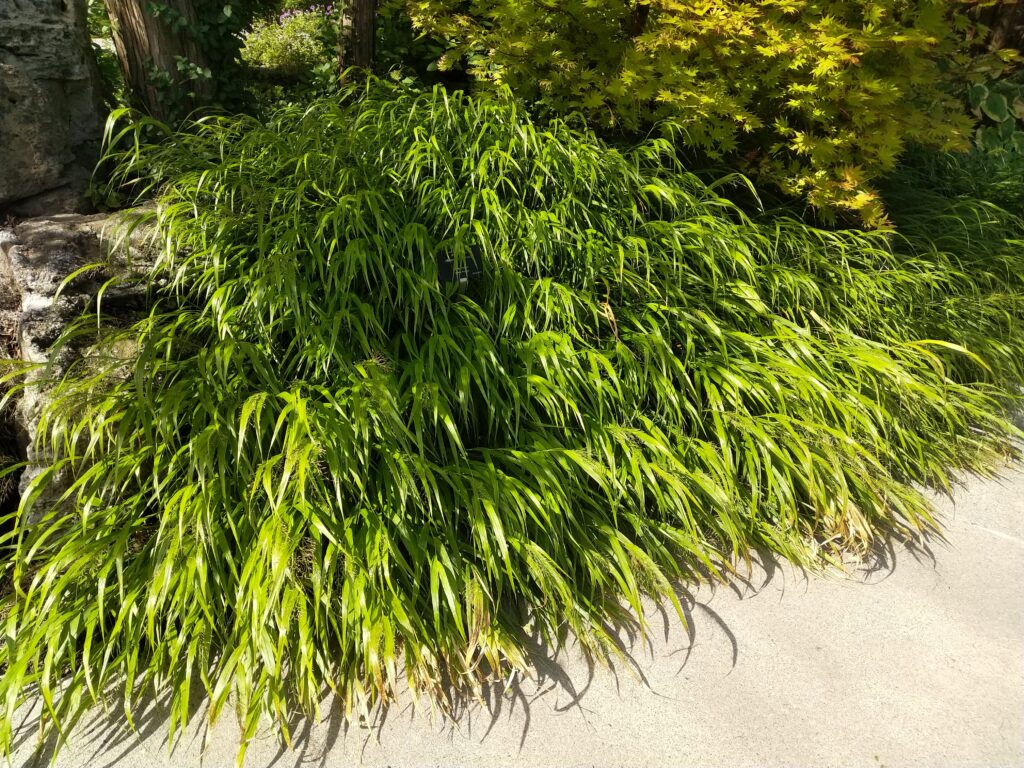
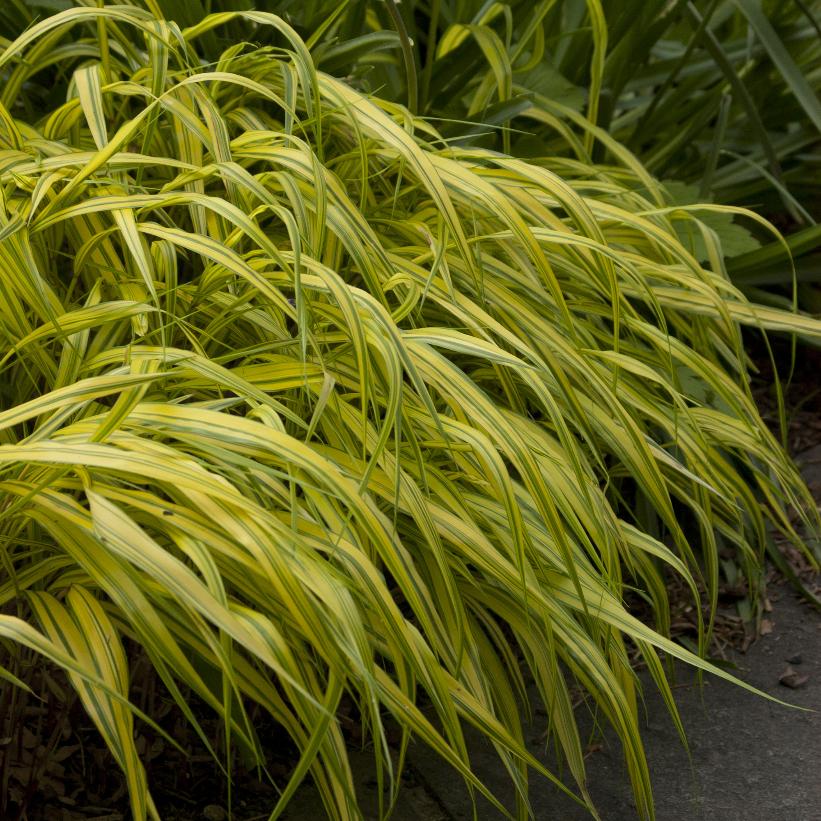
The primary attraction of ‘Aureola’ is its foliage.
The leaves emerge golden yellow with fine green striping and create a luminous effect in shaded areas. As autumn arrives, the foliage often develops attractive shades of pink, bronze, copper, and reddish-orange before going dormant.
Graceful Cascading Habit
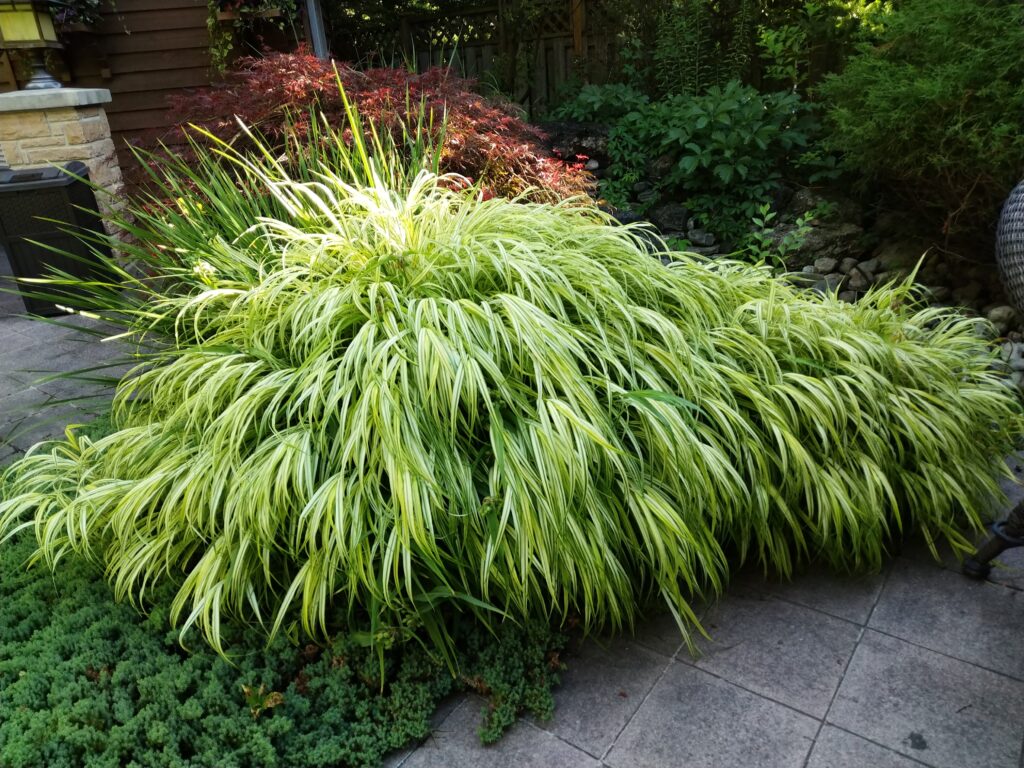
Unlike many upright ornamental grasses, Hakone Grass grows in soft mounds that cascade like a waterfall. This elegant habit creates movement and texture in the landscape.
Shade Tolerance
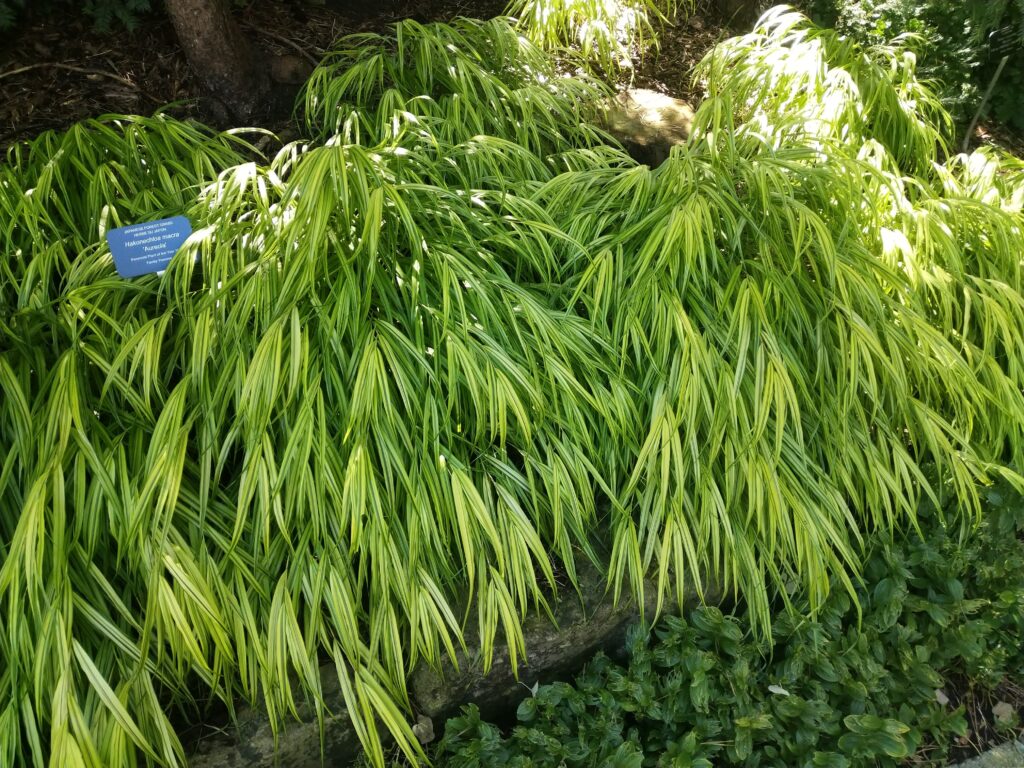
Few ornamental grasses perform as well in shade as Hakonechloa. It is particularly valuable for bringing colour and texture to woodland gardens and shaded borders.
Season-Long Interest
From spring emergence through autumn colour change, this grass provides months of visual appeal. Its foliage remains the star attraction throughout the growing season.
Landscape Uses
Woodland Gardens
Hakone Grass looks completely at home in woodland settings and naturalized shade gardens. Its graceful form complements ferns and native woodland plants beautifully.
Shade Borders
The bright foliage helps illuminate darker sections of the landscape where flowering options may be limited.
Edging Pathways
Its cascading habit softens the edges of walkways, stone pathways, and garden borders.
Underplanting Trees and Shrubs
Because it tolerates partial to full shade, it performs exceptionally well beneath deciduous trees and larger shrubs.
Containers
The arching foliage spills beautifully over container edges, creating a soft, elegant effect.
Asian-Inspired Gardens
Its Japanese origins and bamboo-like appearance make it an excellent choice for Asian-themed landscapes.
Plant Characteristics
- Botanical Name: Hakonechloa macra ‘Aureola’
- Common Name: Golden Japanese Forest Grass
- Plant Type: Ornamental grass
- Height: 30–45 cm (12–18 inches)
- Spread: 45–60 cm (18–24 inches)
- Hardiness: USDA Zones 5–9
- Growth Habit: Cascading, mound-forming
- Foliage Colour: Gold with green striping, turning bronze and reddish tones in autumn
How to Care for Hakonechloa ‘Aureola’
Sunlight
For the best foliage colour and plant health:
Partial Shade is Ideal
- Morning sun and afternoon shade are preferred.
- Too much sun can scorch the foliage.
- Deep shade may reduce the intensity of the golden colouring.
Soil Requirements
Hakone Grass thrives in:
- Moist, humus-rich soil
- Well-drained soil
- Organic woodland-type soils
Avoid excessively dry locations or poorly drained clay soils.
Watering
Unlike many ornamental grasses, Hakone Grass appreciates consistent moisture.
- Water regularly during establishment.
- Maintain evenly moist soil.
- Avoid prolonged drought stress.
Fertilizing
A yearly application of compost or a balanced slow-release fertilizer in spring is generally sufficient. Heavy fertilization is rarely necessary.
Maintenance and Pruning
Hakone Grass is remarkably low maintenance.
Recommended care includes:
- Cutting old foliage back to the ground in late winter or early spring.
- Applying mulch in winter in colder regions.
- Dividing clumps every few years if expansion or propagation is desired.
The plant spreads slowly by rhizomes but is not considered invasive.
Common Pests and Diseases
One reason landscapers value ‘Aureola’ is its resistance to most problems.
Pests
- Deer generally avoid it.
- Serious insect problems are uncommon.
Diseases
- Few significant disease issues occur.
- Occasional leaf scorch may develop during hot weather or drought.
- Poor drainage can contribute to root problems.
Companion Plants
Golden Japanese Forest Grass pairs beautifully with:
- Hosta
- Heuchera
- Ferns
- Astilbe
- Tiarella
- Brunnera
- Epimedium
- Japanese Painted Fern
The gold foliage creates striking contrast against blue, purple, and dark green leaves.
Why Homeowners Love Hakonechloa ‘Aureola’
✅ Brightens shady gardens
✅ Elegant cascading habit
✅ Multi-season foliage colour
✅ Low maintenance
✅ Deer resistant
✅ Excellent in containers
✅ Beautiful companion plant
✅ Slow spreading and non-invasive
✅ Adds movement and texture to the landscape
Conclusion
Hakonechloa macra ‘Aureola’ is one of the finest ornamental grasses available for shaded landscapes. Its luminous gold foliage, graceful cascading habit, and exceptional adaptability make it an invaluable addition to woodland gardens, shaded borders, and container plantings. For gardeners seeking year-long texture and colour without demanding maintenance, Golden Japanese Forest Grass is truly one of the most elegant choices available.