Origins in the Canadian Landscape
Euonymus alatus—better known as burning bush o
r winged euonymus—is not native to Canada. It originates from central and northern China, Japan, and Korea, and was introduced to North America as an ornamental shrub in the 1860s.
In Canada, especially in southern Ontario, burning bush escaped cultivation and is now found spreading into natural ravines and forests.
Invasive Nature in Canada
Euonymus alatus is considered invasive in Ontario and other parts of southeastern Canada. Invasive agencies warn that it:
- Forms dense thickets that crowd out native shrubs and understory plants.
- Thrives in full shade, giving it a competitive advantage over many native species.
- Spreads aggressively via bird‑dispersed seeds and vegetative root suckering.
Its ecological impact is severe enough that several U.S. states list it as a noxious weed, and Ontario organizations strongly discourage planting it.
Landscape Uses (and Why They’re Controversial Today)
Historically, burning bush became popular because of its:
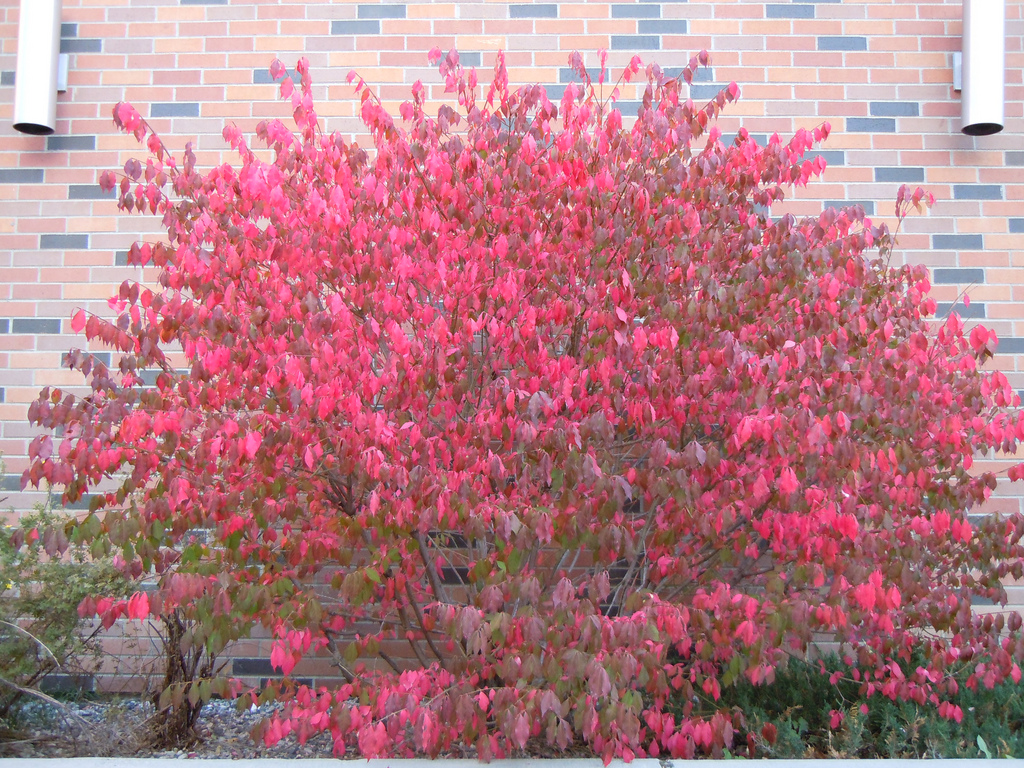
- Brilliant red fall foliage
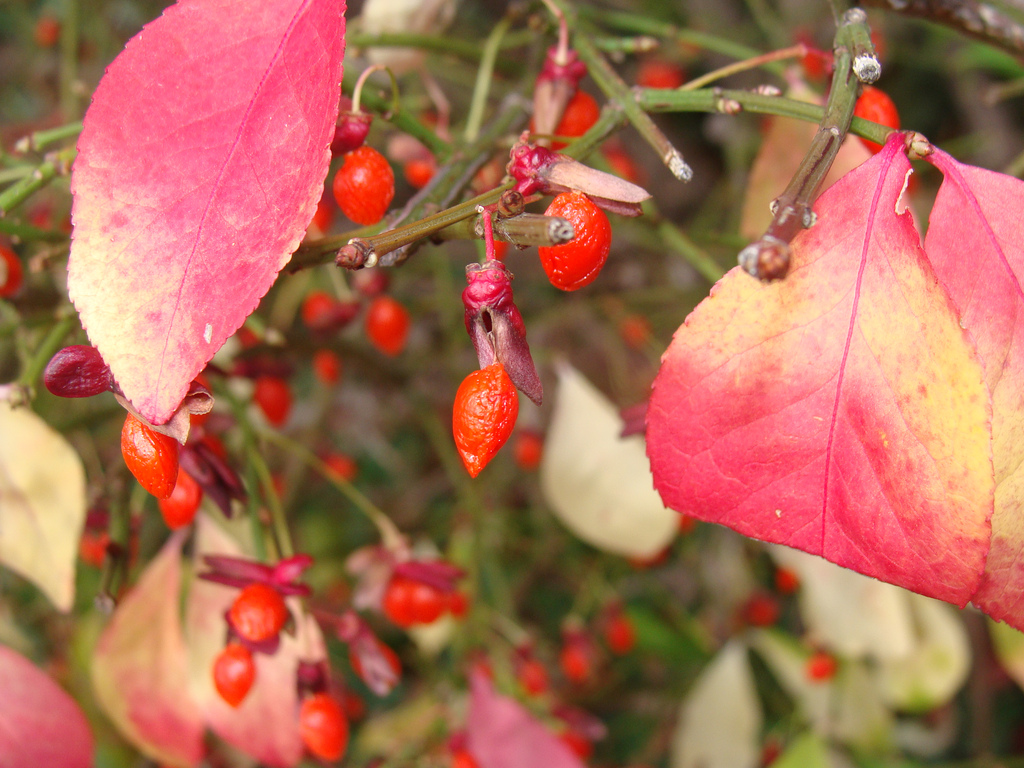
- Attractive red fruit
- Tolerance of urban environments
- Usefulness in hedges, mass plantings, highways, and foundation plantings
These traits made it widely used across suburban and commercial landscapes.
However, due to its invasive tendencies and ecological harm, experts now recommend discontinuing its use in Canadian landscapes.
Fun Facts About Euonymus alatus
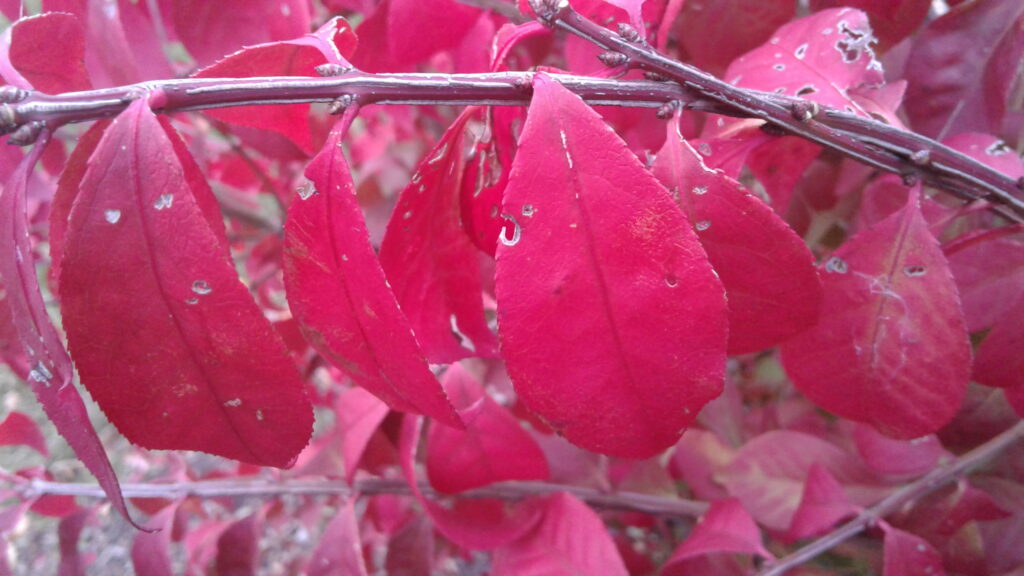
- The name “burning bush” comes from its intense crimson fall colour, which makes entire shrubs look aflame.
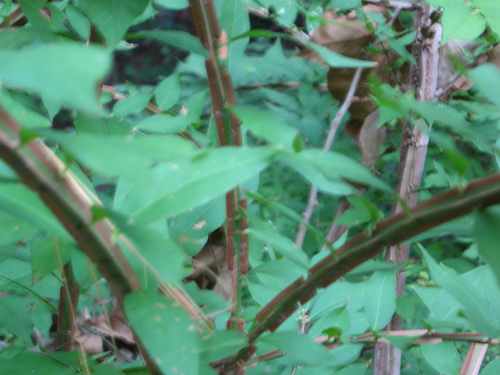
- Its stems have distinctive corky “wings,” making it easy to identify year‑round.
- Though attractive, all parts of the plant are toxic if ingested, causing severe discomfort.
- Some cultivars such as ‘Compactus’ gained awards for ornamental value before invasiveness concerns became widely known.
How to Grow Euonymus alatus (If Still Permitted)
Note: Planting is discouraged in many regions. Check local regulations.
If you already have burning bush on your property and choose to maintain it:
Growing Conditions
- Light: Full sun to full shade (fall colour strongest in sun).
- Soil: Adaptable but prefers consistent moisture.
- Size: 5–15 feet tall, often wider than tall.
- Uses: Foundation plantings, hedges, large borders (where non‑invasive alternatives are unavailable).
Management Tips (Important for Containment)
- Remove fruits before birds disperse seeds.
- Prune regularly to reduce spread.
- Monitor roots for suckering.
- Replace with native shrubs whenever possible.
Recommended Alternatives
Consider planting native or non‑invasive shrubs such as:
- Aronia melanocarpa (Black Chokeberry)
- Cornus sericea (Red Osier Dogwood)
- Viburnum trilobum (Highbush Cranberry)
These mimic burning bush’s colour or structure without harming local ecosystems.
What Do You Think?
Have you grown Euonymus alatus in your garden? Have you noticed it spreading beyond where it was planted?
Share your experiences or questions—your input helps others make more informed, environmentally responsible landscape choices!