When homeowners and landscape professionals are searching for a shrub that offers exceptional foliage colour and year-round appeal, Physocarpus opulifolius ‘Monlo’, commonly marketed as Diabolo Ninebark, consistently rises to the top of the list. Its deep burgundy-purple foliage, contrasting white flowers, and distinctive peeling bark make it one of the most versatile shrubs available for modern landscapes.
Origins of Diabolo Ninebark
The species Physocarpus opulifolius, commonly known as Eastern Ninebark, is native to much of North America, where it naturally occurs along stream banks, woodland edges, rocky slopes, and moist thickets. It has long been valued for its adaptability, hardiness, and ability to thrive in challenging conditions.
The cultivar ‘Monlo’ originated in Germa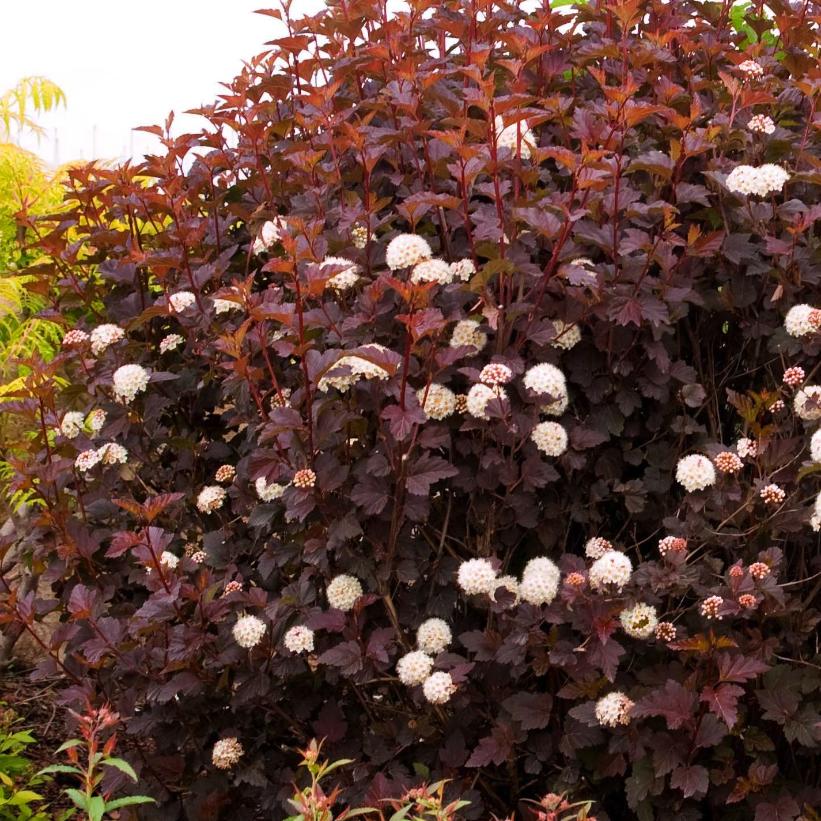 ny and was discovered in 1968 among approximately 120,000 seedlings because of its remarkable red-purple foliage. Unlike the species’ typical green leaves, this seedling displayed consistently dark colouring, leading to its eventual introduction into the nursery trade. The cultivar name is ‘Monlo’, while the trademarked marketing name is Diabolo in North America.
Why Is It Called Ninebark?
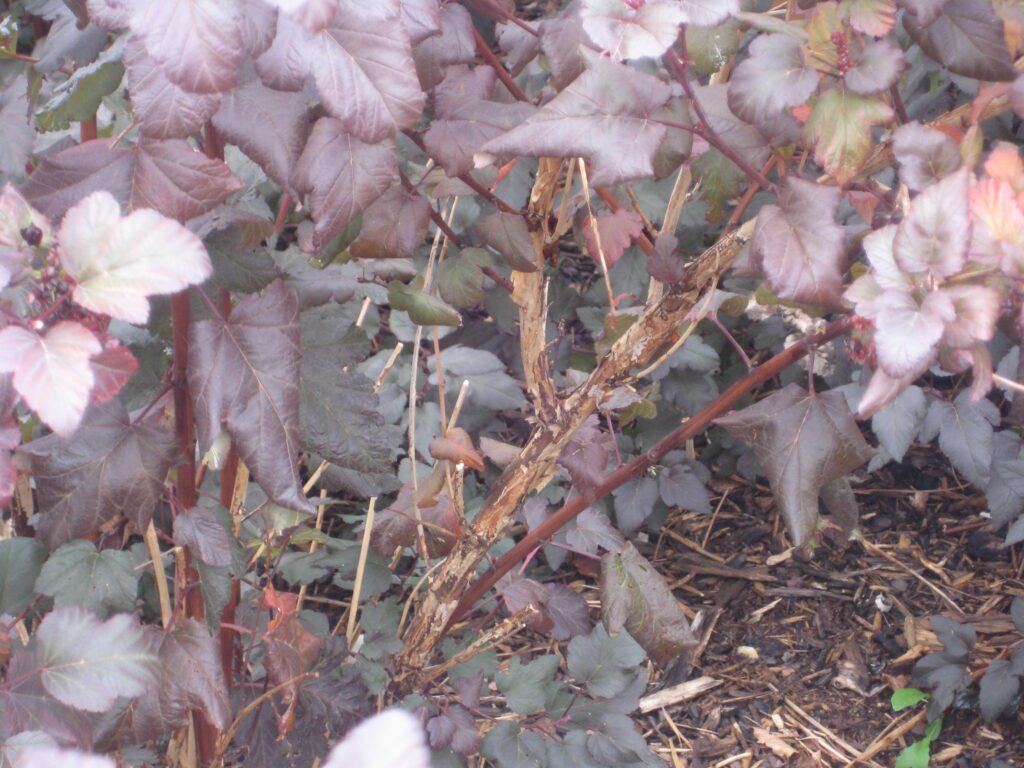
The common name Ninebark comes from the shrub’s distinctive exfoliating bark. As stems mature, the outer bark peels away in thin layers, revealing multiple shades of reddish-brown and tan beneath. Early observers believed the bark appeared to peel in many layers—hence the name “ninebark.”
This peeling bark provides valuable winter interest long after the leaves have fallen.
Landscape Uses
Diabolo Ninebark is prized for its versatility and dramatic visual impact.
Specimen Plant
The dark foliage creates a striking focal point in the landscape. Plant it as a standalone specimen where its rich colour can contrast with lawns, ornamental grasses, or lighter-coloured shrubs.
Privacy Screens and Hedges
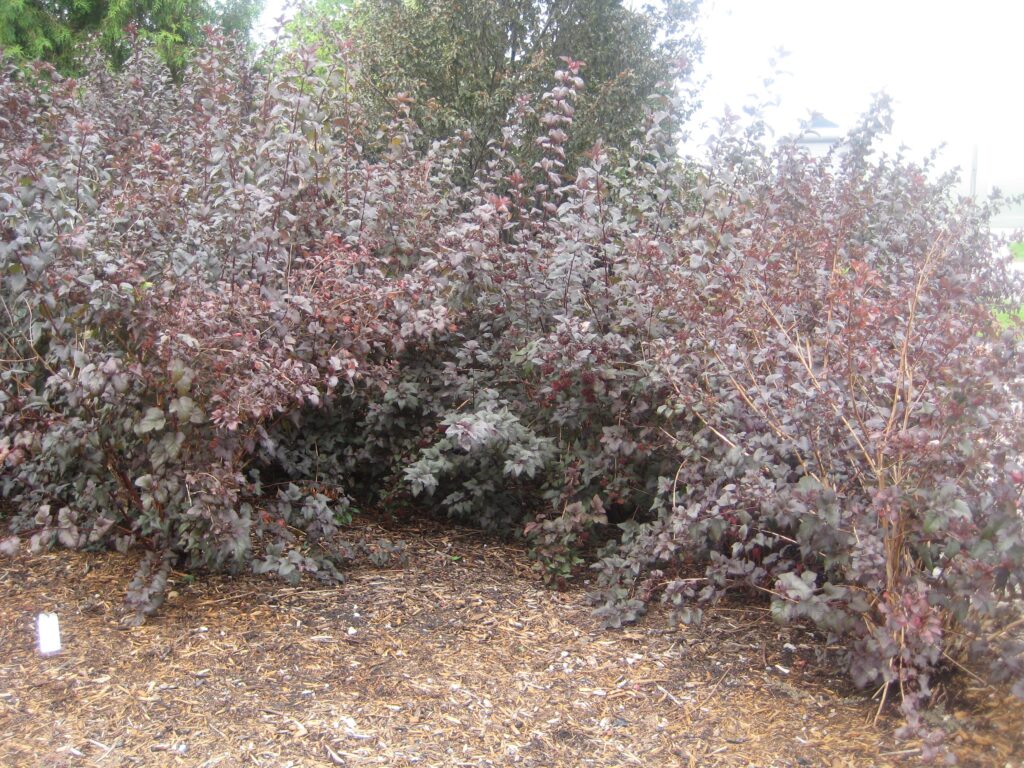
Growing approximately 8–10 feet tall and wide, Diabolo Ninebark forms a dense screen that can provide privacy while adding seasonal colour. Its upright yet gracefully arching habit works beautifully in informal hedges.
Mixed Shrub Borders
Landscape designers frequently use Diabolo Ninebark as a backdrop for perennials with gold, silver, pink, or white flowers. The dark foliage amplifies the colours of neighbouring plants and creates dramatic contrast throughout the growing season.
Wildlife and Pollinator Gardens
The late-spring flower clusters attract bees, butterflies, and other pollinators, while its dense branching provides shelter for birds. Seed capsules that develop after flowering offer additional seasonal interest.
Erosion Control
Because of its vigorous root system and adaptability, ninebark is often used on slopes, banks, and difficult sites where soil stabilization is needed.
Seasonal Interest
One of the greatest strengths of Diabolo Ninebark is its ability to perform throughout all four seasons.
Spring
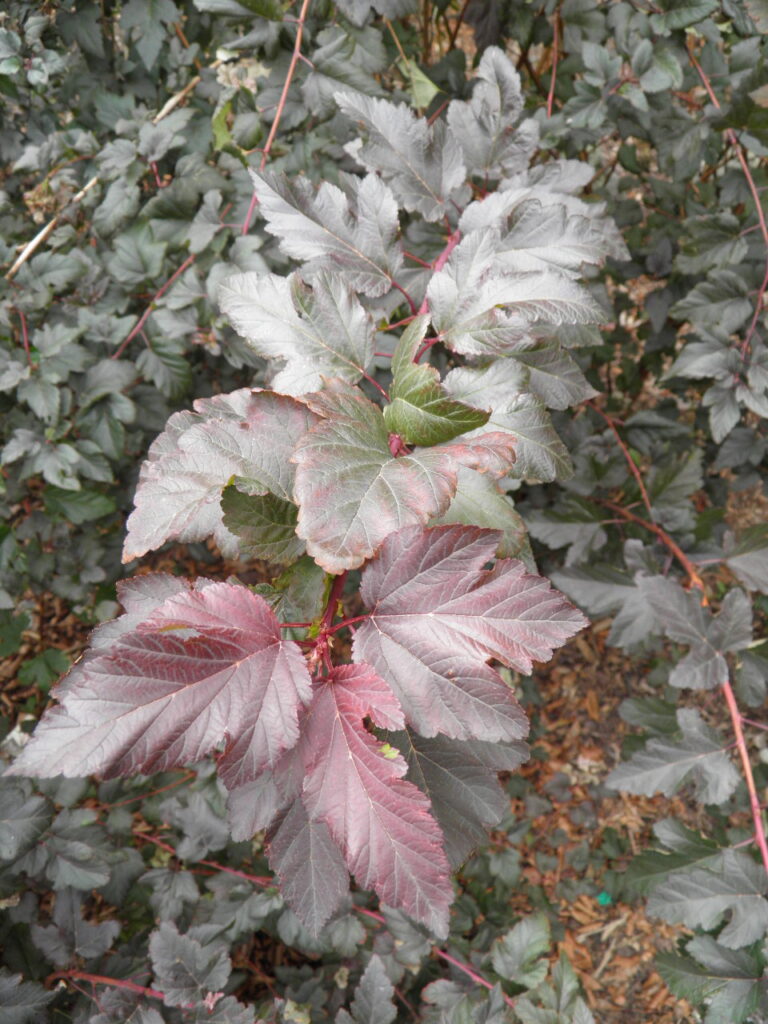
New foliage emerges in shades of coppery-red before maturing to deep burgundy. Soft clusters of pink buds open into creamy-white flowers.
Summer
The foliage remains rich and colourful, providing a dramatic backdrop to other landscape plants. In very hot climates or excessive shade, leaves may become greener.
Fall
Red seed capsules and reddish fall foliage add another layer of visual interest.
Winter
The peeling bark becomes the star attraction, revealing multiple layers beneath and adding texture to the dormant landscape.
Care and Maintenance
Light Requirements
For the deepest foliage colour, plant Diabolo Ninebark in full sun. Partial shade is tolerated but may reduce the intensity of the purple foliage.
Soil
One reason for the popularity of ninebark is its adaptability. It thrives in a wide range of soils, including clay, sandy, rocky, and moderately dry sites, provided drainage is adequate.
Water
Once established, Diabolo Ninebark exhibits excellent drought tolerance, making it a valuable shrub for low-maintenance landscapes and water-wise gardens.
Pruning
Prune immediately after flowering if shaping is needed. Older plants can be rejuvenated by removing older stems or cutting the shrub back hard in early spring to encourage vigorous new growth.
Hardiness
This shrub is exceptionally cold hardy and performs well across much of Canada and the northern United States, typically thriving in Zones 2 or 3 through 7.
Cultural Connections
Indigenous peoples throughout North America traditionally utilized various parts of native ninebark species for practical and medicinal purposes. The plant’s toughness and regenerative nature contributed to its reputation as a symbol of resilience and endurance in the landscape. The peeling bark also inspired curiosity among settlers, who often viewed the layered bark as a sign of longevity and protection. While specific legends attached to Ninebark are scarce, its native heritage and remarkable adaptability have made it an enduring feature of North American gardens for generations.
Final Thoughts
If you’re seeking a shrub that combines bold colour, adaptability, wildlife value, drought tolerance, and four-season interest, Diabolo Ninebark deserves a prominent place in your landscape. Its striking burgundy foliage provides instant contrast, while its flowers, seed heads, and peeling bark ensure that the plant remains attractive long after many other shrubs have faded from view.
Whether used as a specimen, hedge, screen, or mixed border plant, Physocarpus opulifolius ‘Monlo’ continues to prove why it is one of the most popular ornamental shrubs in modern landscape design.