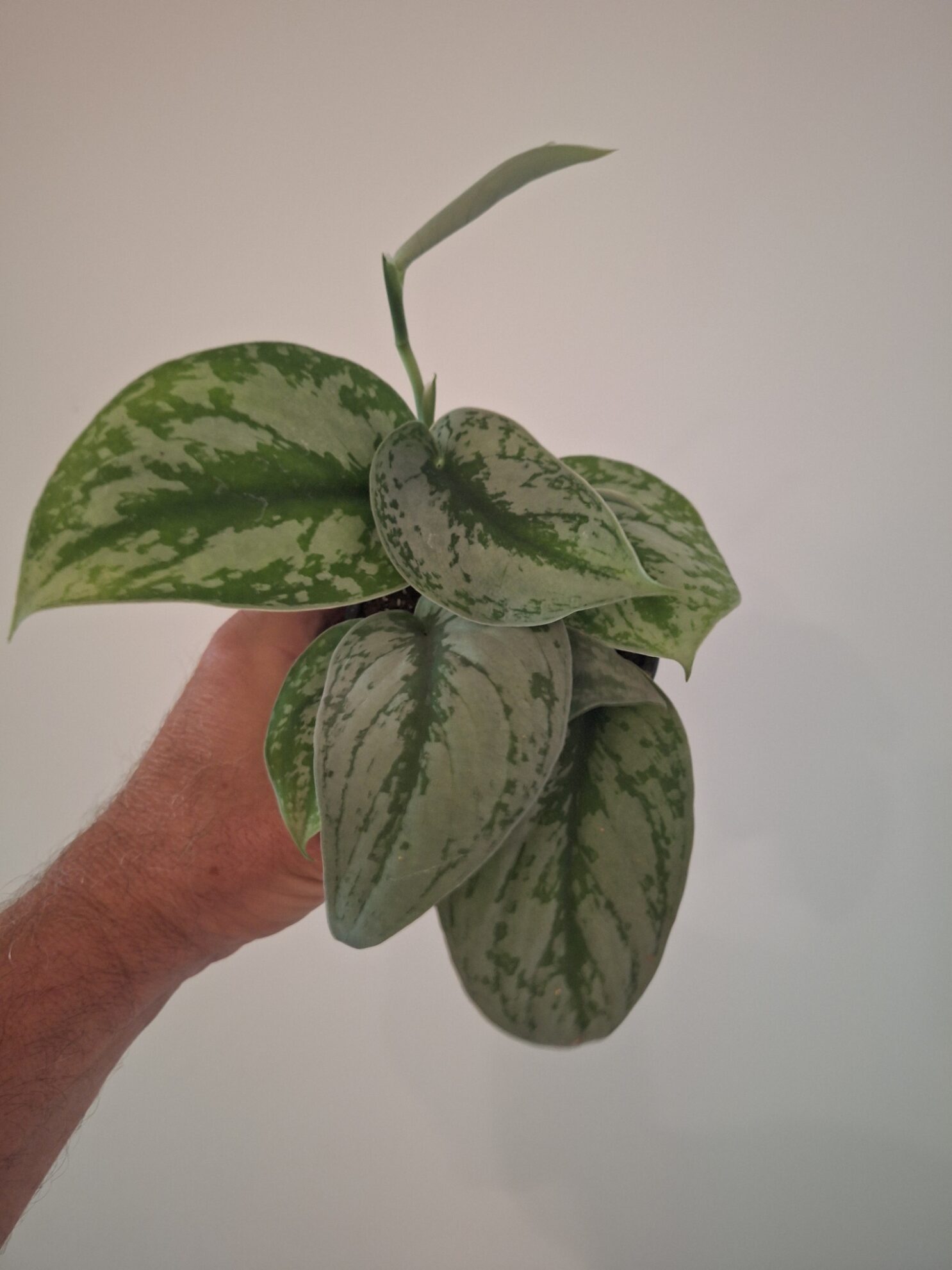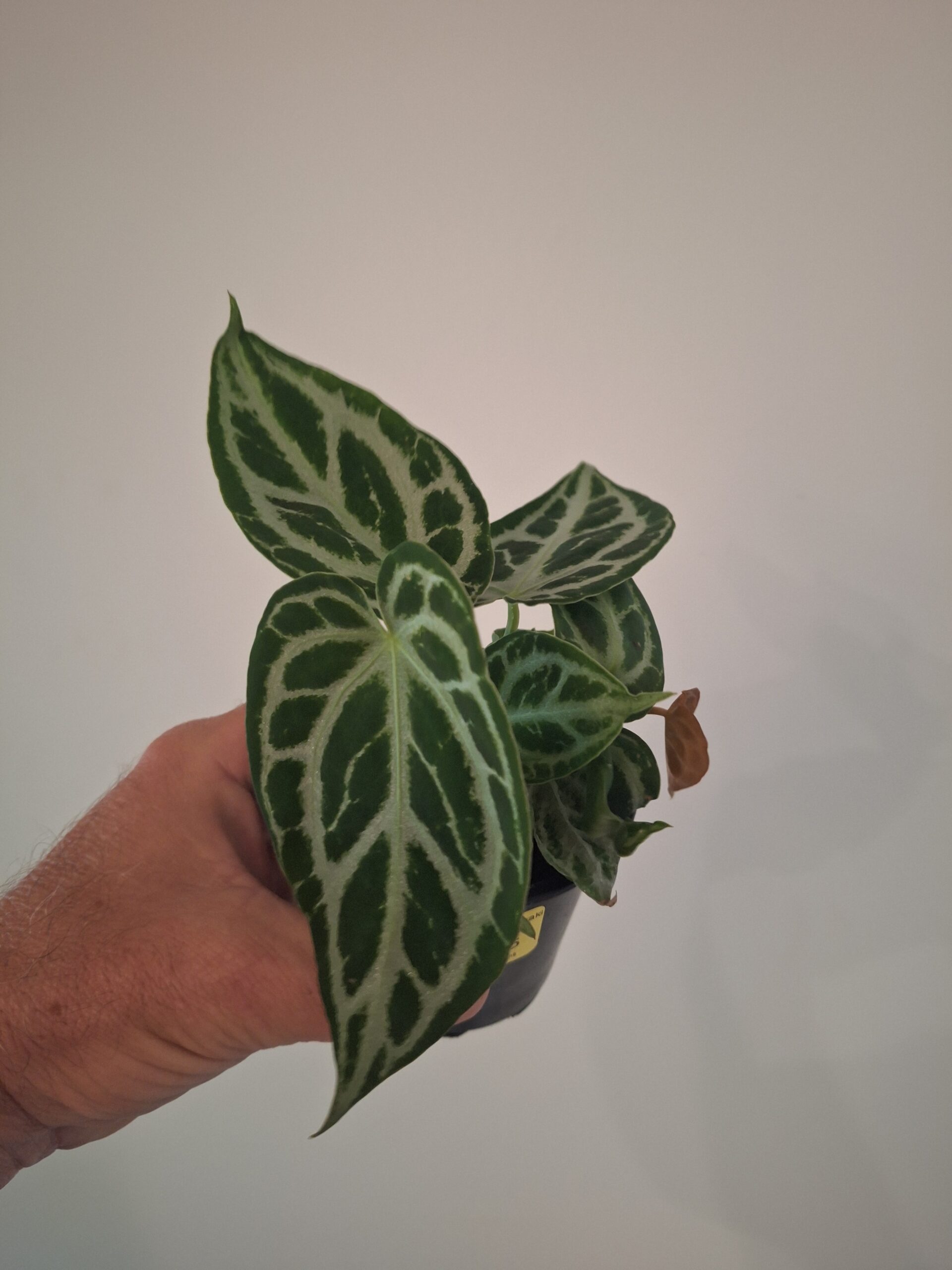
Among the many stunning foliage Anthuriums available today, Anthurium crystallinum ‘Silver Blush’ stands out as one of the most desirable. This striking cultivar takes the beauty of the species to another level, featuring dramatic silver coloration that appears almost painted onto its velvety leaves. For indoor plant enthusiasts and collectors, few plants combine elegance, rarity, and visual impact quite like ‘Silver Blush’.
What Is Anthurium crystallinum ‘Silver Blush’?
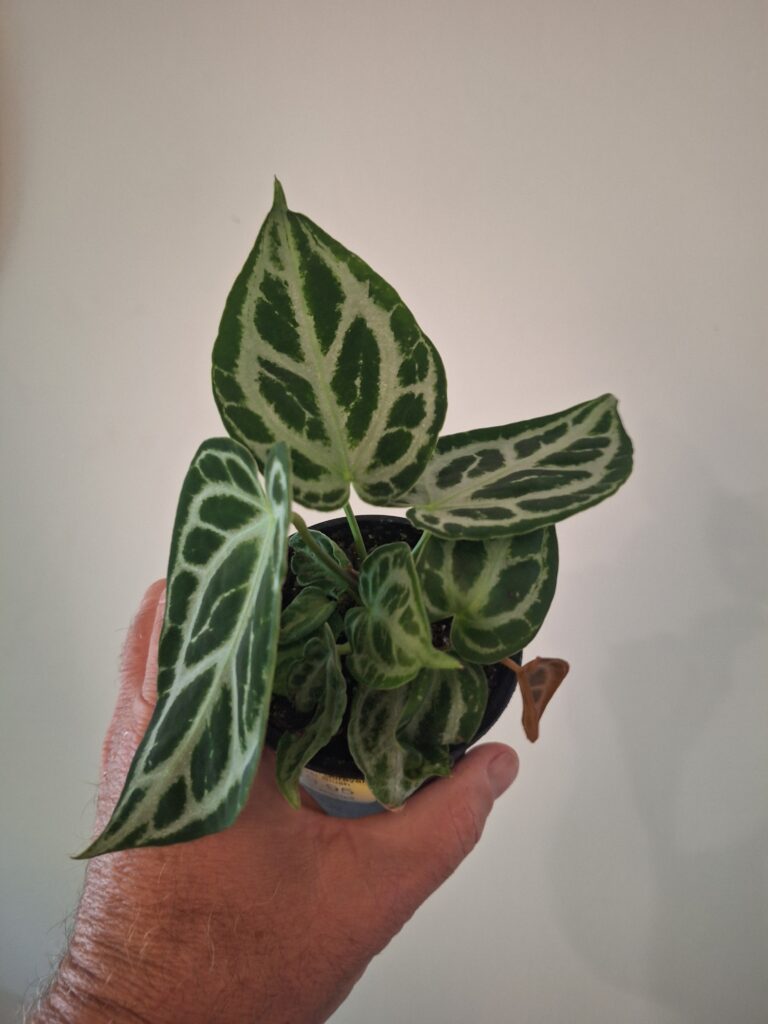
‘Silver Blush’ is a selected form of Anthurium crystallinum, a tropical species native to the rainforests of Central and South America. While the species is known for its dark green, velvety foliage and contrasting white veins, ‘Silver Blush’ was selected for its unusually heavy silver coloration.
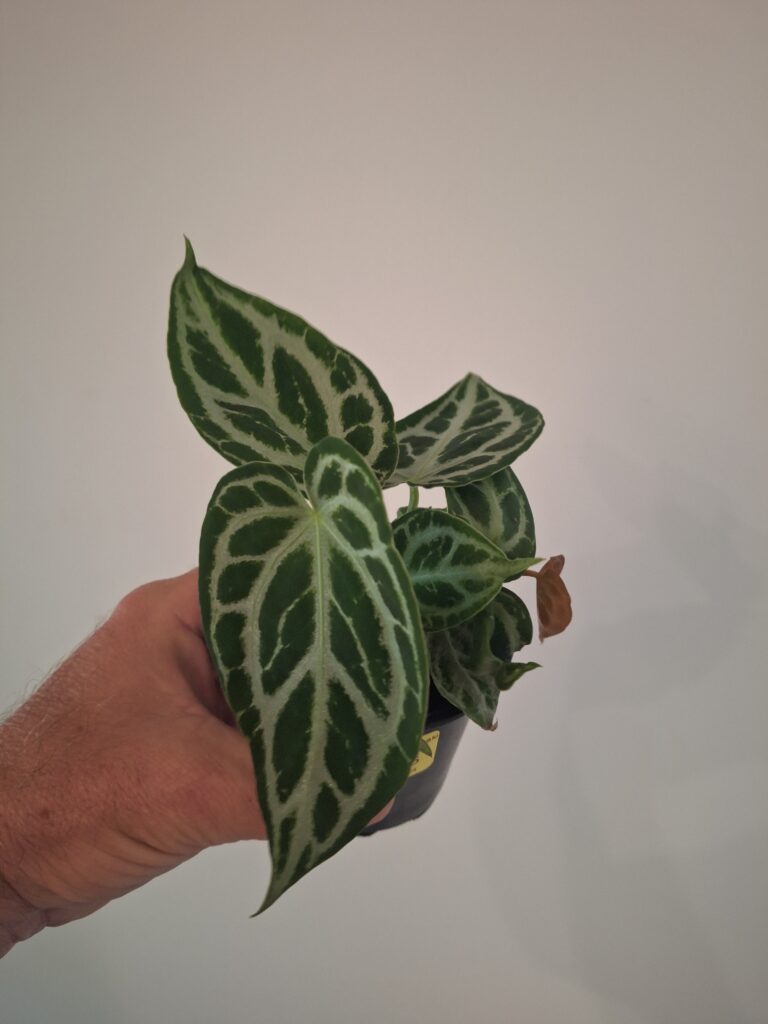
The leaves emerge with a shimmering metallic appearance and often develop broad silver areas between the veins. Each leaf is unique, making every plant slightly different from the next.
What Makes ‘Silver Blush’ Special?
Several characteristics set this cultivar apart from standard Anthurium crystallinum:
Exceptional Silver Foliage
The most obvious feature is the silver overlay that gives the plant its name. Rather than simply showing silver veins, many leaves develop a frosted or brushed-metal appearance across much of the leaf surface.
Velvety Texture
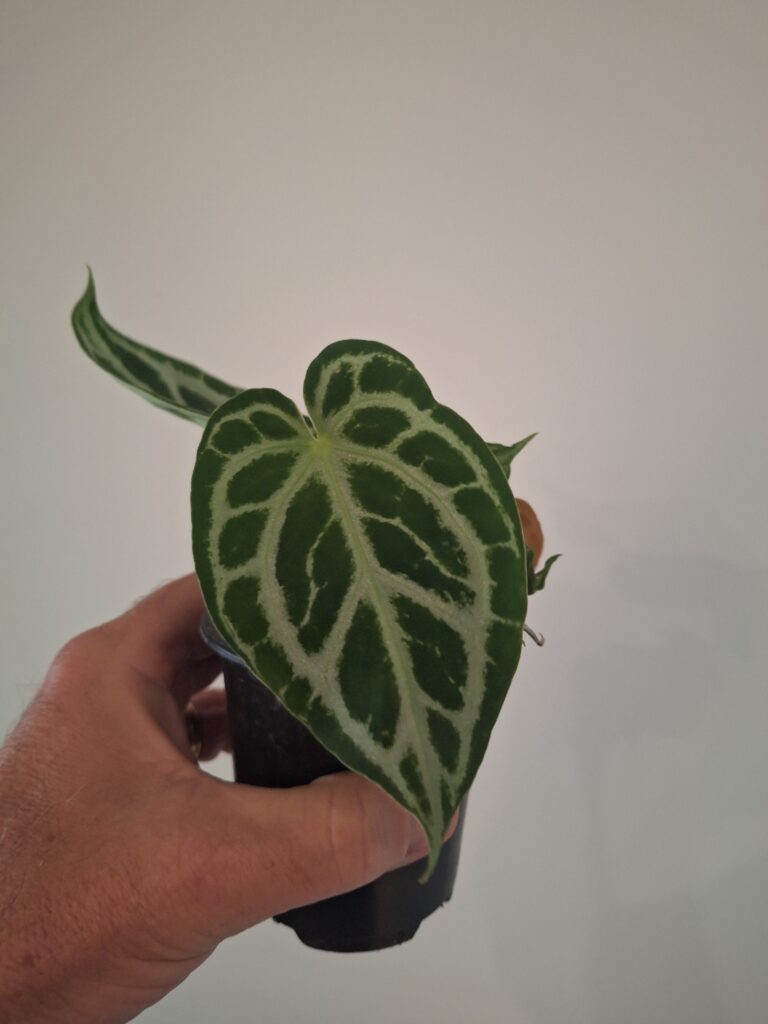
The leaves have a luxurious velvet texture that catches and reflects light beautifully. The combination of velvet and silver creates an almost three-dimensional effect.
Ever-Changing Appearance
Young leaves often emerge bronze, copper, or reddish-green before maturing into their characteristic silver and deep-green coloration. The plant seems to reinvent itself with every new leaf.
Collector Appeal
Because silver expression varies from plant to plant, enthusiasts often seek out particularly striking specimens. High-quality ‘Silver Blush’ plants remain highly prized among aroid collectors.
Tropical Elegance
Unlike many brightly colored houseplants, ‘Silver Blush’ creates a sophisticated, upscale appearance that complements modern interiors, offices, and plant displays.
Native Habitat
Although ‘Silver Blush’ is a cultivated selection, its species originates from humid tropical forests where plants grow on the forest floor or among organic debris beneath the canopy.
In nature, these environments provide:
- Warm temperatures year-round
- High humidity
- Frequent rainfall
- Excellent drainage
- Bright, filtered light
Replicating these conditions indoors is the key to success.
Light Requirements
Anthurium crystallinum ‘Silver Blush’ prefers bright, indirect light.
Ideal locations include:
- East-facing windows
- Bright north-facing windows
- A few feet back from south-facing windows
- Plant shelves with supplemental grow lights
Avoid prolonged direct sunlight, especially during the afternoon hours, as it can bleach or scorch the foliage.
Too little light may result in smaller leaves, slower growth, and reduced silver coloration.
Temperature Preferences
As a tropical plant, ‘Silver Blush’ enjoys warm indoor conditions.
Best temperature range:
- 18°C to 27°C (65°F to 80°F)
Avoid:
- Temperatures below 15°C (59°F)
- Drafty windows during winter
- Air conditioner vents
- Sudden temperature swings
Consistent warmth encourages vigorous growth and larger leaves.
Watering
The goal is evenly moist soil with plenty of air around the roots.
A good practice is to:
- Water thoroughly when the top 2 to 5 cm (1 to 2 inches) of the growing medium begins to dry.
- Allow excess water to drain freely.
- Never leave the pot sitting in water.
Overwatering can quickly lead to root rot, while underwatering may result in crispy leaf tips and slowed growth.
Soil Requirements
Like many prized aroids, ‘Silver Blush’ prefers a chunky, airy growing medium.
A suitable mix might include:
- Orchid bark
- Perlite
- Coco coir or peat moss
- High-quality potting mix
- Horticultural charcoal
This type of mix retains adequate moisture while ensuring excellent root aeration.
Fertilizing
During the active growing season:
- Feed every four to six weeks with a balanced liquid fertilizer diluted to half strength.
Reduce fertilization during autumn and winter when growth naturally slows.
Too much fertilizer can damage roots and cause leaf burn.
Repotting
Repot every one to two years or when roots begin filling the container.
Choose:
- A pot with drainage holes
- A container only slightly larger than the previous one
Oversized pots often remain too wet for too long, increasing the risk of root problems.
Common Problems
Brown Leaf Edges
Usually caused by:
- Low humidity
- Inconsistent watering
- Salt buildup from fertilizer
Yellow Leaves
Often linked to:
- Excess moisture
- Poor soil drainage
- Root stress
Pests
Watch for:
- Spider mites
- Mealybugs
- Thrips
- Scale insects
Regular inspection helps catch issues before they become serious.
Propagation
The easiest propagation method is division.
When repotting:
- Separate growth points that have established roots.
- Plant divisions in fresh aroid mix.
- Maintain warmth and humidity while new roots establish.
Displaying Silver Blush Indoors
This cultivar is best showcased where its foliage can be appreciated up close:
- Living room plant displays
- Office desks and reception areas
- Plant cabinets
- Tropical indoor collections
- Shelves with accent lighting
Its reflective silver foliage often becomes a conversation piece for visitors.
Final Thoughts
Anthurium crystallinum ‘Silver Blush’ represents everything indoor plant collectors love about velvet-leaved Anthuriums. Its shimmering silver foliage, luxurious texture, and constantly evolving leaves make it one of the most beautiful tropical plants available for indoor growing. With bright indirect light, warm temperatures, high humidity, and a well-draining soil mix, this remarkable cultivar can thrive for years while producing increasingly spectacular foliage.