Topdressing, Aerating and Overseeding Lawns
There is a lot of misinformation out there about how to take care of lawns. Among the topics aerating, topdressing and overseeding. The following words are not made up by me. They follow Ontario Ministry of Agriculture and Food (OMAFRA) and Guelph Turfgrass Institute (GTI) guidelines. Not to mention many textbooks written and followed by professional turfgrass managers.
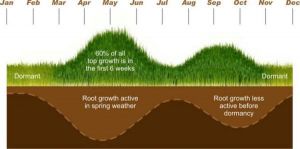
The very best time to aerate, topdress and overseed a lawn is when it is growing robustly where the plants are developing really strong roots. From a calendar standpoint, we can usually start this process in mid-August and stop mid-September. This growth period is called “vegetative growth”. During spring growth is reproductive growth with the plants putting all of their “efforts” into flowering and fruiting. Spring comes in a distant second place as far as a desired time but please wait until mid-May before aerating…. And yet there and are a lot of companies that use aerating to generate income in the spring.
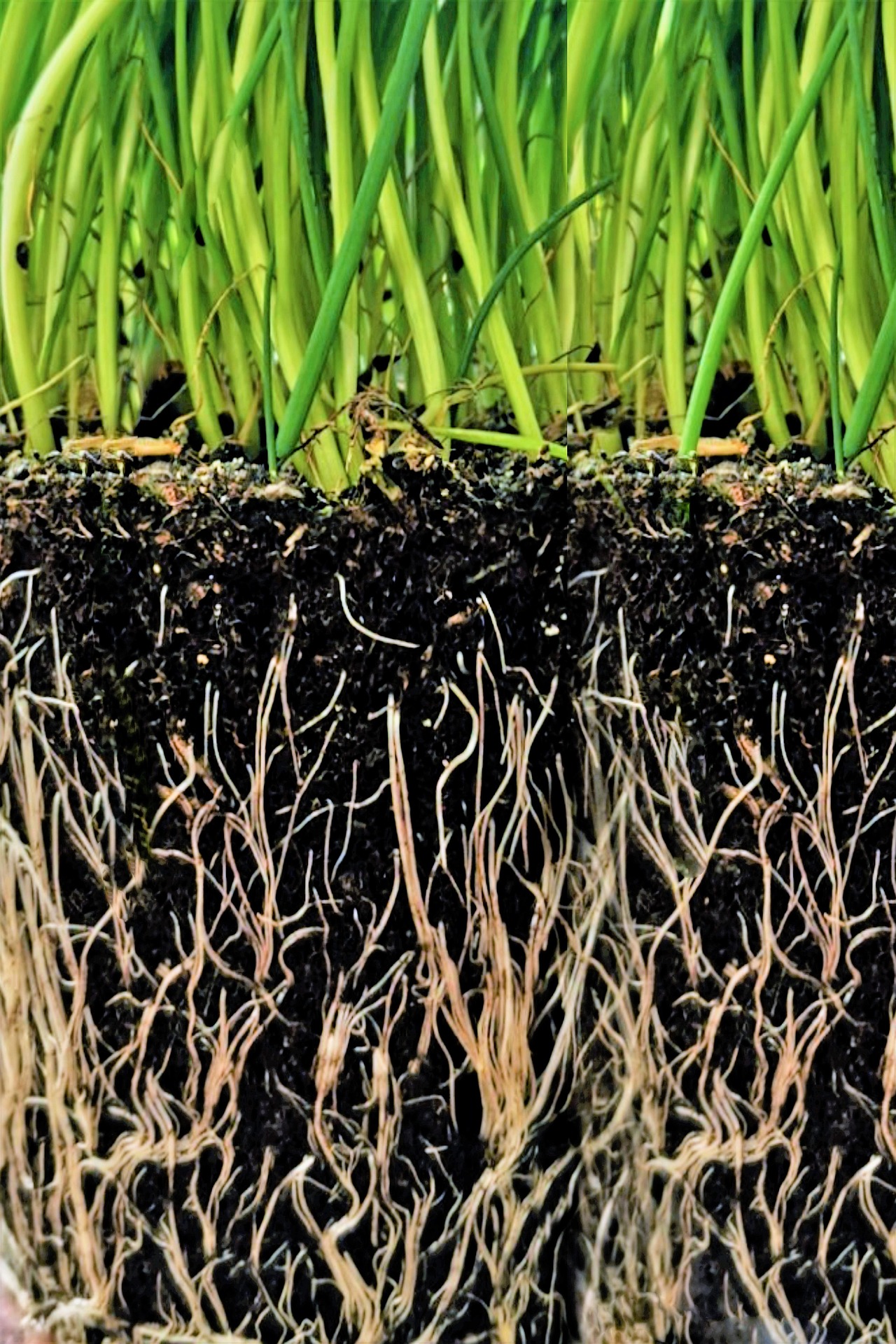
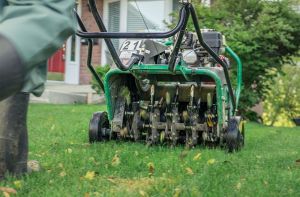
Aerating is one the most abused lawn care practices. Healthy lawns do not need to be aerated. There are a lot of creatures that do that for our lawns. Worms, grubs (yes grubs), birds and even the grass plants’ roots aerate the soil. I MAY aerate a lawn if I am applying a soil based topdressing material.
Topdressing is another funny one to me. I have neighbours that get one of those big bags of soil delivered every spring and then spend the weekend topdressing a lawn that doesn’t need it. We will use a soil based topdressing material when we are trying to level a lawn, or fill in divots, that sort of thing.
Again, like aerating, this process doesn’t need to be done regularly. It is usually done to correct a problem.
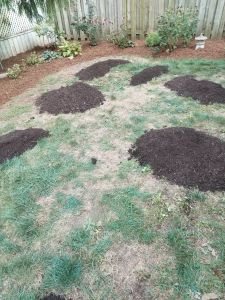
A few years ago we would use either 100% compost or a coarse sand / compost blend. We still may use these products from time to time but we have changed our processes over the past 4 or 5 seasons. After applying and raking in the material we would apply grass seed, water and wait.
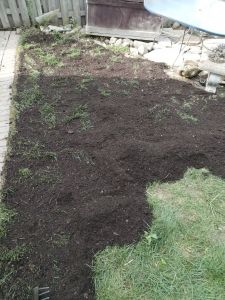
For the most part, we use a pelletized compost material. The material has a small quantity of nutrients in it. In fact the analysis is 3-1-1. These three numbers represent the quantity of nitrogen (N), phosphorous (P) and potassium (K) expressed as a percentage by weight.
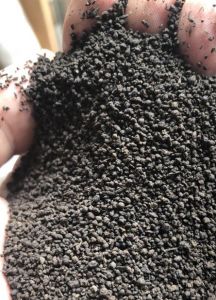
So why do we use a product with (apparently) very little to offer. The answer is complex. First, the material is 100% organic material. Organic material helps improve the cation Exchange Capacity (CEC) of the soil allowing to exchange nutrients with the plants’ roots more effectively. Secondly, because it is organic, it supplies a lot of micronutrients to the soil. Finally, simply, it is easy to use. A bag of pelletized compost will cover 4000 square feet – 400 square meters.
To cover 4000 square feet we need 3 cubic yards (about 2.25 cubic meters) of traditional material. Our crew needs wheelbarrows, shovels, rakes, a spreader, the material and time to topdress using traditional material. All we need with a pelletized compost material is a spreader. A single person can topdress 4000 square feet in less than an hour.
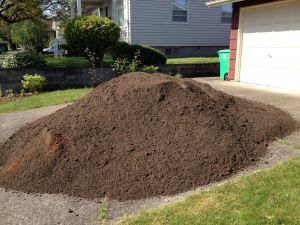
You can buy pelletized compost and many independent garden centres.
Finally! Overseeding. I teach courses in turfgrass management to horticulture apprentices here in Ontario. These folks usually have some experience in landscaping / horticulture. I am always a little (maybe a bit more) stunned with their understanding of the term “overseeding”.
Overseeding is simply the act of applying seed over an existing lawn. This process works best when done in conjunction with topdressing. I watch people at garden centres buying grass seed by checking the price OR being drawn in by a major brand that advertises a lot.
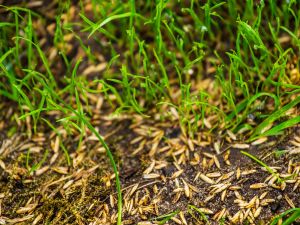
Here is a little “secret” about grass seed….. There are only a handful of companies that produce it. Most seed sold at a garden centres are not produced by the people packaging them. So buy the best seed you can for the sun and moisture conditions your lawn is exposed to. You’ll notice that lawn seed is often packaged as full sun, part shade or shade seeds. Sun is 6 or more hours of direct sun each day, partial shade is 3 to 6 hours and shade is less than 3 hours.
There are some main types of seed available at garden centres. Ask the staff at the garden centre for the best quality they have available for your lawn’s conditions. Seed will be the lowest input cost into these three processes.
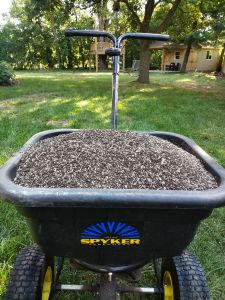
We blend our grass seed with the pelletized topdressing material to get a much more even application of seed.
One last thought before I close this out. Please shop Canadian. We purchase 99.9% of our products at independent lawn and garden shops. These independent suppliers support the Canadian landscape and horticulture market in many ways. Some are contributing members of the GTI. Most if not all are members of Landscape Ontario. All have skin in the game.
As always, please reach out to us if you have any comments or questions.
Matt