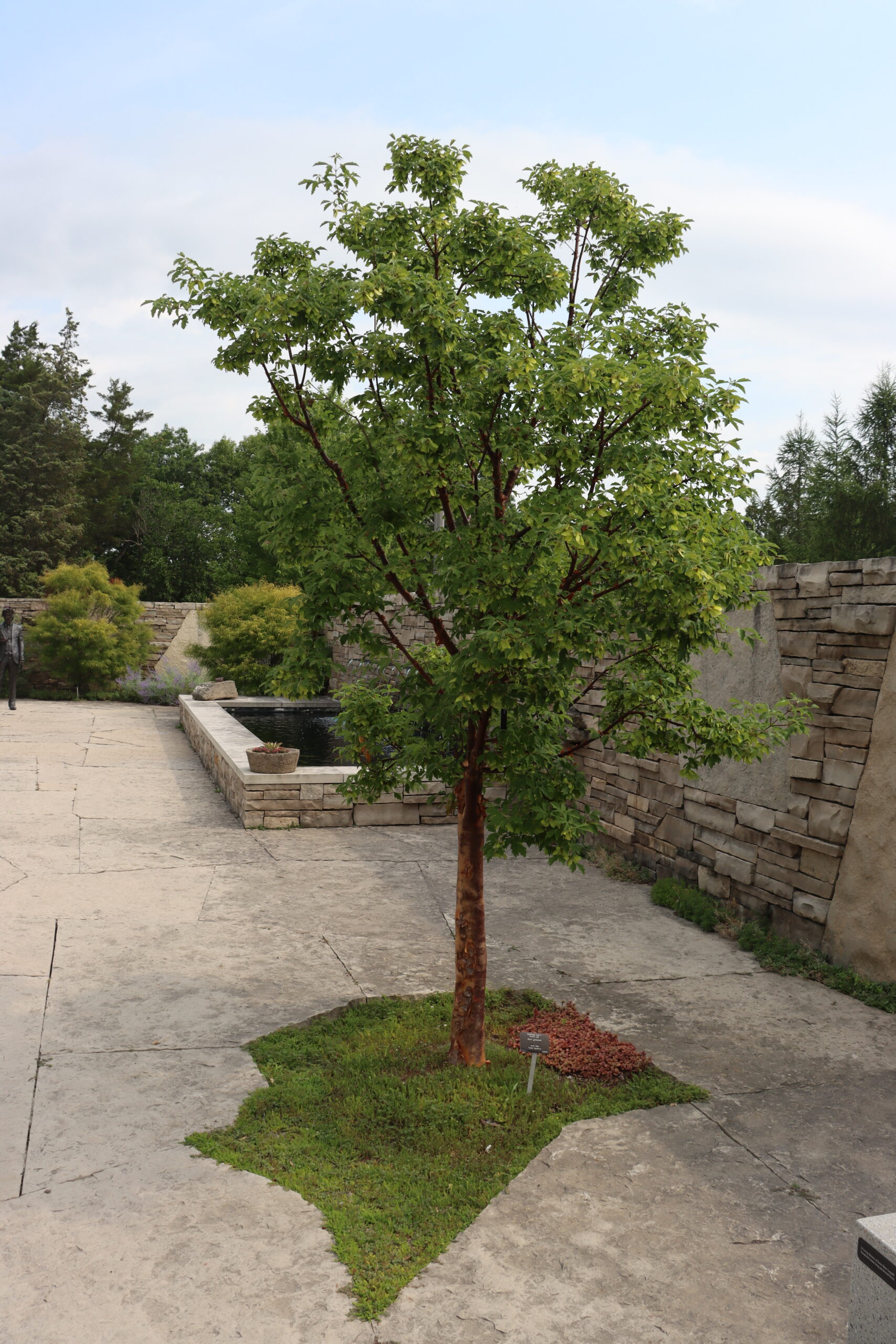
Few ornamental trees can stop people in their tracks the way Acer griseum, Paperbark Maple, can. With its signature cinnamon‑coloured, exfoliating bark and graceful form, this species offers a level of year‑round beauty that is hard to match. It’s one of my personal favourites—but like all great plants, it deserves thoughtful, selective placement to truly shine.
If you’re considering adding Acer griseum to your landscape, or you’re simply fascinated by unique specimen trees, here’s everything you should know about this remarkable plant.
Origins: From Central China to Gardens Worldwide
Acer griseum is native to central China, particularly the provinces of Sichuan, Hubei, and Shaanxi. It was first introduced to Western horticulture in the early 1900s by renowned plant explorer Ernest Henry Wilson, who collected seeds during one of his expeditions for the Arnold Arboretum.
Because it originates from mountainous regions with cool to temperate climates, it has adapted beautifully to growing conditions across North America—especially Ontario’s climate.
Why It’s Loved: Beauty in Every Season
- Bark That Steals the Show
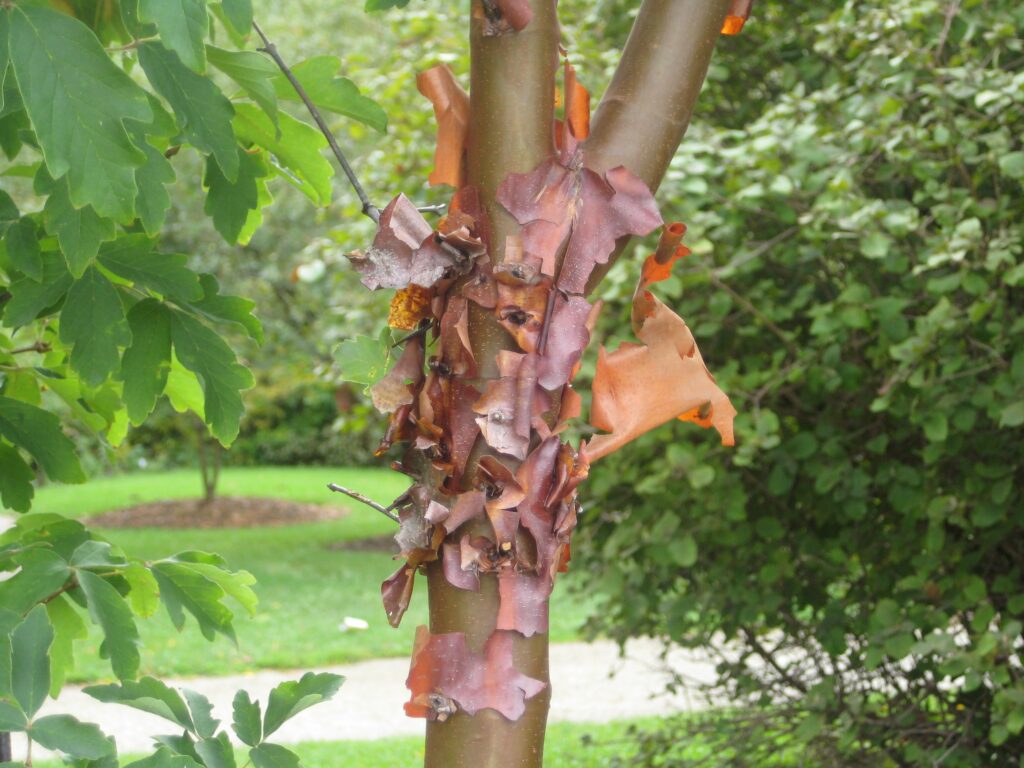
The hallmark of Acer griseum is its reddish‑brown, papery bark that curls and peels in translucent layers. In winter sunlight, the effect can be breathtaking. For this reason alone, it’s considered one of the best winter-interest trees available.
- Refined, Manageable Size
At maturity, the paperbark maple typically grows:
- 20–30 feet tall
- 15–20 feet wide
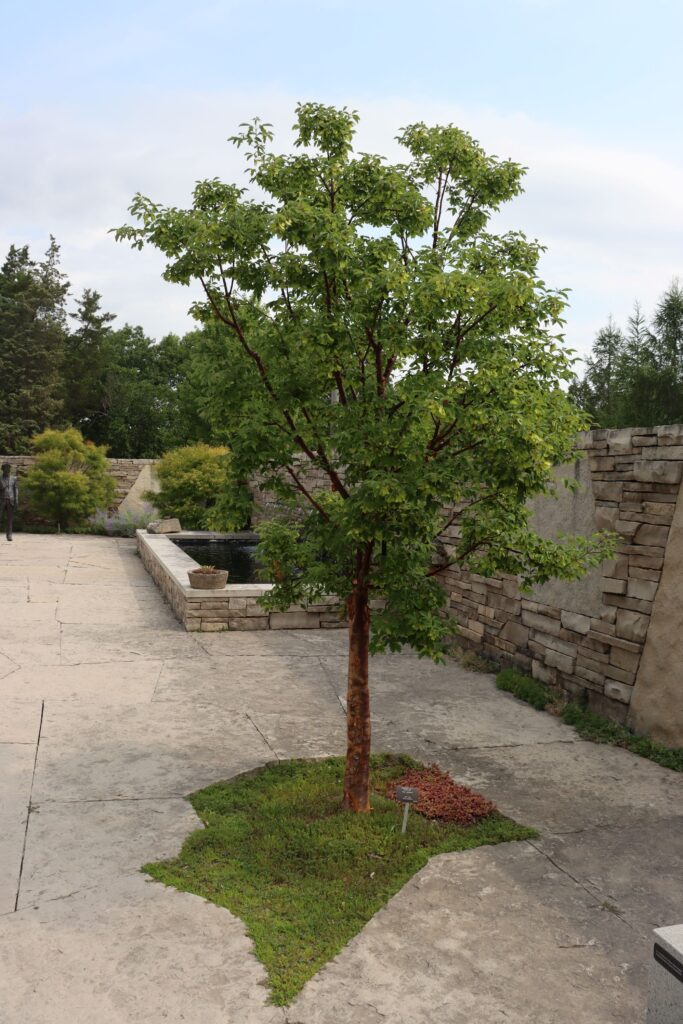
This makes it ideal for:
- Small urban gardens
- Courtyards
- Front‑yard specimen planting
- Foundation landscapes needing a vertical accent
- Foliage That Glows
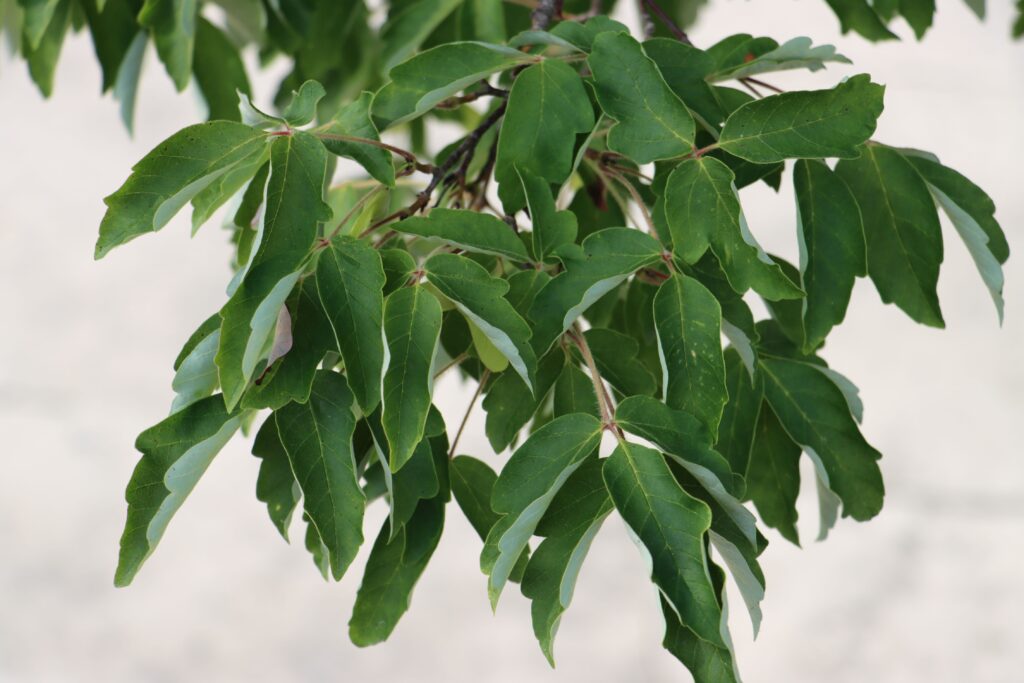
Its trifoliate leaves emerge soft green, deepen through summer, and finish with a stunning mix of orange, red, and scarlet in autumn. Combined with the bark, the fall show is exceptional.
Best Uses in the Landscape
Acer griseum is most effective when treated as a feature tree. Here are some ideal placements:
✔ As a Specimen Tree
Give it space. Surround it with low, contrasting groundcovers—think Epimedium, Hakonechloa, or ferns—to highlight its bark.
✔ In a Winter Interest Garden
Pair it with:
- Red osier dogwood
- Ornamental grasses
- Evergreen backdrops
This enhances its bark’s visual impact.
✔ Near Walkways, Patios, or Entrances
Up‑close viewing is essential. This tree rewards those who stop and look closely.
✔ In Part‑Shade Woodland Gardens
Its soft texture and warm bark blend beautifully with other shade-lovers.
Avoid crowding it among fast-growing or bulky shrubs and trees. It deserves a spotlight, not competition.
How to Grow and Care for Acer griseum
Light
- Full sun to light shade
- Best fall colour occurs with at least 4 hours of direct sun
Soil
- Moist, well‑drained soil
- Slightly acidic to neutral pH
- Avoid heavy clay without amendment
Water
- Moderate moisture needs
- Appreciates consistent watering during establishment
- Once mature, it is moderately drought tolerant
Pruning
- Minimal pruning required
- Best done in late summer
- Remove only dead or crossing branches
Growth Rate
- Slow to moderate
- This slow growth contributes to its elegant structure and longevity
Pests & Diseases
Another reason Acer griseum is beloved: it’s remarkably trouble‑free.
Generally resistant to:
- Verticillium wilt (compared to many other maples)
- Anthracnose
- Major insect pests
Possible—but uncommon—issues:
- Leaf scorch in drought or excessively hot sites
- Minor leaf spot in wet seasons
- Occasional aphids (usually cosmetic)
Overall, it’s one of the healthiest, most reliable ornamental trees you can grow.
Special Consideration: Seed Viability
Acer griseum has notoriously low seed viability, which is one reason it remains relatively rare and more expensive in nurseries. Many specimens are grafted to ensure consistent quality.
Final Thoughts: A Tree Worth Waiting For
If you’re looking for a specimen tree with four-season interest, manageable size, and unmatched bark, the paperbark maple deserves a spot on your shortlist. Just plant it with intention—give it the space and spotlight it deserves—and it will reward you for decades.
Your Turn: Have You Grown Acer griseum?
I’d love to hear from you!
- Have you planted one?
- How has it performed in your garden?
- Do you have a favourite companion plant pairing?
Share your experiences, photos, and stories with us—your insights help other gardeners decide whether this beautiful tree belongs in their landscapes.