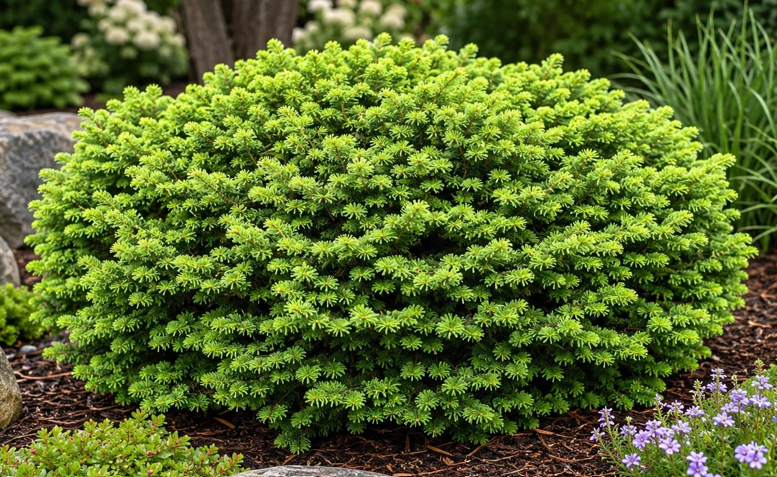
When most people think of fir trees, they imagine towering evergreens dominating the landscape. Abies balsamea ‘Nana’ offers all the beauty and fragrance of a traditional balsam fir in a compact, dwarf form that is perfectly suited to today’s smaller gardens.
With its dense, rounded shape and rich green needles, this miniature conifer provides year-round structure and colour while requiring very little maintenance. Whether used as a specimen plant, incorporated into a rock garden, or featured in a collection of dwarf conifers, Dwarf Balsam Fir delivers reliable beauty for decades.
Origins and History
Abies balsamea, the species known as Balsam Fir, is native to eastern and central Canada and the northeastern United States. It is one of the signature trees of Canada’s boreal forests and is renowned for its aromatic foliage and excellent cold hardiness.
The cultivar ‘Nana’ is believed to have originated from naturally dwarf plants discovered in the White Mountains of New Hampshire. Over time, horticulturists recognized its unique compact habit and propagated it for use in ornamental gardens.
The name “Nana” is derived from the Latin word for “dwarf,” an appropriate description for this slow-growing evergreen that never outgrows its space.
Plant Characteristics
Size and Growth Rate
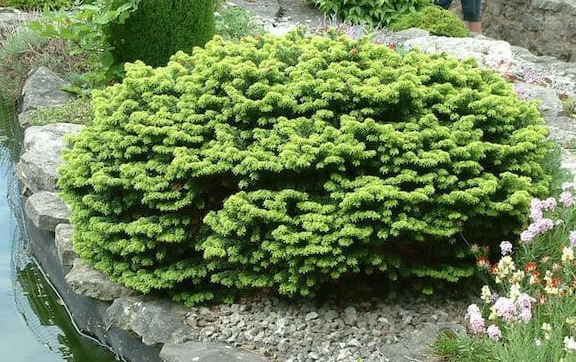
One of the most attractive features of Abies balsamea ‘Nana’ is its manageable size.
Typical mature dimensions include:
- Height: 30-60 cm (1-2 ft.)
- Spread: 60-90 cm (2-3 ft.)
- Growth Rate: Approximately 5-7 cm (2-3 in.) per year
Its naturally mounded form develops slowly, making it an excellent long-term investment in the garden.
Foliage
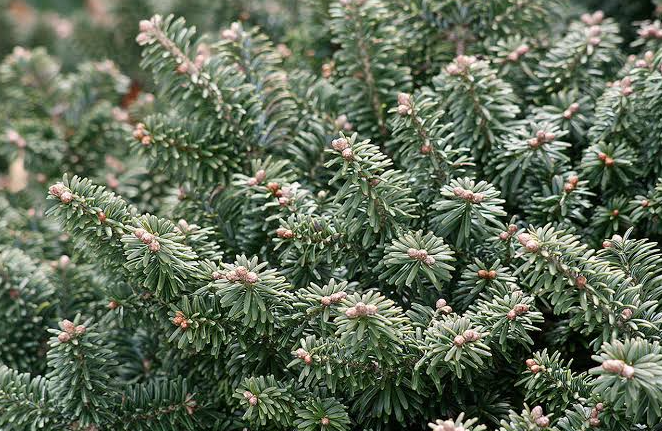
The foliage is what truly sets this plant apart.
Characteristics include:
- Rich dark green needles
- Silvery-white undersides
- Soft texture
- Pleasant balsam fragrance
- Evergreen colour throughout the year
When brushed or crushed, the needles release the familiar scent associated with Christmas trees and northern forests.
Form
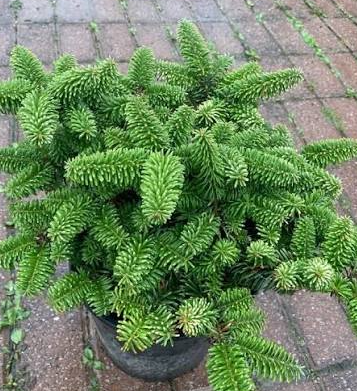
Unlike larger firs that develop a pyramidal shape, ‘Nana’ forms a dense, rounded cushion of foliage. As plants mature, they often develop a flattened top that adds additional character to the landscape.
Growing Conditions
Sunlight
For best performance, plant Dwarf Balsam Fir in:
- Full sun
- Light partial shade
In hotter climates, some protection from intense afternoon sun is beneficial. In most Canadian landscapes, however, full sun is ideal.
Soil Requirements
Abies balsamea ‘Nana’ prefers:
- Moist but well-drained soil
- Slightly acidic conditions
- Organic-rich soil
- Moderate fertility
The plant dislikes prolonged drought and does not perform well in heavily compacted or waterlogged soils.
Watering
Young plants should receive regular watering while becoming established.
Once mature:
- Maintain consistent soil moisture
- Water during extended dry periods
- Avoid allowing the soil to become completely dry
A layer of organic mulch helps conserve moisture and protect the shallow root system.
Hardiness
This is one of the toughest dwarf conifers available.
- USDA Zones 3-6
- Extremely cold-hardy
- Well suited to Canadian winters
- Tolerates heavy snow loads
For gardeners in Ontario and across much of Canada, winter survival is rarely a concern.
Landscape Uses
Rock Gardens
Dwarf Balsam Fir is a classic rock garden plant. Its compact size and refined form contrast beautifully against stone, gravel, and alpine plantings.
Foundation Plantings
Unlike larger conifers that eventually obscure windows and overwhelm buildings, ‘Nana’ remains small and tidy for decades.
This makes it an excellent choice around:
- Homes
- Garden sheds
- Entranceways
Conifer Gardens
Collectors of dwarf conifers often consider Abies balsamea ‘Nana’ an essential addition.
It pairs well with:
- Dwarf pines
- Mugo pine cultivars
- Globe spruce varieties
- Hinoki cypress
- Junipers
Japanese-Inspired Gardens
Its naturally sculptural appearance works particularly well in Japanese and Zen-inspired garden designs where texture and form are emphasized.
Container Gardening
Because of its slow growth, ‘Nana’ can thrive for many years in large containers, making it ideal for patios, terraces, and rooftop gardens.
Four-Season Interest
Many perennials shine for only a few weeks of the year. Dwarf Balsam Fir earns its place in the landscape every single day.
Spring
Fresh new growth emerges a lighter shade of green.
Summer
The dense foliage provides structure and contrast among flowering perennials.
Autumn
Evergreen foliage remains fresh while deciduous plants begin to fade.
Winter
The plant becomes a focal point, providing colour and texture during the dormant season.
This year-round ornamental value makes it one of the most dependable plants in any landscape.
Maintenance Requirements
One reason gardeners love this plant is its simplicity.
Pruning
Pruning is rarely required.
The plant naturally maintains a compact, symmetrical habit without shaping or trimming.
Fertilizing
In healthy soil, fertilizer is often unnecessary.
If desired, apply a balanced slow-release fertilizer formulated for evergreens in early spring.
Mulching
Apply 5-8 cm (2-3 inches) of mulch around the root zone to:
- Conserve moisture
- Moderate soil temperatures
- Reduce weed competition
- Improve soil structure
Keep mulch slightly away from the base of the plant to prevent excess moisture around the crown.
Potential Problems
Dwarf Balsam Fir is generally trouble-free when grown in suitable conditions.
Occasional issues may include:
- Aphids
- Spider mites during hot, dry weather
- Scale insects
- Root rot in poorly drained soils
Most problems can be avoided by providing excellent drainage and maintaining adequate soil moisture.
Interesting Facts
It Smells Wonderful
The fragrant foliage carries the same unmistakable scent that has made balsam fir one of the most popular Christmas tree species in North America.
It Can Live for Decades
Its slow growth means a well-placed specimen can become a permanent feature in the landscape for many years.
It’s Perfect for Small Gardens
As residential lot sizes continue to shrink, gardeners increasingly seek plants that provide structure without overwhelming the space. Abies balsamea ‘Nana’ fits that need perfectly.
It’s Native at Heart
Although selected and propagated as a cultivar, its roots trace back to one of Canada’s most iconic native tree species.
Why We Love Abies balsamea ‘Nana’
Few plants offer the same combination of elegance, hardiness, fragrance, and low maintenance found in Dwarf Balsam Fir. Its compact size makes it easy to incorporate into nearly any landscape, while its evergreen foliage provides beauty throughout all four seasons.
Whether you’re designing a rock garden, enhancing a foundation planting, or building a collection of dwarf conifers, Abies balsamea ‘Nana’ is a timeless choice that rewards gardeners year after year.
For Canadian landscapes, especially throughout Ontario, this charming dwarf evergreen remains one of the finest small conifers available today. Its combination of durability, beauty, and year-round appeal ensures it will continue to be a favourite among gardeners for generations to come.