As I get ready for my Plant Identification class at Humber College with our Level 1 Horticultural Technician Apprentices, I’m refreshing my notes on Abies balsamea—better known as balsam fir. This species is deeply woven into the Canadian landscape, widely used in forestry, horticulture, and even holiday traditions.
🌲 Botanical Profile
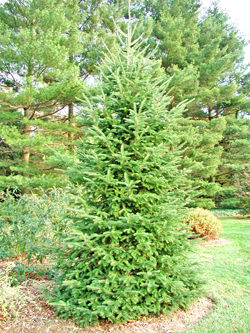
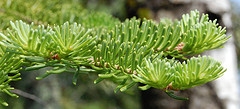
Abies balsamea is a small to medium‑sized evergreen native to eastern and central Canada, stretching from Newfoundland and Labrador to central Alberta. It typically reaches 14–20 metres tall, with some specimens growing up to 25 metres. It forms a narrow, conical crown with dense, dark‑green, fragrant needles, which are flat and 15–30 mm long, arranged to give the appearance of two horizontal rows. Cones are 40–80 mm long, upright, and disintegrate at maturity—an identifying fir trait.
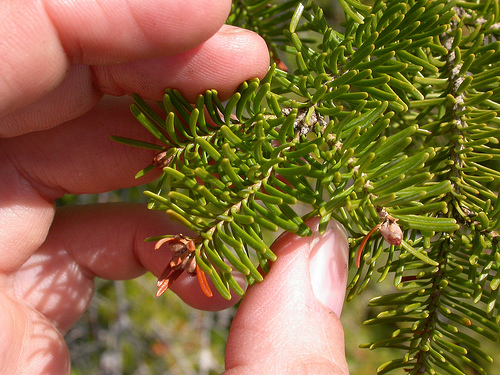
The species is a major component of Canada’s boreal forest and is strongly associated with cool, moist climates.
🌿 Landscape Uses
Balsam fir is widely valued for both ornamental and functional landscape roles:
✔ Specimen Tree
Its symmetrical, pyramidal form and resinous, fragrant needles make it an attractive centerpiece in cold‑climate gardens.
✔ Winter Interest
As a needled evergreen with a striking crown, it provides strong four‑season structure—ideal for Canadian landscapes that rely on winter aesthetics.
✔ Windbreaks & Shelterbelts
Frequently used in northern regions due to its cold hardiness and dense branching.
✔ Ecological Plantings
It provides critical habitat and cover for wildlife including moose, deer, and many bird species.
✔ Christmas Tree Production
Canada’s balsam fir is iconic for holiday use due to its long needle retention and strong fragrance.
🌎 Native Range & Habitat
- Found across eastern and central Canada: Newfoundland → Quebec → Ontario → Manitoba → Saskatchewan → Alberta.
- Grows from sea level to subalpine zones, often forming dense stands in cool, moist forests.
- Thrives in acidic soils with high organic matter.
This adaptability to cool climates makes it a staple species in Canadian forestry and ecological restoration.
💧 Cultivation & Care
Balsam fir performs best under the following conditions:
Soil
- Moist, well‑drained, acidic soil—a good match for many Canadian forest soils.
- Avoid heavy clay; it struggles in poorly drained compacted sites.
Light
- Full sun to partial shade. Younger trees tolerate more shade, a key factor in forest understory regeneration.
Water
- Prefers consistent moisture, especially in youth. Drought stress increases vulnerability to pests.
Maintenance
Medium. Sensitive to urban pollution—best suited for rural or naturalistic landscapes.
🪲 Pests & Diseases
Though resilient, balsam fir does face several significant pest pressures in Canada:
Major Insect Pests
- Spruce Budworm (Choristoneura fumiferana) – One of the most damaging pests in eastern Canada, causing defoliation and reduced vigor.
- Balsam Woolly Adelgid (Adelges piceae) – Present in B.C. and Atlantic Canada; causes swelling (“gouting”), needle loss, and potential mortality.
- Bark beetles, aphids, scales, and bagworms – Common minor pests. Diseases
- Cankers, root rot, needle rust, and twig blight appear periodically, especially in moist conditions or stressed trees.
🌳 Why It Matters for Apprentices
Abies balsamea is a foundational species for plant ID students because it:
- Teaches classic fir characteristics (flat needles, upright cones, resin blisters).
- Demonstrates the relationship between climate, soil type, and species distribution.
- Offers real‑world examples of forestry pests and IPM strategies in Canada.
- Appears frequently in landscape design, restoration, and nursery production.
💬 Have Experience With This Species? Let’s Chat!
If you’ve worked with Abies balsamea—in landscapes, forestry, Christmas tree production, or classroom settings—I’d love to hear your insights. Drop a comment, share your experiences, or ask questions.
If you’d like to work one onto your landscape, book a free consultation with us!