Dieffenbachia ‘Camille’
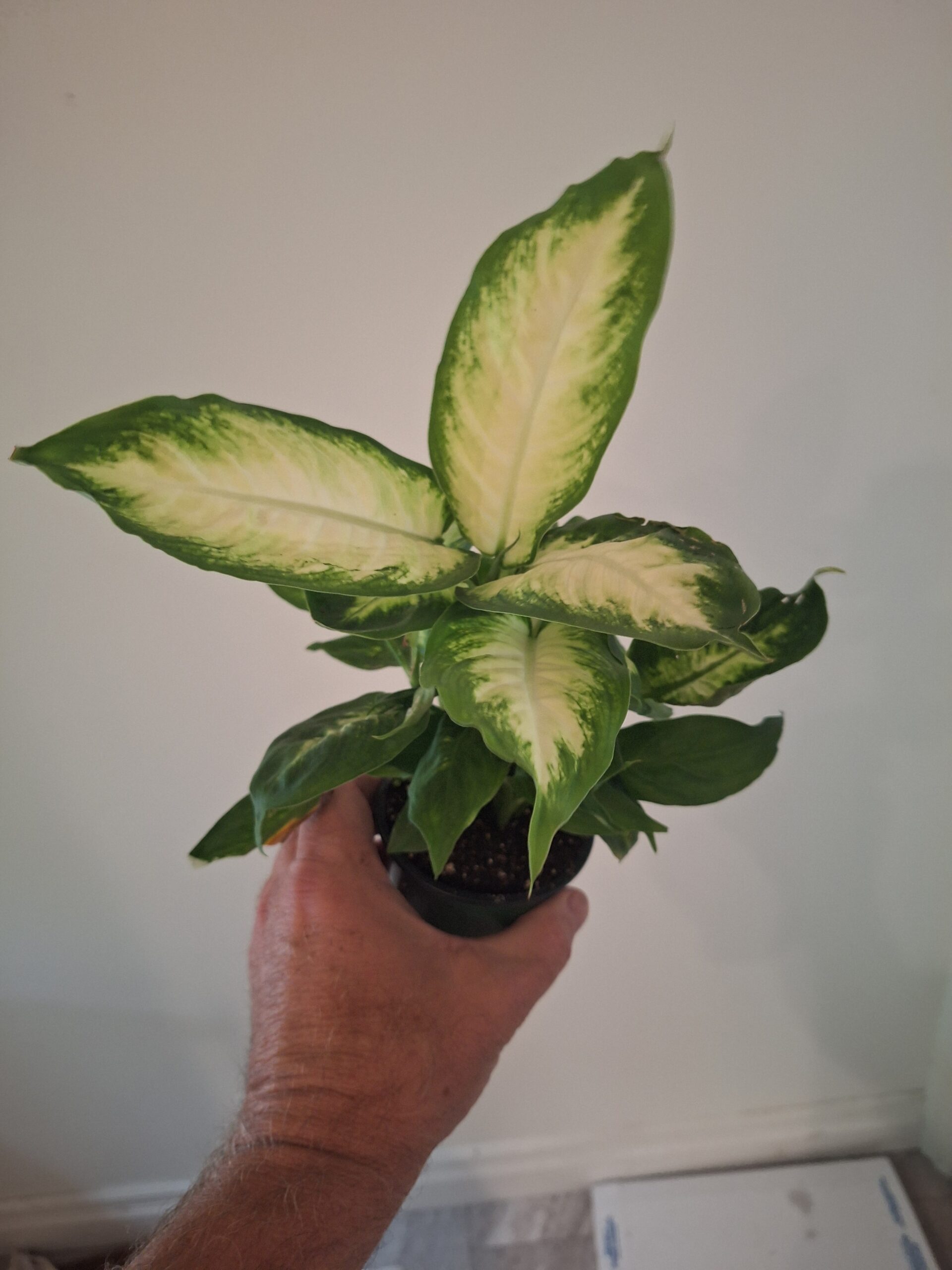
If you’re looking for a houseplant that makes a bold statement without demanding constant attention, Dieffenbachia ‘Camille’ is an excellent choice. Its broad leaves feature creamy white centres surrounded by dark green margins, creating a dramatic contrast that instantly brightens homes, offices, and interior landscapes.
Often referred to simply as Dumb Cane, Dieffenbachia has been a popular houseplant for generations due to its lush tropical appearance and ability to thrive in typical indoor environments.
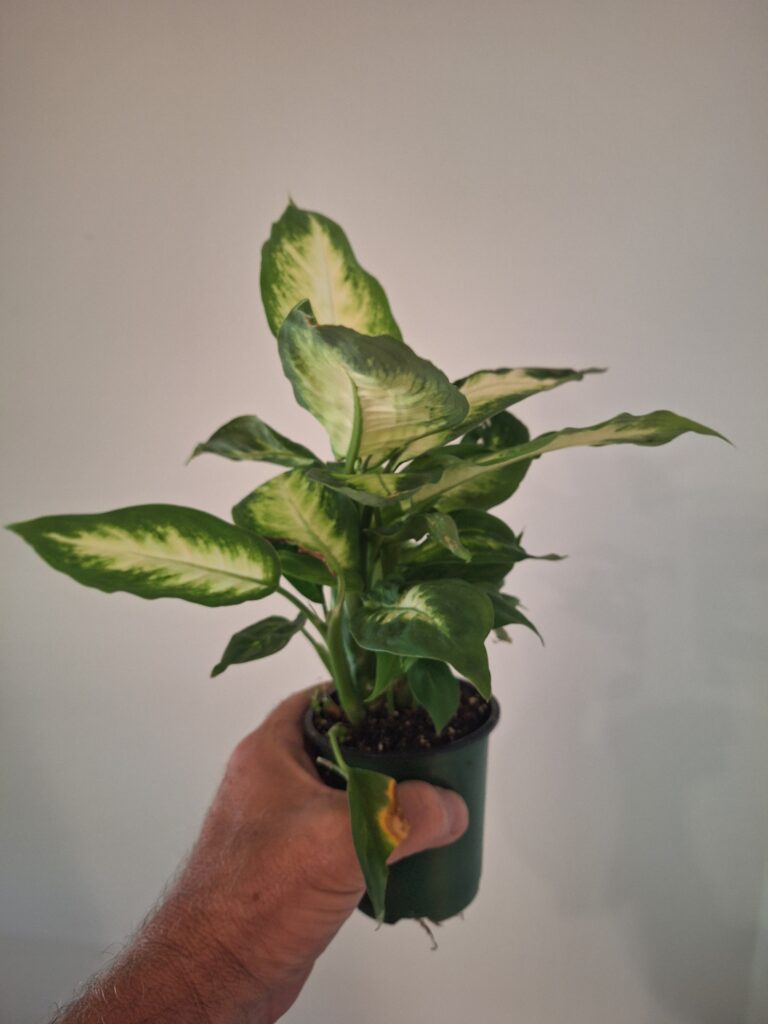
History and Origins
The ‘Camille’ variety is a cultivated selection of Dieffenbachia species native to the tropical rainforests of Central and South America. In its natural habitat, Dieffenbachia grows beneath the forest canopy where it receives filtered sunlight, warm temperatures, and consistent moisture.
Named after German botanist Ernst Dieffenbach, the genus has been cultivated as an ornamental plant since the nineteenth century. Over time, breeders developed numerous cultivars, with ‘Camille’ becoming one of the most recognizable thanks to its stunning white and green foliage.
Today, it remains a staple in homes, offices, shopping centres, and professional interior plant displays worldwide.
Plant Description
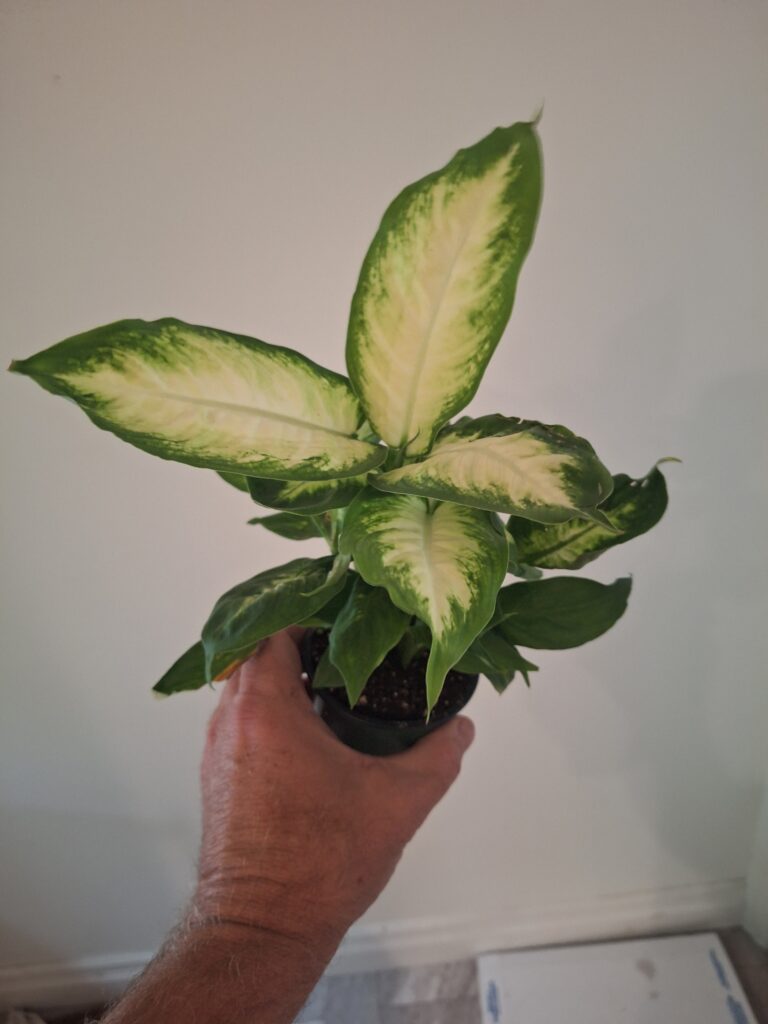
Dieffenbachia ‘Camille’ is an evergreen tropical foliage plant prized for its large, decorative leaves.
Key Features
- Creamy white leaf centres
- Dark green leaf margins
- Large tropical foliage
- Upright, compact growth habit
- Adaptable indoor performance
- Excellent statement plant for bright interiors
Indoors, mature plants typically reach between 60 cm and 120 cm (2 to 4 feet) tall, depending on growing conditions and container size.
Its lush foliage creates an instant tropical atmosphere in any room.
Ideal Growing Conditions
Light Requirements
Dieffenbachia ‘Camille’ thrives in:
- Bright indirect light
- Medium indirect light
- East-facing windows
- Bright rooms with filtered sunlight
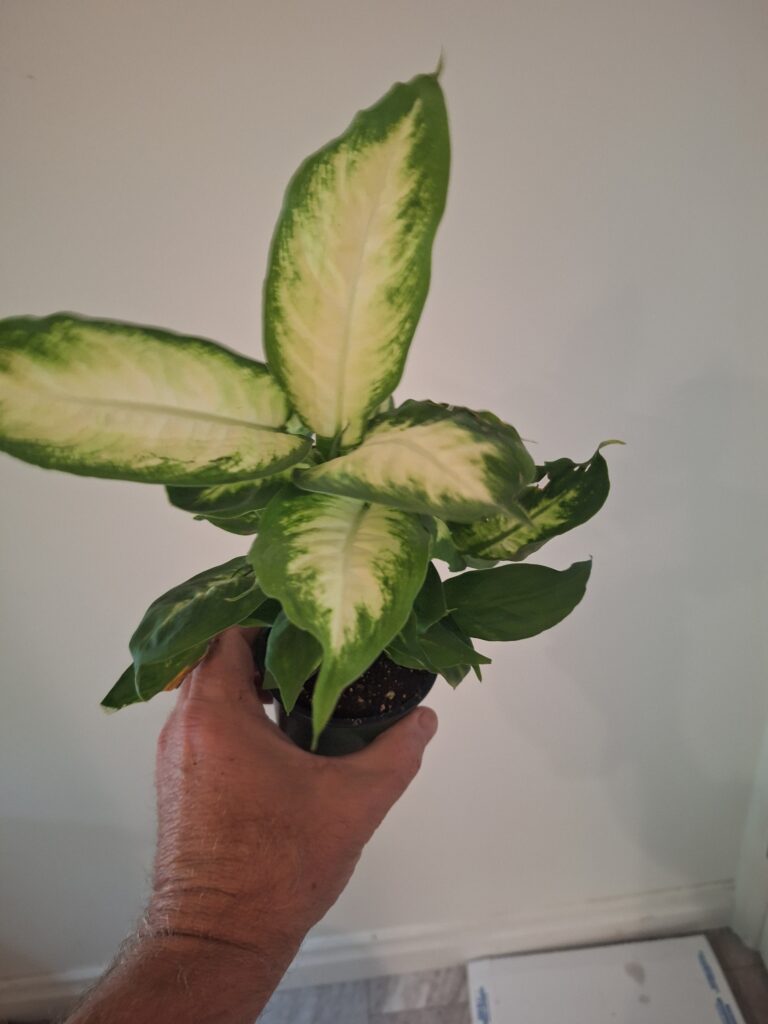
The creamy-white portions of the leaves require adequate light to maintain their colour and contrast.
Avoid prolonged direct sunlight, which can scorch the foliage and cause leaf damage.
Too little light may result in slower growth and less vibrant variegation.
Temperature
As a tropical plant, ‘Camille’ prefers warm and stable temperatures.
Ideal temperatures include:
- 18°C to 29°C (65°F to 85°F)
Protect the plant from:
- Cold drafts
- Sudden temperature changes
- Air conditioning vents
- Temperatures below 15°C (59°F)
Consistent warmth encourages strong growth and healthy foliage.
Watering Requirements
Proper watering is essential for maintaining healthy growth.
Watering Tips
- Allow the top 2 to 5 cm (1 to 2 inches) of soil to dry before watering.
- Water thoroughly when the soil becomes slightly dry.
- Empty excess water from saucers and decorative pots.
- Reduce watering during winter.
The goal is to keep the soil lightly moist but never soggy.
Overwatering is the most common cause of problems.
Soil Requirements
Dieffenbachia grows best in a potting mix that is:
- Well-draining
- Rich in organic matter
- Light and airy
- Moisture-retentive without remaining wet
A quality indoor plant potting mix amended with perlite works particularly well.
Good drainage is essential to prevent root rot.
Fertilizing
Feed monthly during spring and summer with a balanced liquid houseplant fertilizer.
Regular feeding helps promote:
- Larger leaves
- Richer colour
- Stronger stems
- Faster growth
Reduce fertilizing during autumn and winter when growth slows naturally.
Pruning and Maintenance
Dieffenbachia ‘Camille’ requires minimal pruning.
Prune to:
- Remove yellowing leaves
- Eliminate damaged foliage
- Control height
- Encourage fresh growth
Cleaning the leaves with a damp cloth periodically helps remove dust and allows the plant to make the most of available light.
Repotting
Repot every two to three years or whenever the plant becomes root-bound.
Signs it needs repotting include:
- Roots emerging from drainage holes
- Slower growth
- Rapid drying of the potting mix
Choose a new container only slightly larger than the previous one.
Propagation
Dieffenbachia can be propagated through:
- Stem cuttings
- Cane cuttings
- Division of mature plants
Stem sections root readily in moist growing media, making propagation relatively easy for home gardeners.
Common Pests and Problems
Although generally easy to grow, Dieffenbachia may occasionally experience issues.
Potential Pests
- Spider mites
- Mealybugs
- Scale insects
- Aphids
Routine monitoring usually prevents serious infestations.
Common Growing Problems
Yellow Leaves
Most often caused by overwatering.
Brown Leaf Edges
May result from low humidity, inconsistent watering, or fertilizer buildup.
Drooping Leaves
Can occur when the plant is too dry or exposed to temperature stress.
Root Rot
Usually develops if the soil remains constantly wet.
Maintaining proper watering practices is the best preventative measure.
Safety Considerations
One important characteristic of Dieffenbachia is that all parts of the plant contain calcium oxalate crystals.
If chewed or ingested, these crystals can irritate the mouth and throat of people and pets.
For this reason:
- Keep out of reach of children.
- Place away from curious cats and dogs.
- Wear gloves if sensitive to plant sap.
This characteristic is the reason for the common name “Dumb Cane,” as ingestion can temporarily affect speech due to mouth irritation.
Interesting Facts About Dieffenbachia ‘Camille’
The Stunning White Centres Are Its Signature Feature
The striking cream-coloured centres make ‘Camille’ one of the brightest and most attractive Dieffenbachia varieties available.
It’s a Proven Indoor Performer
Dieffenbachia has been grown indoors for more than a century and remains one of the most dependable tropical foliage plants.
It Helps Brighten Dark Corners
While it prefers bright indirect light, it tolerates medium-light conditions better than many variegated houseplants.
Each New Leaf Unfurls Like a Scroll
Watching new leaves emerge and gradually open is one of the most enjoyable aspects of growing this plant.
It Creates Instant Tropical Appeal
Few houseplants provide such a lush, tropical look with so little effort.
Final Thoughts
Dieffenbachia ‘Camille’ is an outstanding choice for anyone seeking a bold, elegant, and easy-care houseplant. Its dramatic white-and-green foliage, adaptability to indoor conditions, and manageable care requirements make it a long-time favourite among plant lovers.
With bright indirect light, moderate watering, warm temperatures, and occasional feeding, this tropical beauty will provide year-round colour and structure while serving as a stunning focal point in your indoor garden.