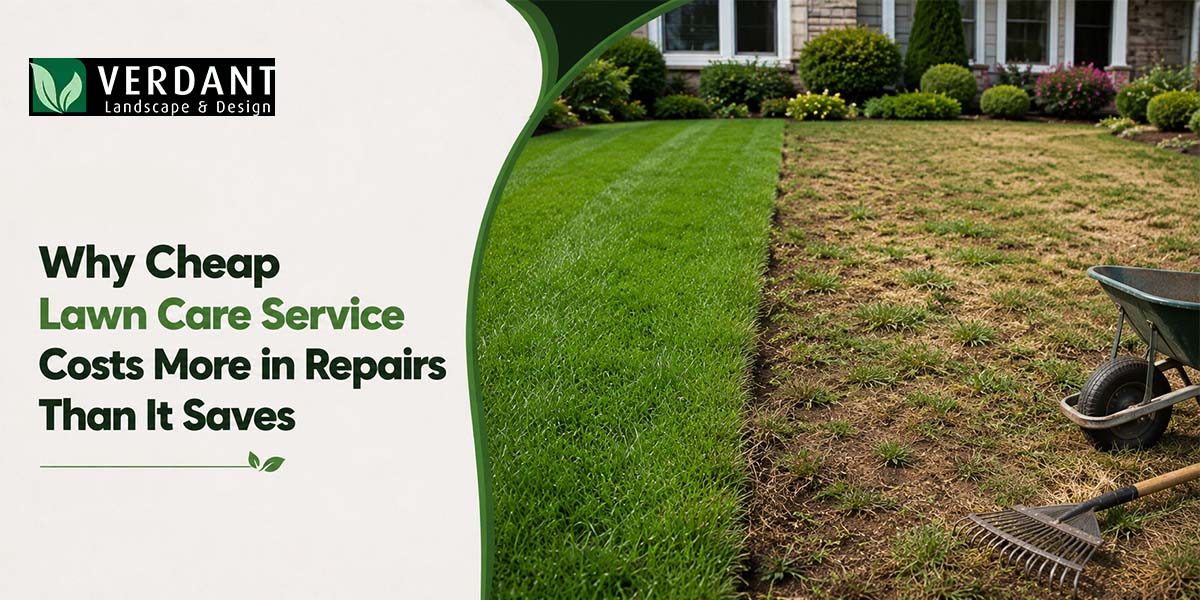
Have you ever paid less for lawn care and ended up spending twice as much fixing what got missed? Budget providers cut corners on soil prep, product quality, and follow-up visits. A cheap lawn care service saves money on the invoice and costs far more in dead grass, weed takeovers, and recovery treatments before the season ends.
Why Low-Cost Providers Always Leave Something Behind
The budget service lowers its costs by reducing the time spent on visits and soil analysis. The lawn seems okay for several weeks. Then comes the problem.
Compaction goes untreated. Thatch builds up unnoticed. None of these problems appears on the invoice, but all of them show up in the yard before summer ends. A reliable lawn maintenance service catches these issues during every visit before they lead to expensive repairs.
What a Proper Program Covers That Budget Providers Skip
A properly priced program includes every one of these steps on every visit:
- Soil assessment before any product gets applied
- Targeted weed treatment based on the species present
- Aeration scheduling to prevent compaction buildup
- Follow-up visits to catch new problems before they spread
Reliable landscaping services built based on this foundation prevent the exact problems homeowners end up paying to fix later in the season.
Is Cheap Lawn Treatment Actually Worth What You Pay?
Not over a full season. A low-cost provider charges less per visit but creates conditions that require additional treatments and recovery work that a proper program would have prevented.
Thatch that is ignored through one season requires dethatching the following spring. Bare patches left untreated need overseeding in the fall. That repair cycle costs far more than proper care would have from the start.
Each skipped step becomes a paid repair later. Booking a complete lawn maintenance service upfront costs less than paying for individual fix-up treatments spread across the whole season.
How Repair Costs Stack Up After a Cheap Season
One season without proper lawn maintenance will likely mean you need to perform dethatching, overseeding, aeration, and additional fertilization treatments, all to be arranged for the coming year. The total expense of this will exceed the cost of doing it as part of a full lawn maintenance program in the first place.
What Does Poor Irrigation Planning Cost a Yard?
Overwatering causes fungal disease and root rot. Underwatering during peak heat causes drought stress that takes a full season to reverse.
A proper lawn irrigation services plan accounts for soil type, sun exposure, and seasonal demand before setting any schedule. Budget providers apply the same routine to every yard regardless of conditions.
Waterlogged soil destroys root systems that took years to build. Catching problems early and adjusting the plan prevents the kind of root damage that takes a full season to recover from.
Signs Your Irrigation Was Set Up Incorrectly
- Pooling water that sits on the surface for hours after watering
- Dry patches in full sun areas despite frequent watering cycles
- Fungal rings or yellowing grass appearing in late summer
- Grass pulling away easily from the soil, indicating root rot below.
A proper lawn irrigation services assessment, conducted once at the start of the season, prevents most of these failures across the GTA.
Why Cheap Landscaping Work Fails After One Season
Low-cost work skips the base preparation that makes any project last. Shallow plant roots, poor grading, and thin hardscape bases all look fine at the time of installation. They fail within twelve months once frost, ground movement, and rainfall expose what was skipped.
Proper landscaping services include soil amendment, drainage assessment, and compacted base work under every hardscape element. Skipping any one of these results in a project that will require partial or full replacement after the first winter freeze.
Releveling a patio after frost heave costs more than laying the right base before installation. Work built on proper preparation holds up year after year void of unexpected repair costs.
What to Ask Before Hiring Any Landscaping Provider
- What base depth do you use under patios and walkways?
- Do you include a drainage assessment before grading begins?
- What soil amendments do you apply before planting?
- Are follow-up visits included or charged separately?
The four questions above distinguish between companies that design their projects for lastingness and those that design for aesthetics.
Conclusion
Cheap lawn and landscaping work is not a bargain. It is a delayed invoice for repairs that proper care would have prevented entirely.
Before doing anything, first ask your provider whether they handle soil preparation, whether there are any additional follow-ups included in the package, and how they address compaction and drainage. A professional lawn care service plan is initially more expensive but ultimately much cheaper for the entire season. The right provider solves issues once, while the wrong one will just increase your budget.
Frequently Asked Questions
What is a Lawn Irrigation Service?
A lawn irrigation service designs, installs, and maintains watering systems for your yard. It ensures your grass and plants receive the right amount of water at the right time, reducing waste and preventing damage from overwatering or underwatering.
What are the 7 Types of Irrigation?
The seven types are surface irrigation, sprinkler irrigation, drip irrigation, subsurface irrigation, localized irrigation, rotational irrigation, and manual irrigation. Each method differs in how water is delivered to the soil and in which yard or crop type it works best.
How Do I Irrigate My Lawn?
Water deeply two to three times a week rather than lightly every day. Always water before 9 AM to reduce evaporation and prevent fungal growth. Make sure each watering session soaks the soil to a depth of 15 to 20 centimeters to encourage deep root growth.