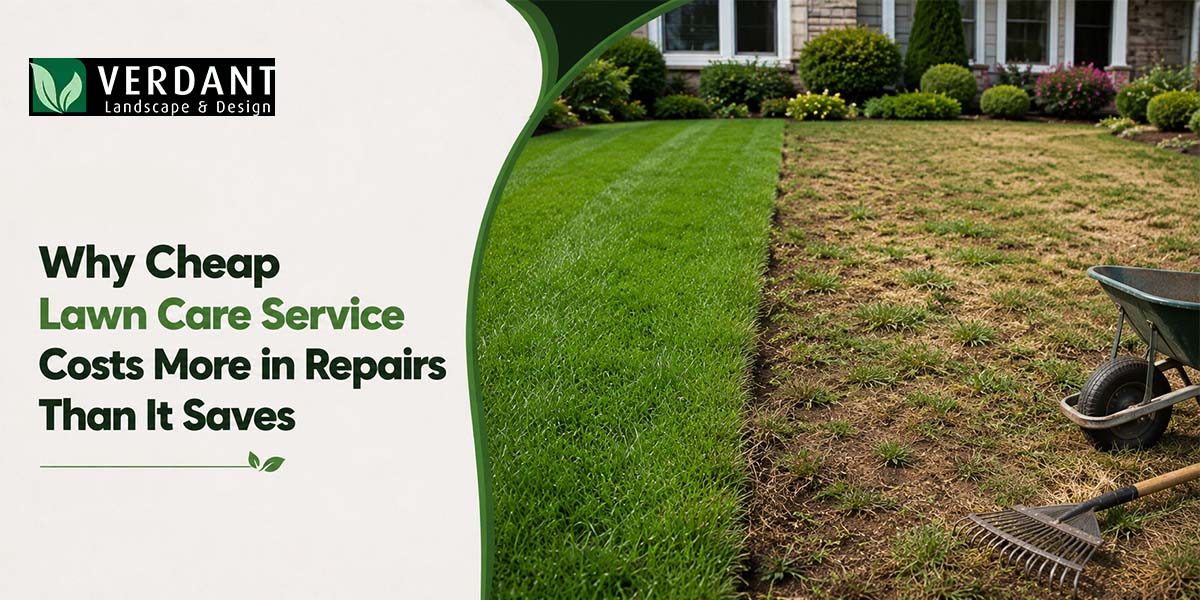
Why do some Mississauga lawns stay thick and green all season, while others thin out, yellow, and fill with weeds by July? This is not about putting in effort. This is about organization. An effective lawn maintenance program takes into account soil conditions, fertilizer application, grass height, and irrigation as an organized system instead of separate activities performed on the fly to solve problems.
Why Most Lawn Routines Break Down by Midsummer
The majority of homeowners respond to their lawn. They water their lawn only when it appears dry; they fertilize their lawn only once a year during the springtime, and they cut the grass whenever it is convenient for them.
Grass that does not get consistent seasonal care builds shallow roots over time. Shallow roots dry out faster, recover more slowly, and leave the lawn open to weeds and bare patches that spread quickly through the summer. Home turf lawn care in Burlington programs that follow a fixed seasonal schedule avoid this cycle entirely because problems get addressed before they appear.
What an Organized Plan Does Differently
With a planned program, there is no need to guess how many treatments there will be and when they will take place. This is done according to the grass’s needs at different stages of development.
What Does a Spring Lawn Plan Actually Include?
Spring is when the season is decided. Skipping key spring steps creates problems that surface in June and July, when recovery is harder and more expensive.
A proper home turf lawn care in Mississauga plan starts in spring with a soil assessment, pre-emergent weed treatment, and a controlled-release fertilizer application. Aeration is added for any yard showing compaction signs from the previous season.
Why Leaving Grass Clippings Helps in Spring
Nutrients are provided by the clippings left in the grass after cutting, making it unnecessary to use fertilizers. The roots will be supplied with nutrition until the next treatment.
How Does a Summer Lawn Plan Differ From Spring?
Summer care turns attention from growth to protection. The goal is to keep roots strong and grass thick enough to crowd out weeds during the hottest and driest weeks of the season.
The mower is set at 7-9 centimeters to conserve soil moisture. The irrigation schedule shifts to infrequent, deep irrigation before 9 o’clock. Fertilization occurs in mid-summer to provide the roots with nutrition that helps them withstand heat stress. This is where the home turf lawn care in Burlington surpasses do-it-yourself efforts that lack summer feedings.
What Happens When Summer Feeding Gets Skipped
Grass thins out by August when nutrients run out. Weeds fill every gap that opens up. Recovery in fall takes longer and requires more product than a mid-season feed would have cost in the first place. A consistent home turf lawn care in Milton schedule that includes mid-summer feeding prevents this from happening entirely.
What Makes a Fall Lawn Plan the Most Important of All?
Fall determines how well the lawn survives winter and how strong it comes back in spring. Most homeowners stop caring for their lawn once summer ends and pay for it the following April.
A fall plan includes a final fertilizer application that pushes nutrients into the root zone before dormancy. Home turf lawn care in Milton programs that include fall overseeding fill bare patches before frost locks the ground. Leaf removal and a final cut at the right height protect the turf from snow mould through winter.
Conclusion
A lawn that stays healthy year after year is not the result of one good season. It comes from following the right steps at the right time across every season without skipping stages.
If your Mississauga lawn keeps declining despite your efforts, the plan is the problem. A structured home turf lawn care in Mississauga routine built around spring prep, summer protection, and fall recovery, gives your yard a foundation that holds up regardless of the season. Start with soil, follow the seasonal schedule, and the results follow.
Frequently Asked Questions
How to Care for a New Turf Lawn?
Water daily for the first two weeks to help roots establish. Avoid walking on it until it feels firmly rooted when you tug a corner. Hold off mowing until the grass reaches at least 25mm and never cut more than one third of the blade at a time.
What is a Home Turf?
Home turf refers to the grass and lawn area surrounding your home. It includes everything from the front yard to the backyard, as well as any grassy areas on your property that require regular care and maintenance to stay healthy.
What is the Lifespan of a Turf Lawn?
A well-maintained natural turf lawn can last indefinitely with the right seasonal care. Artificial turf typically lasts between 8 and 15 years. With proper maintenance, some artificial turf installations have lasted 20 years or more.