Where the Name “Fortune” Comes From
The species name fortunei honors Robert Fortune (1812–1880), a Scottish horticulturist and plant collector who explored China and introduced many Asian plants to Western gardens.

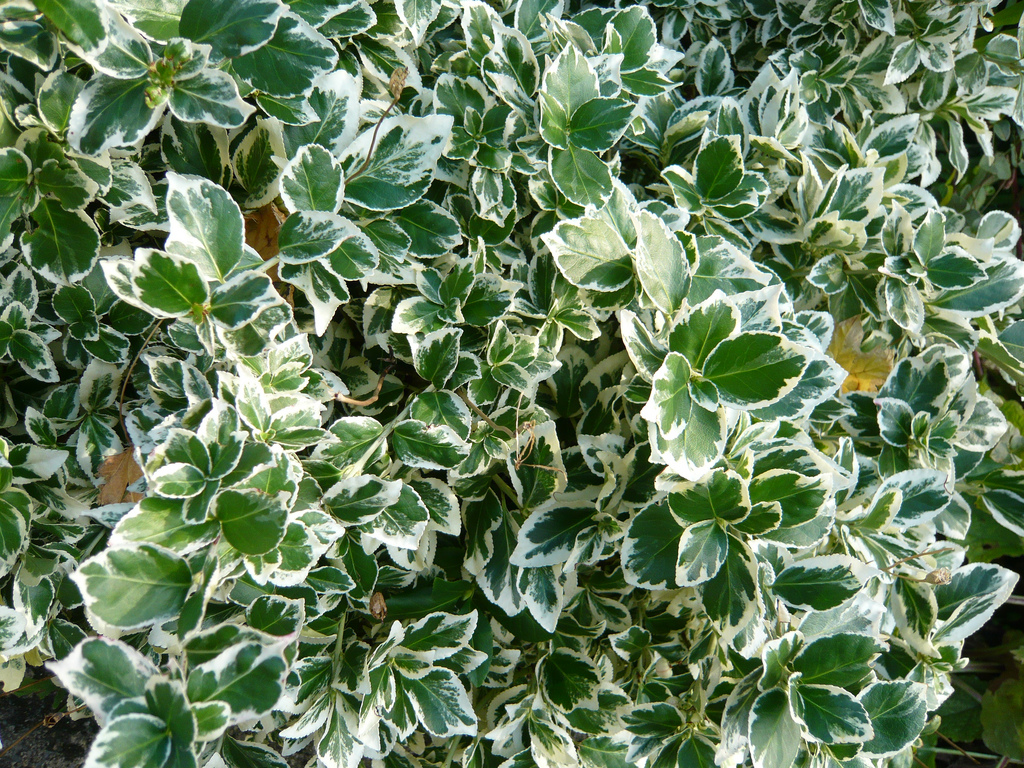
Native to East Asia, including China, Japan, and Korea, Euonymus fortunei has a long history of cultivation for its adaptability and evergreen appeal.
Using ‘Emerald Gaiety’ in the Landscape
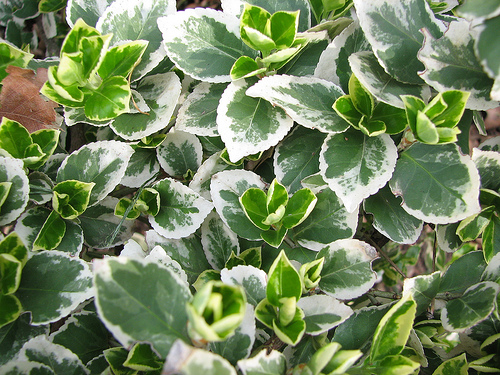
‘Emerald Gaiety’ is prized for its rounded, glossy emerald‑green leaves with creamy‑white margins, which often blush pink in winter.
Its versatility makes it valuable in many design settings:
- Foundation plantings and front‑of‑bed accents
- Low hedges or clipped forms
- Borders, edging, and pathway outlines
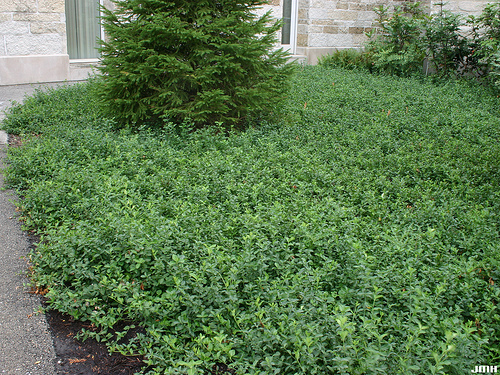
- Groundcover where stems root along the soil
- Climbing vine when given support (walls, trellises, chimneys)
It performs well in both sun and shade, adding bright foliage contrast in darker garden areas.
How to Grow Euonymus fortunei ‘Emerald Gaiety’
Light & Soil
- Thrives in full sun to part shade; variegation often stronger in partial shade.
- Grows easily in average, medium‑moisture, well‑drained soils and tolerates a wide range of conditions.
- Avoid wet or boggy soils.
Watering & Maintenance
- Moderate watering needs once established: drought tolerant but benefits from consistent moisture.
- Trim annually after flowering to maintain shape.
- Will root where stems touch the ground, so monitor spread if you want to keep it contained.
Growth Habit
- Typically 3–5 ft tall and 3–6 ft wide, depending on age and pruning.
- Can climb if supported; otherwise forms a mounding, spreading evergreen shrub.

Pest & Disease Pressures
Like many Euonymus species, ‘Emerald Gaiety’ is prone to:
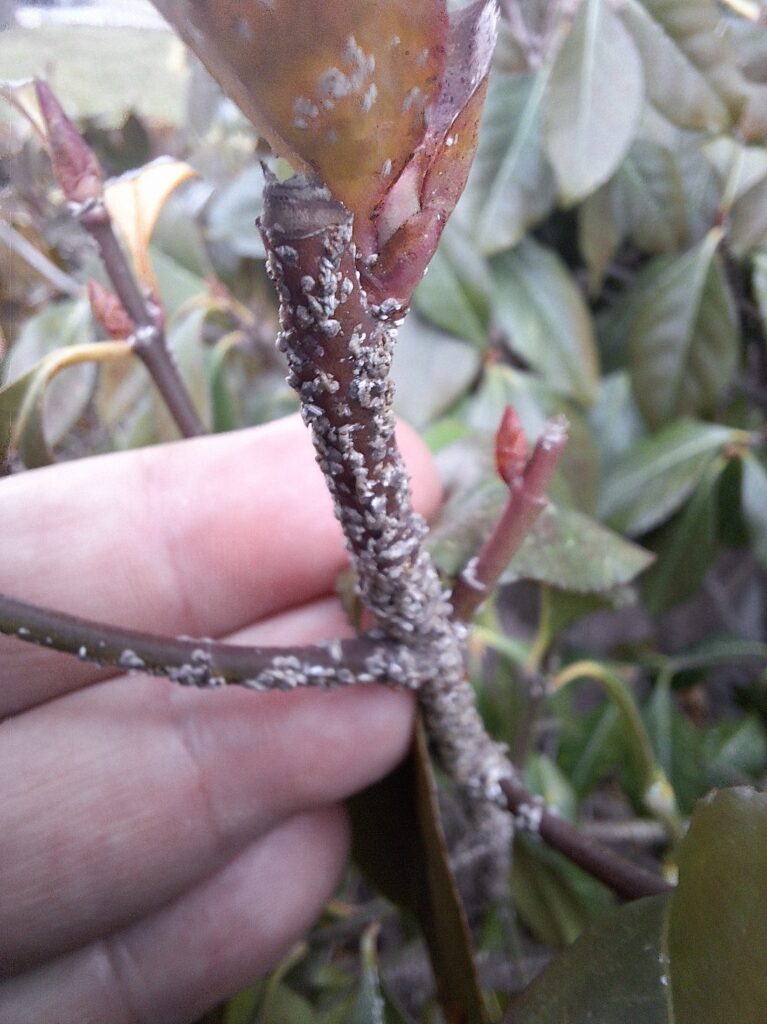
- Euonymus scale – the most significant threat
- Anthracnose
- Crown gall
- Leaf spot
- Powdery mildew
- Aphids
Monitoring for scale is especially important, as infestations can weaken or disfigure the shrub.
A Few Fun Features
- Leaves turn pink‑tinged in winter, giving a subtle seasonal shift.
- It can grow as a shrub, groundcover, or vine, depending on training.
- Birds may eat and spread its seeds.
- All parts can be toxic if ingested in quantity.
Other Suggested Cultivars of Euonymus fortunei
- ‘Emerald ’n Gold’
A popular sister cultivar to ‘Emerald Gaiety,’ ‘Emerald ’n Gold’ features bright green leaves with golden-yellow margins. Like ‘Emerald Gaiety,’ it can function as a groundcover, shrub, or climber.

- ‘Coloratus’ (Purple Wintercreeper)
Known for its purple-red winter foliage, this cultivar forms a dense, low groundcover. Often used for erosion control and slope stabilization.
- ‘Sunspot’
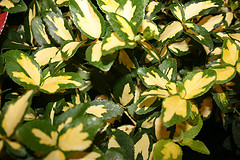
This variety has deep green leaves with a brilliant yellow center, offering a splash of color even in shade. Suitable as groundcover or small shrub.
- ‘Gracilis’
A finer‑textured, small‑leaf cultivar often chosen for edging and tight garden spaces.
- ‘Moonshadow’
Features dark green margins and creamy-yellow centers—a reverse-variegated look compared to ‘Emerald ’n Gold.’ Works beautifully in mass plantings.
What Do You Think?
Have you grown ‘Emerald Gaiety’ in your landscape? Do you train it as a shrub, a climber, or a groundcover?
Share your experiences, challenges, or tips in the comments—I’d love to hear how this versatile plant performs for you!