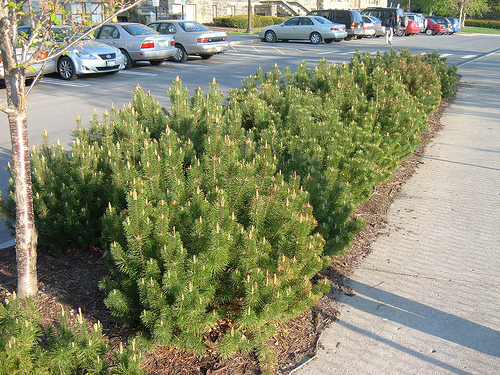
For decades, Pinus mugo, commonly known as the Mugo Pine, has been a staple in commercial and residential landscapes. Yet for all its popularity, it’s also one of the most misused and poorly maintained evergreens in the industry. In my own 35+ years working in horticulture, I honestly don’t remember planting one—largely because they’re rarely given the care they need to look their best.
If you’re considering a Mugo Pine for your landscape or simply want to understand why so many existing plantings look tired, misshapen, or overgrown, this deep dive is for you.
🌲 Origins: Where the Mugo Pine Comes From
Pinus mugo is native to the mountainous regions of Central and Southern Europe, particularly the Alps, Carpathians, and the Balkans. In the wild, it grows as a dense, shrubby pine clinging to rocky slopes where wind, snow, and thin soils naturally keep it compact.
This alpine origin explains two key traits:
- Exceptional hardiness
- Naturally compact form that becomes unruly without regular maintenance
In other words: nature pruned it for thousands of years—landscapers often don’t.
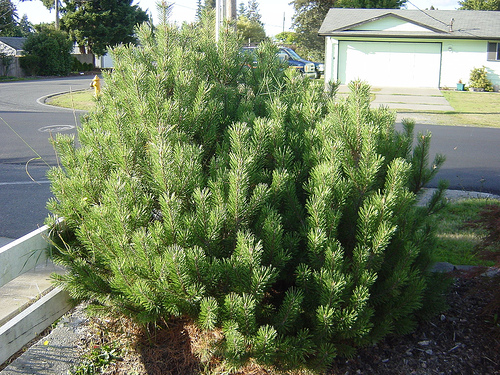
✂️ Why So Many Mugo Pines Look Overgrown: The Importance of Candling
The number one reason Mugo Pines become overgrown blobs is simple:
👉 They aren’t candled.
Candling is the spring practice of pinching back the new growth (the “candles”) while they are still soft. This:
- Controls size
- Maintains shape
- Encourages dense, attractive branching
- Prevents the “monster mound” appearance we see in so many landscapes
Without candling, a Mugo Pine will double or triple in size faster than homeowners expect—and once it becomes woody and stretched, it’s almost impossible to correct.
This is why I’ve rarely installed them in my career: unless the client commits to annual maintenance, the plant simply doesn’t perform well long‑term.
Here is a link to our blog about spring pruning conifers. This explains candling. https://verdantlandscaping.ca/spring-pruning-of-conifers/
🌱 Popular Cultivars of Pinus mugo
There are many cultivars bred for more predictable size and form. Here are some of the most reliable:
✔️ ‘Mops’
A true dwarf form, rounded and slow‑growing. Ideal for small gardens and foundation plantings.
✔️ ‘Pumilio’
Compact but more spreading; often used in rock gardens. Still needs candling to stay tight.
✔️ ‘Sherwood Compact’
Dense, uniform, and less prone to irregular growth.
✔️ ‘Carsten’s Wintergold’
Turns a glowing golden-yellow in winter—excellent for four‑season interest.
✔️ ‘Slowmound’
One of the best modern cultivars for maintaining predictable size with minimal shaping.
Choosing the right cultivar can prevent many of the issues associated with the “standard” Mugo Pine found in big-box stores.
🐛 Pests and Problems to Watch For
Although relatively tough, Mugo Pines can run into issues—especially when planted in irrigated beds or heavy soils.
Common Pests
- Pine Sawfly – larvae skeletonize needles in early spring. This is common in Ontario.
- Pine Needle Scale – white scale insects that weaken growth. This has been spotted in Ontario.
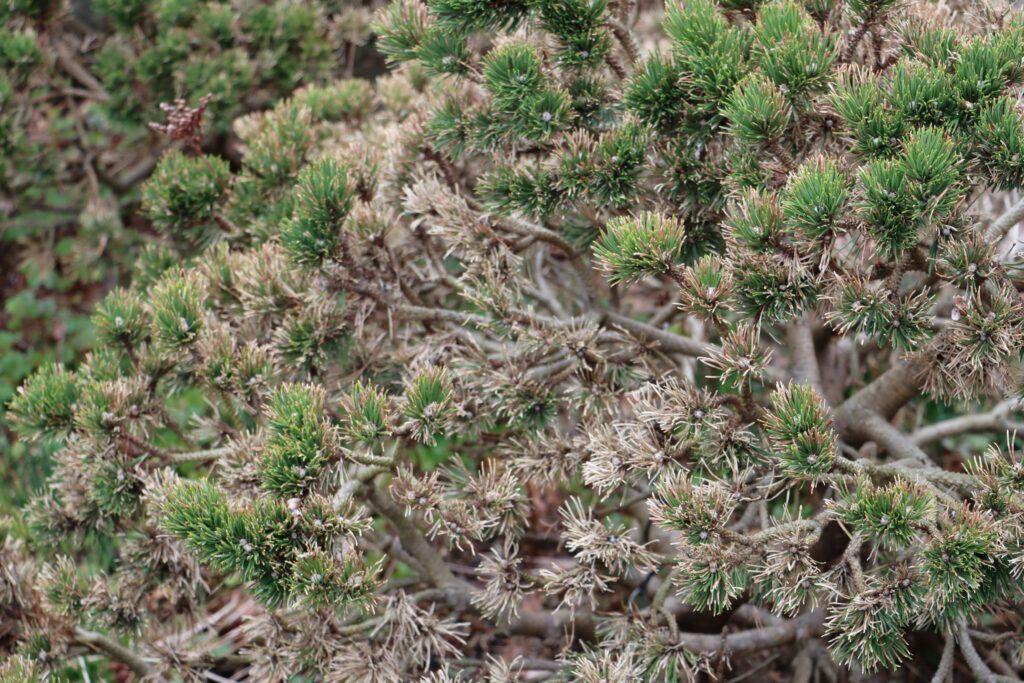
- Aphids – especially in stressed plants
Common Diseases
- Dothistroma needle blight
- Diplodia tip blight
- Root rot in poorly drained soils
Maintaining good air circulation, avoiding overhead watering, and preventing soil compaction can dramatically reduce disease pressure.
💡 Is the Mugo Pine Still Worth Planting?
Yes—but only when used thoughtfully.
The Mugo Pine can be a beautiful, rugged evergreen when:
- The right cultivar is chosen
- It is sited in full sun and well‑drained soil
- Annual candling is performed
- It’s not expected to stay small without intervention
Unfortunately, many landscape designs simply drop in a “standard” Mugo Pine and hope for the best. That’s why so many become sprawling, woody, misshapen shrubs.
If you’re looking for compact evergreen structure, there are often better modern alternatives—but the Mugo Pine still earns its place when treated properly.
📞 Have questions or planning a landscape improvement?
I’m currently researching plant selections for an upcoming installation, and I love helping homeowners and businesses make smart, long‑lasting choices.
💬 Reach out with any questions, comments, or to schedule a free consultation.
Let’s build a landscape that thrives—not just survives.